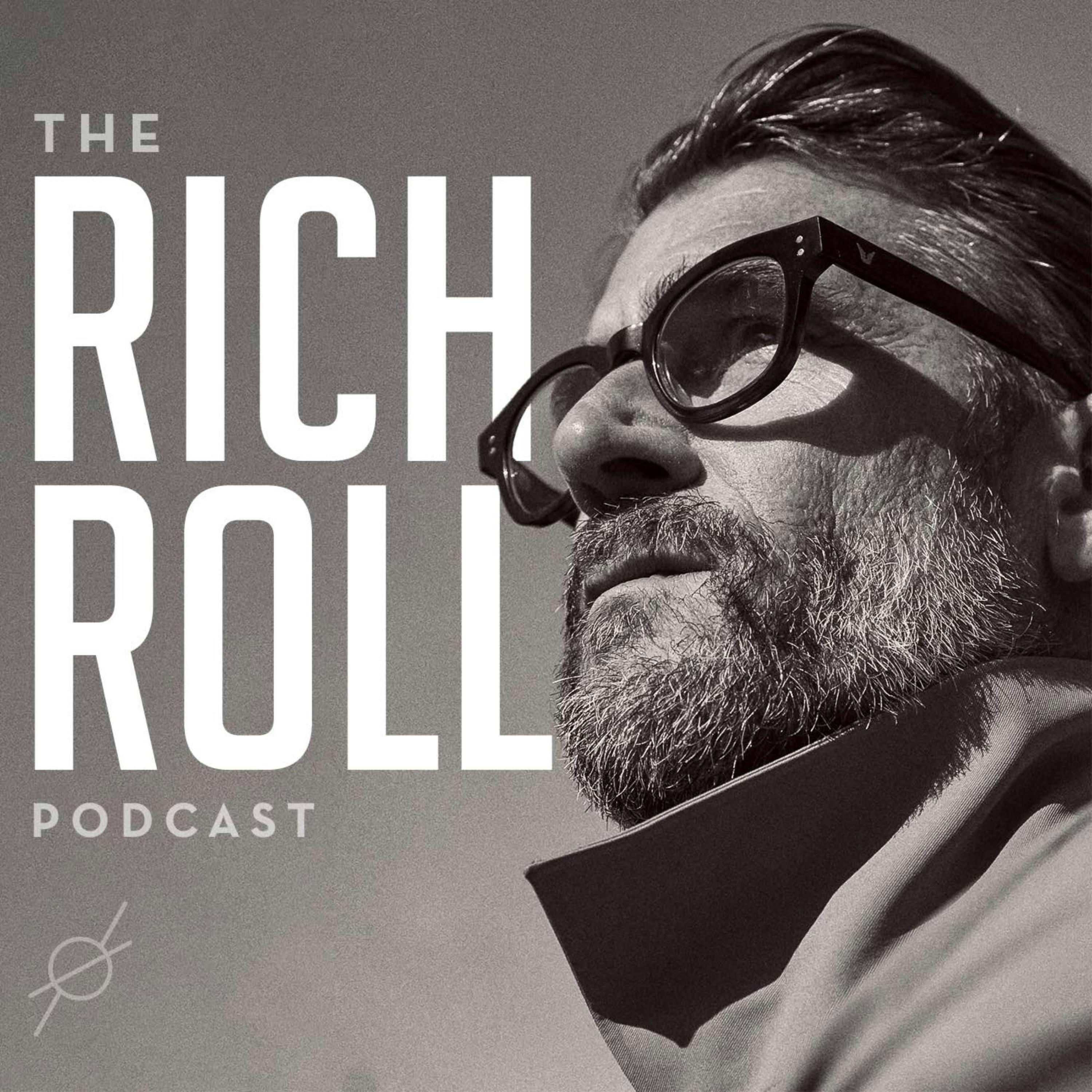
Pod Insights The Rich Roll Podcast Ignite Your Evolution: Hakim Tafari is a Master of Mindfulness, Curator of Culture, & The Journeyman of Reinvention About this episode Hakim Tafari is a journeyman of reinvention, master of mindfulness, and martial arts practitioner.
This conversation explores Hakim’s philosophy of surrender as a superpower and his “Sure Hearts Release” practice for personal transformation. We discuss his unique blend of street culture and ancient wisdom, from Tai Chi to running, and how mindful movement can revolutionize our approach to life.
He shares transformative experiences running ancient Mexican trails and summiting Mount Asahi in Japan—both of which catalyze profound personal growth.
Hakim is a true mindfulness maestro. This conversation is pure inspiration. Enjoy!
Show notes + MORE
Watch on YouTube
Newsletter Sign-Up
Today’s Sponsors:
On: Swiss engineering at it’s finest, On crafts high-performance shoes and apparel crafted for comfort and style 👉on.com/richroll
Go Brewing: Use the code Rich Roll for 15% OFF your first purchase 👉gobrewing.com
Momentous: Save 20% OFF all of my favorite products & more 👉livemomentous.com/richroll
Birch: For 25% off ALL mattresses and 2 free eco-rest pillows👉BirchLiving.com/richroll
Roka: Unlock 20% OFF your order with code RICHROLL 👉ROKA.com/RICHROLL
Check out all of the amazing discounts from our Sponsors 👉 richroll.com/sponsors
Find out more about Voicing Change Media at voicingchange.media and follow us @voicingchange
Learn more about your ad choices. Visit podcastchoices.com/adchoices
Transcript 18,741 words · 2 speakers
Speaker names marked ? are inferred from speaking time and the show’s known hosts — they are not voice-verified.
0:00 Rich Roll? Eating well rarely falls apart because of one big failure. It's the daily question that wears you down. Like, what am I actually gonna make tonight? What's in the fridge? And it's exactly why we built the Plant Power Meal Planner. It's a personalized, plant-based meal planning program that matches you with recipes based on your taste, your allergies, your cooking skills, and how much time you actually have. You build, through this program, a balanced, nutrient-dense plan for your entire household in a few minutes. Then it generates a grocery list for you with one click that plugs right into our delivery partners. All the recipes in the program are built by dietitians with culinary training. Plus, you get your own food coach to help you problem-solve along the way.
0:44 Rich Roll? It's kind of an amazing thing. For listeners of the show, all you special people, we're offering an exclusive $20 off an annual subscription right now. To get it, go to meals.richroll.com, take your quick personalization quiz, and enter promo code RICHROLL20 at checkout.
1:05 Hakim Tafari? I got to see my life in 4K in front of me. It's already been written in the tapestry of the universe. We're just too blind sometimes to see it. And I realized my life can be taken just like that.
1:23 Rich Roll? How come Taferi's life reads like a masterclass in continuous reinvention? A man difficult to define, Hak is a Buddhist Dharma practitioner. He is a master of mindfulness movement and meaning. He's a teacher and practitioner of meditation and Tai Chi and Kung Fu.
1:43 Hakim Tafari? The Tai Chi is a mindful movement. The Qigong is a mindful movement. The running is a mindful movement. All these things are a way of showing you how to find true sense of liberation and inner freedom.
1:57 Rich Roll? He's a mountaineer, he's an herbalist, he's a DJ, he's a runner and a curator of culture, which is all a long way of saying that Hock is a seeker of wisdom. Wisdom he today shares in my friend's second appearance on the show, which is a deeply nourishing conversation exploring the beauty of suffering, the power of inviting discomfort into your life, and the potential that resides within all of us to transcend our circumstances and actively transform our lives wholesale.
2:29 Hakim Tafari? I've surrendered to the fact that I want to live a certain lifestyle. To me, surrender is almost like a superpower. You have to break shit down, you have to dismantle, you have to destroy all misnomers. I want to be my ancestors' wildest dreams. What are you trying to do?
2:51 Rich Roll? Good to see you, my friend. I'm so grateful to have you back here.
2:54 Hakim Tafari? Thank you for having me. Good to see you too, man.
2:56 Rich Roll? And thank you for this gift, this hand painted. I mean, I've seen these symbols of...
3:05 Hakim Tafari? The circle.
3:05 Rich Roll? Yeah, but I don't know a lot about what they represent, or what they're called, or what this art form is of, you know, painting these.
3:16 Hakim Tafari? So...
3:17 Rich Roll? I should hold that up.
3:17 Hakim Tafari? They're based upon a Zen Buddhist practice. They're called Enzos. And it's, as I said, they're based upon a Zen Buddhist practice where the practitioner basically gets the brush and within one breath stroke creates the circle. And you end up making, you know, whether it be five, six, a dozen, a hundred, but it's part of a meditation practice. And what you're doing is, is basically just breathing into the brush and the brush becomes your... Kind of stroke becomes your weapon of choice.
3:58 Rich Roll? And everyone is unique, of course.
4:01 Hakim Tafari? And everyone is unique.
4:03 Rich Roll? But the circle's never quite complete. It always ends right before you complete the circle. What is the idea behind that?
4:10 Hakim Tafari? Um, you know, I think every, every Enzo artist is different. You have some that are fully complete. And then you have some, which is like, you do that breath and it's like a quick whisk. And you see that brush stroke.
4:26 Rich Roll? Mm hmm.
4:26 Hakim Tafari? And as you said, everyone is different. I think it represents the completeness and the incompleteness of life. There's a fullness and a void that, that encapsulates the Enzo. So every artist is different, the way they paint their Enzos. Sometimes I might be in a mood where I want to do the full stroke and the full circle. And then there's times when I'm like, no, just let me just do a little whisk and cut that end off. So everyone is different. Yeah, everyone is different.
5:03 Rich Roll? And the reflection that I'm supposed to have when I gaze into this on my wall or on my meditation altar.
5:12 Hakim Tafari? I'm, I'm hoping that it brings you peace and calmness. When you look at that, you can see the, the beauty in your own life.
5:24 Rich Roll? That's a tough one.
5:25 Hakim Tafari? Hmm.
5:26 Rich Roll? For me, sometimes. The critic is loud. You know what I mean?
5:32 Hakim Tafari? Yeah, it can be. But I think, you know, one of the things that I've been really playing with and really enjoying is surrendering. That concept of surrendering. And it was something that for many years, it was tough for me to do. And as I've gotten older and as I've learned to soften my heart, I've really learned how to surrender. You know, as you talk about that and, and you're like, yeah, I don't know if I can do that. How much of it is you not surrendering?
6:05 Rich Roll? Oh, most of it, all of it, probably, right?
6:09 Hakim Tafari? Yeah.
6:10 Rich Roll? And whatever part isn't about that could probably be solved through a deeper form of surrender.
6:17 Hakim Tafari? Hmm.
6:18 Rich Roll? Because if you're truly letting go, then there's no space for that cackle.
6:25 Hakim Tafari? Yeah, yeah.
6:27 Rich Roll? But liberation is hard.
6:31 Rich Roll? It's a fucking beast, isn't it?
6:33 Hakim Tafari? It really is. It really is.
6:36 Rich Roll? So when you say you're focusing on surrender, what is the brass tacks of that practice?
6:46 Hakim Tafari? Hmm. You know, the aspect of letting go, the aspect of dismantling old habits. You know, for me, I've really worked hard in these last few years on really letting go and dismantling and just getting rid of what doesn't service me. And surrendering is that. What is not servicing you, you gotta let it go. And I think I go through modes where I'm just like, I need to get rid of this. I need to get rid of that, whether it be physically or mentally or spiritually. And it's becoming part of my muscle memory now
7:27 Hakim Tafari? because I'm realizing that it's lightening up my load in so many ways that I could even possibly imagine. It's lightening up my load and it's making things a lot more easier and clearer for me. The more I can let go, the more. And you know, I said this in the last time we were here, you know, holding that backpack and just being able to let go. But it's really true. And in that surrender, I think for so many of us, and especially for men, there's a kind of, they equate surrendering with weakness. And to me, surrender is almost like a superpower. Takes a lot.
8:10 Rich Roll? It's also an act of courage because it's forcing you to confront yourself in an honest way and make peace with the fact that you're not the all-powerful, in-control being that you would like to believe that you are, right? You have to disabuse yourself of that delusion.
8:30 Hakim Tafari? Yeah.
8:31 Rich Roll? And that's very threatening to the ego and it requires courage. So it's actually the antithesis of weakness. Weakness is going about your way and never turning the gaze inward to deconstruct that illusion.
8:46 Hakim Tafari? Yeah.
8:47 Rich Roll? But it's a leap. It's a leap for a lot of people. If you tell somebody, "The solution to your problem is to let go," that immediately gets interpreted as waving the flag of defeat. When all of our instincts and every kind of input over the course of our lives is telling us to like, "Push, push, push." And if you're strong enough, or you can summon the will, you'll be able to solve the problem that way. And that's the gift of, you know, having experienced a life crisis, be it existential or with substances or some form of addiction, is that you're forced to confront that and
9:31 Rich Roll? then you kind of find your way to the other side and realize the power of surrender and how it's very different than what you might imagine, have imagined it to be.
9:42 Hakim Tafari? For sure. You know, one of which for me was a big one, was alcohol. That was a big one. I think I'm going on maybe two and a half, two and a half years now where I haven't touched it. And that was a big one for me because I would somewhat lean on it to... Once I realized that I didn't need alcohol in my life anymore and just got rid of it... Things started becoming a lot more clearer for me. And I know it sounds cliche and a lot of people are like, oh my God, I got rid of alcohol and I got rid of drugs. And it became more mystical and clear. But something did essentially happen for me when I gave up alcohol.
10:26 Rich Roll? Hmm.
10:27 Hakim Tafari? And then being in establishments and being in areas where I saw my friends drinking and seeing what they were doing when they drunk too much or how they would act. And being in those environments. That in itself was a game changer for me in letting go, in surrendering. Because I had to surrender a certain type of lifestyle that I was used to for so many years and certain people that I was used to for certain years and letting that go. And then, you know, just other little things in my life and facets where I was just like,
11:09 Hakim Tafari? I, that's not servicing me anymore. This is not servicing me anymore.
11:14 Rich Roll? What's interesting about that is that this decision to give up alcohol came in the aftermath of many years of spiritual practice and deep connection with ideas like surrender and, you know, being present and all of that. For most people, giving up alcohol is their introduction to these ideas, which are new and foreign. But you're somebody who is, you know, pretty expert in all of that. And yet alcohol confronted you with a new level of what that might mean. That's interesting.
11:51 Hakim Tafari? I think I was toeing the line. I've never been somebody who is extreme with alcohol. But I think during the pandemic and, and, and things that were going on through the pandemic. And keep in mind, I was still somewhat working during the pandemic too. I was still working a nine to five. So there was that stuff that was going on with my family. I would look at it as me being like, yeah, well, you know, I'm becoming a connoisseur of Japanese whiskey. And, you know, you know, I'm, you know, I like that one. So I'm just going to keep on. And I would, I would use that as an excuse to be, you know, let me try out this one tonight. Let me try out this one tonight. And I realized that I was drinking more.
12:39 Hakim Tafari? Almost using that more so than my own meditation practice. And, and, and I don't know what it was, but something, something one day woke me up and I was like, what are you getting from this? What are you really honestly getting from this? And as you said, I meditate, I do Vipassanas. You know, if there's anyone who should know about this, it should be me. But still, I'm, I'm still kind of leaning that on a crack. And then one day I woke up and I was like,
13:09 Hakim Tafari? yeah, I should know better. I do know better.
13:13 Rich Roll? Well, this in a nutshell is the good news and the bad news about pursuing a spiritual path. Is it not right? Because on the one hand, you can't buy into your own bullshit anymore. You know, once you've progressed to a certain point, you're able to see through your own nonsense. And you have this compulsion to call yourself on it, right? Which is, that's the engine of growth, of course. But that means that you have to keep giving up things that you like to do. I mean, listen, we all have things that,
13:43 Hakim Tafari? Yeah.
13:43 Rich Roll? that we rely upon to distract ourselves from whatever it is we don't want to feel in whatever moment we find ourselves in. And it can be the phone, it can be alcohol, it can be anything, right? But for someone like yourself who is, you know, mature on their, on their spiritual path, I'm sure you're like, when you encounter a dissonance, I mean, there's always another layer to peel, right? You're going to be peeling that onion until you die.
14:10 Hakim Tafari? Yeah.
14:11 Rich Roll? And at some point you're like, really? I have to give this up too? I've already done this, this, this, and this. Like, don't I get to graduate? Like, can I coast for a little bit? Just like five minutes?
14:21 Hakim Tafari? Yeah.
14:22 Rich Roll? No, you can't.
14:23 Hakim Tafari? Yeah. You know, I consider myself a, a, a householder, but I still have those monk type qualities. And
14:34 Hakim Tafari? For me, it's this really just following that middle path, man. Knowing how to keep things in balance. Really just knowing how to keep things in balance. And I knew that what I was doing with the alcohol was definitely, the balance wasn't there with the running and the mindfulness and everything else. And then finding myself leaning to this whiskey or that whiskey just to soothe my whatever was going on. Yeah, I realized when you get to a certain point, you know, there's this thing called the eightfold path that most Buddhists really succumb to.
15:19 Hakim Tafari? And they say that, you know, within the wheel, there's eight spokes. And the minute that you take one of those spokes out, the wheel becomes.
15:27 Rich Roll? Unstable.
15:28 Hakim Tafari? Exactly. And, you know, there's a certain thing within the eightfold path, which is sila, moral conduct. And alcohol is part of that. And I looked at that. And I just, as I said, you know, for me, seeing folks around me, especially in run crew culture too, like alcohol is prevalent. You start seeing folks doing things, you know, after a 26 mile race or 50 mile race or 100, and the alcohol starts coming. And then you just start seeing folks doing shit that. Why are you doing that? Why are you?
16:13 Hakim Tafari? And I started seeing a lot of this happen around with a lot of friends, associates, acquaintances and stuff like that. And I just, for myself, there's a moral conduct, there's a moral compass I have in my own self. And, you know, coming to this level where I'm 50 now, the way I move and navigate through life really means something to me.
16:39 Hakim Tafari? And again, where surrendering comes in, I've surrendered to the fact that I want to live a certain lifestyle. I want to live a very simple, peaceful life with my partner. I get to do what I need to do. I get to run. I get to paint. I get to play music. I want to live a very simple life. So, again, what is not servicing me, I'm going to put that away. And I think for me, this has really been the big thing for me, especially turning 50. Like, coming into my 50 was like, the biggest epiphany, like, if I want to have, if I really want to train like a superhero, if I really want to bring my mindfulness
17:23 Hakim Tafari? to a sharper key and to a sharper level, then there are things that I need to get rid of.
17:28 Rich Roll? Hmm.
17:29 Hakim Tafari? There are things that are not going to service me. And there are things that I need to build on that are going to service me into making me a better person.
17:37 Rich Roll? Before the podcast, I was asking you about your Run Crew activities, and you told me that you've kind of stepped back from that world for a bit, which is interesting because you're, you're like the Run Crew dude. You're, you're like the curator of running culture, you know, bombing the streets with giant groups of people. And I think, on some level, the reason, the reason why you've taken a step back is not unrelated to what you just shared.
18:07 Hakim Tafari? Hmm.
18:09 Rich Roll? Not the drinking part, but more the inner reflective part. And, and also, this idea, you were sharing a little bit about how subcultures can create identities that then become an impediment to the growth that awaits, right? So the thing that was the accelerator of your growth has a shelf life, right? Before, it's kind of time to step up and reimagine yourself once again. And you see people who kind of get stuck because they've had such a positive experience and it has helped them and. Positive ways, but then it becomes a barrier. Like you stay there because you're affirmed and that's your community. And there's a lot of good things about that.
18:54 Rich Roll? I'm not disparaging that in any way, but, but I think it then becomes incumbent for somebody who is so committed to a spiritual path and this trajectory of growth that you then have to extract yourself out of that or run the risk of, of, of doing that very thing, which is getting stuck.
19:13 Hakim Tafari? I mean, you know, and it was so funny because I didn't really think about it in its totality until you just made it in 4K, until you just showed it to me and it, yeah, I think it has a big, a big time aspect to why I may not be as deep in that culture as I was before. And I think, I'll be honest with you, you know, I was several years ago, eight, 30, nine o'clock, I was running the streets and it was like, I wasn't getting home till like 10, 10:30, 11 o'clock, you know, not going to bed till one o'clock. I'm watching Marvel superhero cartoons at nine o'clock at night.
19:54 Hakim Tafari? I'm watching old reruns of stuff with my girl and our kid. That's what I'm doing. I don't, you know, that life is not for me anymore. Will I go out and do it every now and again? Yeah. But, yeah, I think for me, there was something great about, I found family in run crew culture. Something that was really, I didn't have that coming up in my formative years, feeling like I had a family, feeling like I had that, people who had my back and the best interest and so forth. And you said something that was really key. I've seen individuals in run crew culture, that's all they know.
20:40 Hakim Tafari? That's all they do.
20:43 Hakim Tafari? Is run marathons, you know, be about that culture, showing up in Berlin, showing up in New York, showing up in Tokyo, being of this caliber. You know, I gotta run, you know, the sub three or I've gotta run, you know, sub three thirty. I gotta show my face in Boston, yada, yada. And I'm not disparaging any, I love run crew culture. Run crew culture is what made me. Um, some of my best friends and family are in run crew culture. But I think there is a maturation. There is a metamorphosis and there's an evolution.
21:20 Hakim Tafari? And I think you're seeing a lot of folks who came from road running now moving really deeply in the trails. Because there's no, you have to be at this time. There's no, you've got to look a certain way. You've got to be in this super shoe or that super shoe. You go on the trail, the trail is gonna humble you. The trail, the trail is gonna show you the way. And especially with the rise and really the beautiful, the beautiful aspect of plant medicine and being able to explore microdosing and going into the wilderness and really being in nature and being in that.
22:02 Hakim Tafari? I think there's something very beautiful and ethereal and spiritual about that. And I think that more folks now are leaning more towards that because there's a lot less judgment. There's a lot more playfulness in the trail. There's a lot more finding yourself and insights in the trail. Not to say that you're not gonna find insights when you're running, you know, twenty four, you know, thirty miles on the street. But there's a difference in that when you're in the trail, you're in the mountain. And that was one of the things that I learned when I went to Oaxaca and Chiapas all those years back.
22:44 Hakim Tafari? Um, running through Jackson Hole, you know, even running here, you know, running in Malibu or, um, you know, running Kenneth Hahn, there is something very.
22:57 Hakim Tafari? Mistical and you know, I use this word a lot when I have these very intense spiritual things, but auspicious and not to sidetrack, but you know, I had the pleasure of taking some young kids into the mountains early this year, city kids who have never really been into the mountains. And for these young black and brown kids to see, to go up and hike these mountains and to see just the whole of LA and to see, you know, Dodger Stadium, to see Pasadena, the Mount of Pasadena and to see their faces.
23:39 Hakim Tafari? It just brought me, it made my heart smile because these are kids that are used to the block. These are kids that are used to, you know, whatever gangs are active in their areas. They're not used to seeing sights like this. So again, wild road running is cool and road running is, is great. I think there's so much more of the world to see out there. And really, I think that you're seeing a lot of folks kind of moving from that and moving into ultras and moving into going in the trails because there's such a playfulness, a way to feel that liberation.
24:17 Rich Roll? Mm hmm.
24:18 Hakim Tafari? And not get judged for a certain time or looking a certain way. Again, I love run crew culture.
24:24 Rich Roll? Yeah, I get it. I get it. I think the human animal will find a way to trap itself no matter what. So the quest to run sub three in the marathon gets replaced with the trail version, which is, well, I'm going to do a 50K and now I'm going to do a 50 mile and I'm going to do a hundred mile. So it's like, you can find that in anything, but I think your point remains true, which is in nature, you are liberating yourself from a lot of those kind of etiquette driven metrics and kind of expectations that come with like road running culture. And obviously like nature is going to deliver a different kind of frequency in terms of that's going to, you know, kind of maybe open you up in a new and unique way.
25:09 Rich Roll? And I love that you took those kids up there. While you were sharing that story, I was thinking about. Tom Shadyak, who was in here the other week, the filmmaker who moved to Memphis and opened Memphis Rocks.
25:21 Hakim Tafari? Ah, yes.
25:22 Rich Roll? I had the occasion to meet some of the kids that he and that community have introduced to the outdoors. And some of these young people have gone on to go on pretty serious expeditions to very big mountains. And the life-changing kind of opportunity that that is giving to kids who live in the poorest zip code in America, basically.
25:49 Hakim Tafari? I was just at the Outside Festival. And I so happened to be with this guy named Malik Damashin. Malik is a filmmaker who came out of Memphis, and he was part of the Black Ice. I think he was one of the moving parts of Black Ice. And for anybody who doesn't know.
26:07 Rich Roll? Yeah, I know who you're talking about. Go ahead, though.
26:10 Hakim Tafari? So Black Ice is a story of, basically, these folks from Memphis who team up with North Face, and they learn how to climb ice. And a lot of these folks come from the inner cities of Memphis. And I got to hear Malik's story, and Malik is very close to one of our mutual friends, Conrad, Conrad Anker and Jimmy Chin. He's had a lot of experience with Conrad going on some of these really wild, crazy adventures.
26:42 Rich Roll? Like Norland.
26:43 Hakim Tafari? Yeah. And Malik made the remark, Conrad would just say, "Just don't die. Just don't die." But something very similar, he said to me when we went on the summit. When I hear Malik's story, when he's talking about, he came up in home, crack addict homes, seeing friends shoot, having friends who just had their younger brother or sister shot, being in these environments, not knowing whether you're gonna make it the next day, to then being in the wilderness and seeing a warthog for the first time.
27:27 Hakim Tafari? How impactful that is. Even myself, I think about... I really, you know, I was very scared of going into the outside space because I didn't really feel like it was really for me. And, you know, being in Oaxaca, you know, being in Chiapas really changed my life. You know, being in Zapatista held, you know, um, rainforest encampments and running through those trails was something very mystic to me, but was so liberating because I'd never seen anything like that before. And I didn't think that I was allowed to be in spaces like that.
28:12 Hakim Tafari? So, you know, when you hear stories of Memphis Rocks and the stuff that Conrad and homie from Free Solo, Alex.
28:21 Rich Roll? Alex.
28:21 Hakim Tafari? Yeah, so, so Alex is always there in Memphis. Just to see the stuff that they're doing with kids that have never seen, you know, a boulder, let alone how to boulder, you know, and climbing ice is, is really just, again, I think it just gives you a perspective. It gives you just a real perspective on life and the privilege that some of us have.
28:51 Rich Roll? Are you still part of that North Face Council?
28:54 Hakim Tafari? Explorer Fund Council?
28:56 Rich Roll? Yeah, yeah, yeah.
28:57 Hakim Tafari? I mean, I'm still in with the, in the mix. I still, you know, Outside Festival is a reunion. So there was a lot of us, like Jody, Jody Potts and Dr. Ray Wing Grant, um, some of those folks. We're not doing anything, uh, big in particular like we did, you know, two, three years ago, but a lot of us are doing our own work and just really channeling and really getting, you know, the word out that we out here and that we're. You know, trying to make a change. I was, I just met an organization out of San Francisco called Nikas in Nature. And then my friend Ron Griswold has HBCU Outside. There's so many
29:40 Hakim Tafari? amazing grassroots, Black, Brown, Indigenous groups that are pushing to get folks into climbing, into kayaking, into seeing the outdoors in a way that we've never seen before. Because I think folks really want it now. They want to come out to see. They want to come and they want to see what life is all about. Some folks have never experienced camping. Some folks have never experienced, you know, roasting a marshmallow on an open fire, you know? So I think it's just, we're seeing a new identity now. We're seeing, I wouldn't say it's a shift, but I just think culturally now, folks are not scared to go out there.
30:37 Rich Roll? When you were with that community in Chiapas and you were running the mountains, was that your first sort of experience with this fusion between spirituality and running and mindfulness? Like, what was the lightbulb moment about that community?
30:59 Hakim Tafari? You know, me and the folks of Air Libre, we were so, we were so enamored with each other and loved what we were doing that we were like, we got to do something together. We got to bring this spirituality and bring it into the mountains and bring these folks. And, you know, we'll make it. We'll plan the routes. We'll make sure that you folks feel safe enough to run these routes that we have designed. So it was the first time I'd ever really gone out in the country and done anything that, you know, being in remote areas where there wasn't, you know, Wi-Fi and stuff like that. But I was open to the idea because I knew it was going to be life-changing and I knew it was going to take me out of my comfort zone.
31:41 Hakim Tafari? And doing that and being with folks, let me tell you about the second day.
31:50 Hakim Tafari? Rich, when I went into districts that have never seen a black person before. These certain places in Chiapas that have never seen the likes of me before. And I'm looking at them like they're wearing these Sherpa style jackets and rich textiles. And there were different townships that had different ways of how they perceive their cultures. It was at a time where it was like Saint Michael, there was a big Saint Michael festival. And all these different townships had something going on. So imagine there's a group of 12 foreigners.
32:31 Hakim Tafari? I can't remember how many black bodies, but it was this, you know, you could tell we weren't all from Chiapas. We weren't all from Mexico. And these folks, I didn't feel worried, not one bit. And I remember having one of our guides, I can't remember our guide's name.
32:51 Hakim Tafari? But he would run us through these areas and these trails. That was so beautiful and so mystic and smells that I had never smelled before. At that point, especially running up the volcano, we ran up a volcano one day.
33:10 Hakim Tafari? And that was an adventure in itself. But running up that volcano and doing a big sky meditation after the, once we reached. I think that was really the moment that I was realized, I realized, I was like, yeah. This is, this is what I meant to see.
33:31 Hakim Tafari? Running with 200 folks is beautiful, but being on the top of a volcano. With six, seven of the locals from that, from that area. Along with eight or nine of us from this country. And then my, Daniel and, and whoever else was with us. Being in silence and being above the clouds. And then after that, going into a coffee plantation where it was family owned. Picking these berries and having this family, having these kids just laughing and running up on us. And wanting to take photographs and locals calling me Joaquin.
34:15 Hakim Tafari? Treating me, bringing me in, cooking me food.
34:20 Hakim Tafari? That was when I was like, I'm meant to see the world and this is, this is why I'm here. This is why I've been given the chance that I've been given. And to also come back and to show folks who look and sound like me that you can do this too.
34:35 Rich Roll? Have you gone back? Have you brought people back there?
34:37 Hakim Tafari? I haven't. I haven't had a chance to go back. I needed to tap in with El Libre and do a reunion because we did Chiapas in 18 and then we did Oaxaca in 19 and then the lockdown happened. But yeah, I mean, Oaxaca was the same thing. You know, being in a teepee on the middle of a river, doing meditation and doing qigong was absolutely mind blowing. We did a somewhat called like the Trail of Tears, where it was kind of like how you have the Harriet Tubman and the Underground Railroad, but it was kind of like for the indigenous Mexicans in Oaxaca.
35:21 Hakim Tafari? And it was like a trail that they were built to escape the conquistadors. And we ran this trail that was like 16 miles and you could feel the spirits guiding you as you ran that trail.
35:39 Rich Roll? Yeah, that's heavy. I mean, how long ago was that?
35:41 Hakim Tafari? Oh, God.
35:42 Rich Roll? 1,000? Year 1,000 or something?
35:45 Hakim Tafari? Yeah.
35:47 Rich Roll? My history is bad. You felt the resonance?
35:50 Hakim Tafari? Oh, you felt it. You felt it. You could just look at the cliffs and see, you know, this was how they were dodging the conquistadors because they knew that they weren't able to get up on these certain ridges and go through these certain little... And then to end on both occasions, the occasions in the volcano and then running through this kind of Trail of Tears, we did a Temescal ceremony, which is where it's kind of, you're in a sweat lodge and you're in the dark. And there's like eight or nine of you in this and you're seeing, you're seeing some shit in there.
36:27 Rich Roll? Yeah.
36:27 Hakim Tafari? And that was, again, going through things like that.
36:32 Hakim Tafari? Changed my life. And then Japan.
36:35 Rich Roll? Oh, I don't know about Japan.
36:36 Hakim Tafari? You don't know about Japan?
36:37 Rich Roll? Did we talk about this last time?
36:38 Hakim Tafari? No, we didn't talk about Japan. Japan wasn't even on the radar.
36:44 Rich Roll? Talk to me. Yeah.
36:47 Hakim Tafari? So.
36:47 Rich Roll? What happened in Japan?
36:49 Hakim Tafari? I got to do a campaign with this company called ROK. And one of my best friends in the world, Travis Weller, who is a pretty well renowned, pretty well-known trail runner. And this guy named Drew Smith. And for anyone who don't know who Drew Smith is, Drew Smith is one of the most incredible photographers you'll ever meet and ever see. His work is incredible. So he had just did, right before we did Japan, he had just did Jim Morrison's first ascent into some mountains. They were in Pakistan. It was the first ascent since Hillary had passed away.
37:35 Hakim Tafari? So Drew was on that mission. And right after that, he came with us to Japan. And originally, we were gonna do, we had an idea, or ROK had an idea, ROK and Travis had an idea of doing what is called a misogi. The original idea of misogi is like a ritual. It's like a Cold War ritual
37:59 Hakim Tafari? that spans like a week. And it's kind of like a rite of passage for
38:05 Hakim Tafari? older spiritual folk. I don't know from what spiritual lineage this came from, but it's basically called misogi. And Travis and Nash, who works for ROK, had this idea of, let's do our own style of misogi.
38:26 Hakim Tafari? And the idea was to do a misogi that was running thirteen peaks within two or three days.
38:35 Rich Roll? Wow.
38:36 Hakim Tafari? These peaks were the dicehead Susan traverse, which is in the northern part of Japan, Hokkaido. Well, I was just talking to Travis the other day and originally when he was like, there's a chance that we could do Japan or there's a chance that, you know, rock might send us Japan. I was like, hey, man, if they send you, let me go. That's a dream of mine. He's like, I don't know if you're gonna be able to make this one, mate. This is kind of a dicey one. And at the time, my friend Rio, Rio Lakeshore, who's a really well-known trail runner out here, black brother, really, really dope friend of mine, an amazing runner, he was supposed to do it with Travis because they were like the models for rock.
39:21 Hakim Tafari? But for whatever reason, Rio couldn't go. So Travis gave me a call.
39:27 Rich Roll? You got slotted in.
39:28 Hakim Tafari? I got slotted in.
39:29 Rich Roll? Yeah. Was it more than you bargained for?
39:33 Rich Roll? How big were these peaks?
39:36 Hakim Tafari? Well, it was fifty fifty whether we were gonna do it. So we had an A plan, a B plan, a C plan and a D plan. And we didn't know whether it was gonna be snowing because we were going in the, we went last year around the end of May, early June time. So we were hoping to go see the rose garden season. We were hoping that it was gonna be summer and sun and field. Well, we get there and it was snow and it was big snow. So us trying to do thirteen peaks, it wasn't gonna happen. And then there was this a level of danger that I'm not used to.
40:21 Hakim Tafari? Travis somewhat and Drew definitely. Drew just came from Pakistan. We did triple the amount. But we knew that we wanted to do it and we wanted to at least attempt to do some type of misog. So we ended up not doing the thirteen peaks. We ended up doing a few and we ended up climbing Mount Ashidaki, which is the highest peak in northern Japan. And we ended up doing that. So we didn't end up doing the whole thirteen peaks because the conditions were just way too rough. By the time we ended up on top of Mount Ashidaki was like thirty, forty mile per hour winds. You could hardly see.
41:04 Hakim Tafari? But we ended up summiting and it was probably another life changing experience in my life that I have never experienced. Or should I say it was an experience that will forever be cemented in both mine and Travis's life and Drew's life because Nash, who was originally supposed to come up with this, ended up having back spasm. So it was only three of us that went up. And it was a really, really, you know, we were doing some knife ridges. There were some really technical parts of that mountain that we climbed. But I ended up doing it and ended up summiting in it.
41:44 Hakim Tafari? It was just one of the most powerful experiences that I have ever, ever, ever had in my life. And then to be in Japan, to be in the home of Zen, to be, you know, there was just so many things, but Japan was.
41:59 Rich Roll? But tell me more about the life changing piece. Like you brought it up and your eyes lit up. There was something about this that seems to have something to do with more than just the degree of difficulty in the cold and the fact that it was in Japan. Like, why was it so life transformative?
42:15 Hakim Tafari? There was a brotherhood between the group of going up there. There was something that was, I got to see the world in a way that I had never, ever seen before. Vast, vast peaks and mountains. And then to be.
42:37 Hakim Tafari? In a space where I didn't believe myself that I could do it. And then to do it, and then the look at the level of what I did. I really started thinking about my childhood and how I was raised and thinking about my parents and thinking about, you know, just different ancestors who had never, who wouldn't have even dreamed of being in the space. And then there was one time where me and Travis had this moment where I looked at him. And he looked at me and he said, are you okay?
43:18 Hakim Tafari? And the winds were coming and it was like when you're on some mountain and you can't, you don't see anything when you're looking down.
43:26 Hakim Tafari? And I remember looking at him and it was like one of those moments where if we were gonna stop, we needed to stop because there was no turning back. And I looked at him and I was, and I don't even think I said anything. I just said, I'm good, let's go. And I think for me, there was something so.
43:50 Hakim Tafari? When we made that summit.
43:55 Hakim Tafari? I cried in a way that I never cried before.
44:00 Hakim Tafari? And just thinking about it now, it just, it really.
44:06 Hakim Tafari? You know, several years back, I was like, man, I, I, I was in a position where I didn't think that I would ever have opportunity to see this type of thing in my life.
44:19 Hakim Tafari? I was in a position where I was like, I couldn't see, I couldn't see, you know, the, I, I couldn't see a foot in front of me.
44:29 Hakim Tafari? And here I was looking at these mountains and these clouds.
44:37 Hakim Tafari? And keep in mind, right before we made a summit, this couple who wore this denim.
44:45 Rich Roll? Just in case you're getting a little, you know, digging your britches, buddy.
44:56 Hakim Tafari? And we were laughing like, how the fuck did they do this?
44:59 Rich Roll? This is not Everest.
45:01 Hakim Tafari? But um, it just brought me to a place where I was like,
45:10 Hakim Tafari? there are certain things in your life that you were meant to see, that you were meant to do, and you were meant to be. And I have this saying that it's already been written in the tapestry of the universe. We're just too blind sometimes to see it and we are sometimes too ignorant to see it. And I got to see my life in 4K in front of me. And me and Travis hugged each other as when we made that summer and it was just like, and Drew came in and
45:43 Hakim Tafari? it was just one of those moments that
45:48 Hakim Tafari? it made me believe in the human existence. Like, if I could take somebody from Compton, if I could take somebody from Brixton, if I could take somebody from Hackney, if I could take somebody from Idaho, who has never seen something like this, I would do it in a heartbeat. Just for them to get that moment to see life in its fullness and in its totality.
46:16 Rich Roll? It's also a punctuation mark on this evolving relationship with reinvention that you have. Like, literally and symbolically, when you climb a mountain, you stand at the top and you look down and reflect upon where you were and how you got to where you are, right?
46:37 Hakim Tafari? Yeah.
46:38 Rich Roll? And so I have to believe on some level like that experience is going to lend to some reflection on. On your own life, you you mentioned, like you were thinking about, you know, your past. I mean, you've you've kind of weathered and undergone lots of changes over the course of your life. And you could say, well, there was this transformation and that transformation. I mean, in truth, it's just, it's a constant process of becoming and unfoldment. That gets occasional punctuation marks that people can point to. But a heightened experience like that is going to, you know, is going to kind of conjure that. And the emotion around it is, is like valuing yourself for having, you know,
47:22 Rich Roll? trodden that that difficult path.
47:25 Hakim Tafari? Yeah, yeah.
47:26 Rich Roll? It's like an act of self honoring.
47:29 Hakim Tafari? It really is. And in turn, it was a misog. It really was a misog. It was a was a trial. It was a certain trial, not by fire, but it was a trial because of what it took to get to that point, what it took to get from Sapporo to Hokkaido, to weathering what Nash was going through, not knowing if we were going to make it, not knowing how far we were going to make it, you know, stopping at the hut and then making, you know, they had several huts where you can sleep, you know, at night, you know, or, you know, just rest up. And I just, you know, remembering being at the hut and
48:10 Hakim Tafari? we all having that conversation like, okay, you know, it's like, make or break, do we go further? Do we go try do this? Because if we're going to do this in two days, this is what the, this is what it's going to look like tonight. This is what it's going to look like tomorrow. Boom, boom, boom. And then to make the decision to just do what we did. And, you know, there was one thought that the one part of the story that I have to say is that coming up, I was, you know, oh, my God, I don't know how I'm going to climb back down. And, you know, this coming up here is hard enough. Coming
48:50 Hakim Tafari? back down, how the hell am I going to do that? And I just remember coming back down and feeling like.
48:59 Hakim Tafari? The Hakim, when I was 10 years old at Christchurch Park in Ipswich, when it would snow and us going down the sledge. That's how I felt coming down those big effing mountains, sliding down. I'd never experienced a tree well. Do you know what a tree well is?
49:18 Rich Roll? Uh-uh.
49:19 Hakim Tafari? So a tree well is when there's ice in the tree, there's like a certain hole that is protected, that protects the tree. And it's, it's pretty shallow. So if you're walking, like your whole leg will just collapse in that. So I wasn't experienced in tree wells and I didn't know how often they came about going down. I was literally putting my foot in a tree well, every other foot. We were laughing so hard that it was like three kids in like climbing down a sled, you know, on a sledge, but we were literally, you know, had our spikes on our hiking boots
50:04 Hakim Tafari? and sliding down this like we were 10, 11 years old.
50:08 Rich Roll? Yeah.
50:08 Hakim Tafari? Just like giddy, three of us.
50:10 Rich Roll? And if you could tell that kid in Ipswich or that young guy who was cruising around Austin or the broken man who, who, you know, stumbled into a Buddhist temple in Orlando, that, you know, this is what you would be doing. And the decision you were going to have to make is whether you were going to continue to the top or turn around, like that would have blown any of those three young Huggins minds, right? Like, so.
50:37 Hakim Tafari? You don't even know me. Yeah.
50:39 Rich Roll? You know what I mean? So it is this, yeah, it's this punctuation mark on, on like, you know, a life that is one of, one in which you've worked very hard to, to become the person that, that you are today. And one that you've also are in a position to enjoy because you've let it all go. And it's like this tension between surrender and also honoring yourself because you did put in a lot of work to make it happen.
51:09 Hakim Tafari? Yeah.
51:09 Rich Roll? It's the conundrum at the heart of, you know, this type of spiritual practice.
51:16 Hakim Tafari? Hmm. You make it sound so beautiful, Rich. You really do.
51:22 Rich Roll? I just want you to tell the stories, but I, but I guess, I guess I'm sort of saying that because.
51:29 Rich Roll? I want to understand the nature of change and the process of reinvention. You know, if there is like a theme that recurs the most on this show, it's like, it's like, how do you change? How do you become a better person physically, mentally, emotionally, spiritually? And there is no one path. And there's also like no right or wrong answer. And sometimes these, these ways conflict with each other. They contradict each other, you know, which makes it confusing because people just want to know, like, well, just tell me what to do and I'll do it. And life has a different way.
52:10 Hakim Tafari? Yeah.
52:10 Rich Roll? You know?
52:11 Hakim Tafari? Yeah.
52:11 Rich Roll? And so I would imagine people ask you all the time, like, how did you go from, from that guy to this guy to now this guy? Like, what are the steps that you undertook? Or when you reflect on that and are in a position to answer that question for somebody, how do you, you know, think about that and respond?
52:32 Hakim Tafari? Well, it's a twofold. One, my partner, Melinda, who has been really a catalyst in this change because I hadn't really been in a relationship where I had a partner who really fully believed in what I had and could do and never really fought me on it. She has always had an amazing ability of being my biggest cheerleader, my manager. She'll give me critique when I need it or when I don't need it.
53:14 Hakim Tafari? But what was really evident was that I had never experienced a type of love like that before. And that love was really, I felt safe. I felt safe going into this run culture. I felt safe going back into DJing. I felt safe teaching Tai Chi and Qigong again. You know, she was the one who said, start teaching Tai Chi and Qigong again. And I started teaching in the backyard.
53:49 Hakim Tafari? Seven years later, I have a residency at the Line Hotel. She was the one who was like,
53:57 Hakim Tafari? "Go to the mountain and do this summit."
54:01 Hakim Tafari? "Let's go do it." It was the summit that I did with Conrad Anker. That changed my life. So there was coming to LA.
54:12 Hakim Tafari? There was all these things. She didn't give me a chance to doubt myself. She was always like, "This is what you need to do." So finding somebody like Melinda was really key and pivotal because she gave me a way to find, she gave me the steps in order to find my own inner liberation, to find my freedom. And she gave me permission, if I was gonna fumble or fuck up or she wasn't gonna be there to judge me, she was gonna be there to hold my hand and say, "Okay, let's get up and try it again." So that was a big catalyst. Finding somebody who really, truly loved me and loved me in my truest, rawest state. And that was really big. That was so big. And we had some really hard times in that first year
54:57 Hakim Tafari? when I came from Orlando to LA. And it was really, really hard. And she believed in me and really trusted me. And we, and still continue to work together. And therapy, which is a segue into therapy. Therapy. You know, I went forty-something years of not having one therapy session. And I went into therapy and had couples therapy and then had my own therapist. And then, you know, I just had therapy with Melinda today. And therapy, like, it gave me a chance to look at...
55:41 Hakim Tafari? Myself and past traumas, stuff with my parents, stuff with my kids. You know, it just really forced me. No, I don't want to use the word forced. It gave me a chance to really look at these things that I had never, ever looked at. Because I put them in the deepest recesses in my mind, or put them in the deepest recesses in my body. And I didn't want to touch them anymore. And these syrup has brought them back out. And shout out to Danae, who's our therapist right now. Danae is incredible in the aspect of really showing us like, no, you were here to show Hakim how to do this. No, you were here, Melinda, to show.
56:25 Hakim Tafari? So, therapy has been really a game changer for me. And, you know, there's this really big misnomer, or this really big thing within, you know, the black community around therapy. And I don't need therapy. And I was one of those that's like, I don't need therapy. What do I need therapy for? Therapy's some white shit. That ain't me. This is, everyone needs therapy. I can honestly say, anyone and everyone needs therapy. To the point that I've, you know, talked to my kids about therapy. You know, it's really been one of those things that, if I had the opportunity to talk to these young Hakims, I would say, jump into therapy. You know, had I had known about therapy,
57:10 Hakim Tafari? even when I was at Whole Foods and I had it, and I had access to it. I didn't even use it. Because I was just, I don't need it. And it took me getting to a certain point and trusting Melinda, and trusting the process in being like, that really was something that I needed. And that's why, you know, we talk about Phil. Phil Stutz. And I just want to give that man the X amount of flowers, because I watched that and I cried like a baby, because it brought so many things. And it made me look at my life in so many different ways. That therapy, anyone and everyone should do it. I can't, I can't champion it enough. Therapy was this game changer.
57:54 Rich Roll? That was not the answer that I thought you were gonna give. So interesting. I lobbed this all in your direction about the driving forces of reinvention. And your answer was a partner who loved you unconditionally and was able to see your highest self or the potential of your highest self and was in support of that blooming in you, right? And then therapy, because you're the Zen Buddhist guy who teaches Qigong and meditation and mindfulness. So I was preparing myself for a good dose of that side of the equation.
58:35 Hakim Tafari? You know, I'll tell you, because, and a lot of people think that, but here's the thing. Meditation can't save you.
58:42 Rich Roll? It's also not therapy.
58:44 Hakim Tafari? And it's not therapy.
58:45 Rich Roll? It's not gonna heal your childhood trauma or absolve you of your resentment.
58:50 Hakim Tafari? And it isn't, and it isn't. And you know what? People know that. People know that I really lean on meditation and I really lean on my Buddhist practice. But there's more than that. And I think, no, let me not say that. I don't think I know that in these years of doing what I've done and being where I've been, a lot of it was I had to fight imposter syndrome because I didn't feel like I could be, I didn't feel like I was meant to be in Japan. I didn't feel like I was meant to be in Chiapas.
59:32 Hakim Tafari? Or I didn't feel that I should be at the Outside Festival. Or I had to fight for so many years this imposter syndrome of stuff that I've been doing for 20, 30 years and still not believing. So the minute that somebody said, "I actually do believe in you."
59:51 Hakim Tafari? I actually do think that you are somebody who could really change the climate of the world and change the climate of how you see this. That was a game changer because you're not gonna find that being in the Vipassana sitting seven, eight days in silence. You're gonna find something, but you also need people in your corner who are gonna really push and support you, just like you have your wife. It's like you have your partner, just like you have certain friends who are gonna really lobby and push and really, you know. And at the end of the day, the person that I would always come to is my partner.
1:00:33 Hakim Tafari? And I have my alter and I have my partner and I have my kids. And those are the ones who really have really brought me into the space that I'm into right now. Buddha, of course, Buddha's always gonna be there. And the Vipassana practice of being in silence and being in those spaces where I have the privilege to go away to be in silence is amazing. But there's something more than that. And I think, you know, as I said, as somebody who came up, I always tried to be, you know, had immigrant parents from Jamaica who didn't have anything.
1:01:16 Hakim Tafari? So growing up, they were like, you have to be this. We need you to be this. You gotta be the one who goes to college. You gotta be the one who, you know, be the breadwinner. You gotta, we want you to be, have a house. We want you. So there was a lot of pressure and I had to fit these moles and had to fit these things. And then, as I said, when I got to that stage where I thought I lost everything and boom, boom, boom, I had to rebuild myself back up. I had to reinvent, as you said, you know, the reinvention. And that's when I, you know, really home den on.
1:01:55 Hakim Tafari? What is reinvention? How do you reinvent? How do you reinterpret or redesign and reconfigure? You have to break shit down. You have to dismount. You have to destroy old misnomers. You have to do the destroying in order to build what you need to build. And I destroyed a lot of old. I destroyed a lot of the old legacies, a lot of the old stories. And I moved to LA. And I had somebody who had my back in a way that I'd never had before. More so than my parents, more so than... And I shouldn't say more so than my parents because my parents, I love my parents.
1:02:35 Hakim Tafari? But I tell the story that my parents didn't tell me that they loved me until I was 25. You know what I mean? I didn't get that. So having a woman telling me that I'm going to support you and I got your back unconditionally, and we're going to make it. And you are way destined to do more than this. Let's try this out. Let's try this out. Let's try this out. It's like a vegan gumbo, putting the compassion, putting that woman, putting, you know, the experiences. And if I was to whisk that vegan gumbo together, that is how Hakim is, where he's at today.
1:03:14 Rich Roll? Yeah, that was very elegantly and beautifully put.
1:03:32 Rich Roll? I think that what maybe got lost in your account or in the way you just described your story is the fact that you had to, you had to put in the work to become the person. Who was worthy of being with someone like Melinda, right? So it's not like, oh, you just lucked into it. Like, there was a lot of inner work that was occurring prior to that relationship, right?
1:04:02 Hakim Tafari? For sure.
1:04:03 Rich Roll? You're shouldered with all this responsibility and expectation. So what do you do? You go out into the world and you say, fuck that. And you do what you want and you blow the whole thing up, right? Because on some level, there's resentment or some unhealed trauma of not feeling, you know, like love was unconditional in your house and not having your emotional needs met essentially, right? Which sets you on a certain trajectory until you crash and burn, right? But you can't be a phoenix until there's a big fat fire, right? So you gotta do that. And then you start throwing in the ingredients into the gumbo, right? And it doesn't, and when you're doing it,
1:04:44 Rich Roll? you don't know what you're doing or where it's going to head or why you're even doing it. But there's nothing else to do because everything else has disappeared, right? And you're kind of with yourself, forced to meet yourself, maybe for the very first time as you truly are. And that's scary and uncertain, but beautiful also, right? It creates this situation of receptivity where suddenly you, you are open to things you weren't before because your options have been taken away from you.
1:05:20 Hakim Tafari? Yeah. Yeah. And I think that's why now I do all this stuff.
1:05:29 Rich Roll? So the question then becomes for me, because this is my dilemma. Then when everything's clicking and everything's good, how do you stay connected to that? Because for me, I just get caught up in my own mind and I take myself well back. It becomes just a little bit harder to do that surrender thing because I got shit going on. I gotta call that guy and I got people coming to the studio. And it's all good and it's rocking, right? That's a recipe for disaster because now you think, once again, that you're the big boss in control. And you're basically, you know, setting yourself up for another reckoning. So staying connected.
1:06:16 Rich Roll? To what got you to that place? I think is essential, but also becomes more challenging. When your life kind of falls back into place, or you are able to like repair that wreckage and, and get to a place where you, you, you do feel good in your own skin. And like you're on the right path.
1:06:39 Hakim Tafari? The work doesn't stop. I mean, that's why I still do therapy.
1:06:44 Rich Roll? But you're very committed. Like you, it is like number one, you get up, you have your whole routine. Like, I mean, this is not negotiable. You know what I mean? And I would say that I am always negotiating it.
1:06:57 Hakim Tafari? Hmm. Cause I've been in a place where there was no negotiation.
1:07:01 Rich Roll? Right. But now things are chill. Right? This is my question. This is what I'm saying. So now like the pressure's off, right?
1:07:11 Hakim Tafari? Yeah.
1:07:12 Rich Roll? So how do you maintain that commitment? Like, how do you stay connected to the essentialism of it? As like your number one priority?
1:07:22 Hakim Tafari? I have role models. Well, I wouldn't call them role models. Like I have folks who I greatly admire, who somewhat like me have been through a journey and have been through certain things in order to get them where they are now. And I also recognize when I'm not getting any younger,
1:07:52 Hakim Tafari? the value that I have for my body
1:07:59 Hakim Tafari? and my heart mind. I value it so much more now.
1:08:05 Hakim Tafari? So, you know, I don't take it for granted. Yeah, it's a, it's a routine for me. Like I get up in the morning, work out, go run, drink my hundred gallons of green tea. Like, you know, all these things that I'm used to. But here's one thing I put into you. I have a lot of friends, when I look at their IGs, they're like obituary accounts.
1:08:36 Hakim Tafari? So many friends and acquaintances have died in these last couple of years that I've seen.
1:08:46 Hakim Tafari? This guy died, this person died, this person died.
1:08:52 Hakim Tafari? And I realized my life can be taken just like that.
1:08:59 Hakim Tafari? So in the aspect of being present as much as I can in every moment, in any situation, in every situation, and looking at the beauty in those situations, I try to, without sounding kumbaya and roasting the classes, because shit ain't gonna be like that all the while. But for the most part, I'm thankful that I have the ability to get up and do what I do every morning, to get two, three hours to work out, to paint Enzos, to meditate, to have the opportunity to go to Spirit Rock, teach Mindful Movement, to go to the Outside Festival,
1:09:41 Hakim Tafari? to go to this festival, to go DJ, to do sound baths, to do...
1:09:50 Hakim Tafari? It took a level of work, but trusting in myself to know that this feels really good and I love where I'm at right now. And I knew what it was to be in this position and that I don't ever want to be in this position ever again.
1:10:15 Hakim Tafari? And I like what it is to be here. So let me just do what I can to be the best human being that I can, to be the best partner that I can, to be the best father that I can, and to be the best person that I can show up to whoever it is, whether I know you, whether I met you for the first time or whether I've known you for years. Because it's just how I've been.
1:10:43 Hakim Tafari? Again, I just remember that time where I might not have been on this earth.
1:10:51 Hakim Tafari? But I understand what has been written in the tapestry of the universe and I love what has been written. And I understand that there are new stories that are being written, whether I know it or not. And I'm just really, just really just being present with it and enjoying it and seeing what comes because this has just been one of those years that has just blown my mind, being in Paris, being in Costa Rica, being in, you know. You've been around. Yeah, been around and it's just the opportunities, the opportunities.
1:11:31 Hakim Tafari? I was just telling somebody just the other day, I have an innate ability and I don't know how it is. I was just in London and Paris and I was with some of the heaviest, some of the most heavyweight DJs in the world. Then I'm at the Outside Festival and I'm with some of the most pivotal people within the black, brown, indigenous spaces and within the outside spaces. I'm in London where I just ran a marathon and I'm hanging with every heavy hitter in every run crew. How is it that I'm in these spaces?
1:12:12 Hakim Tafari? I don't know, but I give thanks and I don't take it lightly and I recognize the privilege that I have. So, you know, I want to be as authentic and as true to anyone and everyone that I come into contact with. I also want to be of service to the folks that I can. That's why I love doing things like with the youth and taking them into the mountains and, you know, trying to work on getting into the prison systems and doing work like my friend Vinnie Ferraro and my friend Oscar Medina and doing things like teaching the Brahma Vaharas, you know, teaching people how to love and how to find themselves.
1:12:57 Hakim Tafari? These are the things and.
1:13:00 Hakim Tafari? Yeah, I'm just.
1:13:04 Hakim Tafari? I don't take it lightly that I'm here in this spot, talking to Rich Roll, having this.
1:13:08 Rich Roll? Well, there's a, there's a humility, you know, in your voice. Like, you're very connected to your humility. And it feels like that helps to keep you grounded.
1:13:21 Rich Roll? You know, Hawks not in charge. All these, you know, players that you're meeting in all these different places and all these exotic locations that you've traveled to. You're not taking credit for that. Like, you're honoring yourself, but you're also appreciating that greater forces are at play. That's what I'm hearing.
1:13:42 Hakim Tafari? Yeah.
1:13:42 Rich Roll? In your voice.
1:13:43 Hakim Tafari? For sure.
1:13:43 Rich Roll? Yeah.
1:13:44 Hakim Tafari? For sure.
1:13:45 Rich Roll? It's all divinity, isn't it, on some level?
1:13:48 Hakim Tafari? It is, it is, it is. And, you know, I look at myself as being a spiritual being, living a human existence. And then I know there's this whole, are you a human being living a spiritual experience? Or are you a spiritual being living a human experience? You know, I honestly look at myself as a spiritual being, living a human existence, and really just taking it one step at a time, but really, uh, being present with it, being, being observant of it, and being humble with it, and knowing that my ancestors put me in this position for a certain reason. I understand the platforms that I have, I understand the leverage I have,
1:14:30 Hakim Tafari? I understand the privileges that I have, but I also understand that
1:14:36 Hakim Tafari? the ancestors put me in this position, and I heed the words of the ancestors. And I, and I really, really don't want to upset the ancestors. I want to make, I want to be my ancestors' wildest dreams.
1:14:51 Rich Roll? You know how they say, uh...
1:14:55 Rich Roll? You kind of hear what you need to hear, you know, it's like, I needed to hear this today. It is my dilemma. Like, I have so much to be grateful for, and I'm hyper aware of
1:15:11 Rich Roll? of this incredible life that I get to live. Like, it's not like it, it doesn't elude me. Like, I'm fully present in this miracle that I know I didn't create.
1:15:25 Rich Roll? But I get caught up in the day, and things are happening, and it's very easy for me to disconnect from that or lose sight of it. Like, I'm not present. And I know the antidote, the solution, is more meditation, right? More mindfulness. There's all these things. It's like, but those are the moments where I'm like, I don't do it. It's like, it's that joke. Like, if you're too busy to meditate, then you need to meditate twice as long, that idea. But when you're in the moment, it's very hard to course correct, you know? And so I think having hard and fast rules around what these practices are, are the guardrails that I'm lacking, because I negotiate with myself around them too
1:16:09 Rich Roll? much. And that allows me to make excuses. And every time I do that, I put distance between myself and the better version of myself, who is more grateful, more present, more aware, more honoring, you know, all of those things that I can be, have been, know how to be, but need to do a better job of making sure that that's the first thing and not the 10th thing on the to-do list, right?
1:16:46 Hakim Tafari? It's priorities. And those, those inner priorities, the inner work, or what do they call it? The shadow work?
1:16:56 Rich Roll? What does that look like for you?
1:17:00 Hakim Tafari? The shadow work for me is a lot of deep reflections, a lot of, a lot of. When I get up in the morning and going down to my studio and putting some Pharoah Saunders on or putting some John Coltrane on and thinking, really, really having a deep meditation like,
1:17:30 Hakim Tafari? what are you trying to do? What does it look like for you? What are you trying to do today? What are you trying to do at this moment? How is it looking for you? And having those deep internal, you know, having two older sisters and not really being, being more of an only child, you tend to think a lot, you tend to overanalyze, you tend to, you know.
1:17:58 Hakim Tafari? And sometimes you tend to, we have the saying in Buddhism called papancha, where you make up these stories in your head that may not necessarily be true, but you have these stories in your head. Usually not. They're usually not. I think I just really come to a point in my life where
1:18:21 Hakim Tafari? I just really know and trust what I want now.
1:18:26 Hakim Tafari? And I just really have deep conversations with myself that I'm not afraid to have. I'm not afraid to check myself. I'm not afraid to have those looks in the mirror internally and be like, nah, bro, you're kind of fucking up. You need to kind of step it up a little bit here or you need to maybe just kind of turn it down a notch. Having those internal conversations, which I have a lot, that's all I've ever known. So I do a lot of internal work.
1:18:57 Rich Roll? The trick with that, though, is not to fall into the trap of self-loathing, right? I mean, you could just flog yourself. You should have done that. You should be better. What are you doing that again?
1:19:09 Hakim Tafari? Well, that's where the Brahma Vahara is coming in.
1:19:10 Rich Roll? These are two different things, like owning your shit and holding yourself to account, but not coming from a place of guilt or shame.
1:19:19 Hakim Tafari? Exactly.
1:19:20 Rich Roll? Coming from a place of honoring yourself because you know you can be better.
1:19:24 Hakim Tafari? And you can, yeah, exactly. And that's where the Brahma Vahara is coming. That's where the love and kindness, the joy, the compassion, the equanimity. And equanimity is really, really big. Equanimity, having a spiritual authority about yourself, knowing what makes you tick spiritually, is something that is really big for me and I think was really grounding for me. I know that I'm trying to live a certain lifestyle. I know that I'm trying to be a certain way. I know that I need that love and kindness for myself. I need that compassion for myself.
1:20:09 Hakim Tafari? I need to give myself grace. I talk to countless of clients who call me and say, I don't know how to have grace for myself. I don't know how to have compassion for myself. Those years of having to find myself, I had to learn how to give myself grace. I had to learn how to love myself again, how to be kind to myself again. And all of that brought me to a certain equanimity, but a certain autonomy. Like, I know this is how I am and this is how I structure myself. And if I want to be a better person, this is what I need to do to be that better person.
1:20:53 Hakim Tafari? I need to meditate. I need to talk to my partner a little bit better. I need to be a little bit more interactive with my son. I need to talk to Nai. I need to talk to Leia. I need to do this with Ayla a little bit. All these things come into play.
1:21:10 Hakim Tafari? And I'm not afraid to look at myself and have those hard conversations. And I'm not afraid to love myself and give myself grace and compassion. There is a middle path to everything. And I think that's the key point is really knowing how to balance and structure that. Cause if you get trapped in the self-loathing, the self-hate, the self-doubt, that's gonna lead you down a hard road. And honestly, that's the dukkha. That's the dukkha. That's the straight-up dukkha. Doubting self, fearing, not knowing. It's scary not knowing what's gonna happen. It's scary not knowing what's gonna happen tomorrow or what's gonna happen the next day. There's doubt.
1:21:53 Hakim Tafari? All these things, you know, in Buddhist terms, we call that dukkha. All these dukkhas come up. But I've been training hard like I was an Olympic athlete in how to battle dukkha.
1:22:09 Hakim Tafari? I'm on my Jesse Owens-type business. You know what I mean? I'm on my Jack Adjoa and Akursi-type business where I'm not trying to let dukkha dictate my life. Cause dukkha dictated my life for so many years that I'm not letting dukkha run my life anymore. So I'm now training, just like I tell my students with Tai Chi. When you do certain movements, you do it over and over and over again because it becomes muscle memory. So the things that I do, getting up, sage-ing myself, blighting the incense, doing my ice baths, doing, you know, listening to spiritual jazz instead of some rah-rah business to soothe my nervous system, finding ways to restructure and re-soothe my nervous system.
1:22:54 Hakim Tafari? You know, going on a run, going on a nice, long run and, you know, doing a little microdose and doing a little adventure, you know what I mean? This is, all the things that I do is to put myself in a position where I can keep things in balance and keep things in check and not have to let dukkha come in and tell me, "Oh man, you should be worried. You should be worried about paying for that or how you're gonna get to that." When I knew I was going to England to run a marathon. Old me would have been freaking out about how much I gotta pay for this ticket and how much I gotta pay for that ticket. How am I gonna get this Airbnb and all that? I didn't. I didn't worry about it. I knew I was gonna have a fun time. I knew we were gonna have a fun time in Paris.
1:23:39 Hakim Tafari? I knew we were gonna have a fun time. You know, boom, boom, boom. Everything works out the way it needs to work out. And I know it sounds cliche and I know it's like, cause you can't let just the spirit just take everything, but you have to have a verified faith in your spirituality in order to move and navigate through the world the way that I move. I understand there's a spiritual urgency, but as I said, if we come back to the four brahmahahars, there's a thing within that equanimity where I know I'm good. I'm good.
1:24:14 Rich Roll? Preach it. Preach it, man. That was amazing.
1:24:21 Rich Roll? How do you think about the intersection between movement, running, mindfulness and spirituality? Because one thing I've learned is obviously there's a, there's a deep spiritual connection by just simply being in nature. And there's an active meditation piece to running in silence, yourself in nature. But meditation formally defined is a different thing. And I think for many years, I sort of thought, well, I don't need to meditate because my meditation is running.
1:25:00 Rich Roll? And I've learned through practice that that is not true, that my formal meditation practice is, is actually quite qualitatively different from the mindfulness benefits that I get from running. But I think it's important not to confuse them.
1:25:20 Hakim Tafari? Yeah.
1:25:21 Rich Roll? But I'm interested in how you think about this intersection.
1:25:25 Hakim Tafari? Yeah. It's really important because I think it all, they're all part of the same kind of...
1:25:36 Hakim Tafari? They're all part of the same puzzle in the aspect of, here's an example. I had an injury not to lumbar where, where I really ripped my ankle up. I don't know, grade three, grade four, I don't know how they graded, but it was a pretty, pretty serious one and I was on crutches and I remember um, one of my clients asked me, how are you taking that? Cause I know that you're really into running and you're really into, you know, running is a piece for you. So now that you've not got that running, how are you taking it? How are you?
1:26:11 Hakim Tafari? And honestly, it was one of the first times that I actually loved having that injury. Because it forced me to do other things. It forced me to get on the road, it forced me to, to, you know, do the assault bike. It, it, it forced me to walk.
1:26:30 Hakim Tafari? Slow walk. It forced me to think about my body in a way that I never before about before.
1:26:39 Hakim Tafari? And I was good with it. And the pieces of that was that I got into my meditation practice even more at that point.
1:26:52 Hakim Tafari? And I guess the meditation practice for me was just a validation to say, you're okay. You're really good. You're okay. To sink into the breath and sink into the logic of why you're doing this and why it feels good at this moment in time. And then, and I leaned on that. And then I leaned on to the Qi Gong. And I realized that, you know, certain movements are going to really help with the pain. Certain movements are going to really help with the movement of the Qi and the blood flow in, in, in the foot. And
1:27:30 Hakim Tafari? So I look at it, again, if we're looking at it as a dish, I look at it as a great salad. And then the music, and then when you add music
1:27:41 Hakim Tafari? as part of really soothing the nervous system, really soothing, you know, different parts of the brain, different parts of the mind. When you add all these things together, or you look at the intersection, they all are synergistic within each other.
1:28:01 Hakim Tafari? People like to separate them as their own thing, but they all work as a grand unit. And if we really look into all these things, the mindfulness, the running, the stretching, the eating, the music, all of that goes hand in hand, going out to run to feel that liberation.
1:28:28 Hakim Tafari? Even, you know, we talk about Toby and the plunge, you know, there is something very restorative and very mindful about putting the body through that. Right? And then going from that into the sauna. And then, and then just adding, you know, the mindful piece or the meditation piece. Adding all of these, these are all restorative. These are all restorative acts. They are also all radical acts, too. And when you look at the radical nature of running, when you look at the radical nature of being mindful, when you look at the radical nature
1:29:12 Hakim Tafari? of sitting in silence for thirty or forty minutes, you realize that it's really part of a beautiful salad. And really, they all go hand in hand. When I meditate.
1:29:27 Hakim Tafari? And then when I put the Tai Chi, the Tai Chi is a mindful movement. The Qigong is a mindful movement. The running is a mindful movement. All of those work hand in hand. And then the meditation piece is really kind of like the NOS. It's really like the fuel injection.
1:29:49 Hakim Tafari? Because when you get to meditate, you really get to tune in with your body and your spirit and your inner psyche and your inner self in 4K. There's no running away from it. When you really dig deep, you're looking at shit in 4K. So now you take those elements and you put those elements within
1:30:15 Hakim Tafari? the running. And you go out in nature. Yes, it's not a meditation, but there are elements of that meditative practice in it.
1:30:25 Hakim Tafari? The Tai Chi, the Qigong. When you have a group of people, or even by yourself, but if you have a group of people and you just listen to 10 or 20 people breathing synergistically, there is something so harmonious and so auspicious about that.
1:30:45 Hakim Tafari? And then,
1:30:47 Hakim Tafari? again with music. Music has a way of bringing people together in a way that is very harmonious and very liberating. When people dance and when people really dance, they're letting out their inner soul.
1:31:06 Hakim Tafari? You see it. You see it. You go to a festival and you see certain folks dancing and this. They're letting their inhibitions go. They're getting free. So in a way.
1:31:19 Hakim Tafari? These, all these things are a way of showing you how to find true sense of liberation and inner freedom.
1:31:28 Rich Roll? I never thought about the through line between all of these practices from music to Tai Chi to meditate, like the consistent theme being these tools to not only tune the individual, but tune the collective.
1:31:49 Hakim Tafari? Yes.
1:31:50 Rich Roll? How music gets everybody on the same frequency.
1:31:53 Hakim Tafari? Yes.
1:31:54 Rich Roll? And the way that like, that's what Tai Chi is doing.
1:31:57 Hakim Tafari? Yeah.
1:31:58 Rich Roll? This is like the same thing.
1:31:59 Hakim Tafari? Yeah.
1:32:00 Rich Roll? In certain ways.
1:32:01 Hakim Tafari? Yeah.
1:32:02 Rich Roll? Or the Run Club.
1:32:03 Hakim Tafari? Or the Run Crew, yes. There's a certain frequency. When everyone's doing the scoop and everyone's doing their stretches and then you move and then you hit that collected breath, there's something powerful about that. There's something so organic about that. It's like when you're watching a flock of birds or you're watching elephants running together or you're seeing a herd of sheep together, there's a certain mystic energy about that. So then again, as I said, you look at that salad and you look at that intersection of
1:32:45 Hakim Tafari? all of those, they all fit. They all fit. And they fit very beautifully if you're able to just be open to see how compatible they are.
1:33:00 Rich Roll? Before you can enjoy that salad though, you gotta throw a few ingredients into the vegan gumbo, right?
1:33:06 Hakim Tafari? Yeah, you do.
1:33:10 Rich Roll? Let it simmer to mix the metaphors here.
1:33:14 Hakim Tafari? Yeah.
1:33:15 Rich Roll? Speaking of Run Crews, you mentioned that you were in London, you ran the London Marathon.
1:33:21 Hakim Tafari? Yeah.
1:33:21 Rich Roll? And you got to spend some time with your boy Charlie Dark.
1:33:25 Hakim Tafari? Oh.
1:33:27 Rich Roll? I've only met him once. I met him at the Strava event, not this past year, the year before. And I just think he's, that guy's amazing. And then I read your Instagram caption to that photo that you posted, the two of you together. I was like, these guys must know each other.
1:33:45 Hakim Tafari? Mm hmm.
1:33:45 Rich Roll? And sure enough, you hadn't met until 2018, but you were stalking him in the
1:33:51 Hakim Tafari? Yeah.
1:33:51 Rich Roll? in the early aughts, you know, right?
1:33:54 Hakim Tafari? Like, yeah. Yeah, I think.
1:33:56 Rich Roll? And he became like this mentor to you or like a sort of lighthouse.
1:34:00 Hakim Tafari? Yeah, for sure.
1:34:03 Hakim Tafari? And, you know, have him tell you, he was like.
1:34:05 Rich Roll? Well, explain to people who this guy is for people that don't know.
1:34:09 Hakim Tafari? So Charlie Dark is, I mean, what can you say about this cat? Charlie Dark is a world renowned DJ. I mean, a world renowned DJ. He was part of a group called Attica Blues, who were a really big group in the early 90s on Ninja Tune or Moax, one of the two. He got into running and this was around 2010, 2011. And he, along with some individuals, Mike Says from New York, Cedric Hernandez from New York. And then there were some other cats from Japan and Seoul.
1:34:49 Hakim Tafari? And they were originally, I would say they were the originators of what we see today as Run Crew culture. And. Charlie has a group called Run Them Crew in London. And along with Bridge Runners of New York, AFE, P R R C in Seoul, uh, Berlin Braves, the Craft Runners in um Berlin and Germany, and so many other crews, they formed this thing called Bridge the Gap. And it was a way of getting all these different runners of somewhat style and color and etiquette together.
1:35:33 Hakim Tafari? And, you know, we wouldn't have Run Crew culture if it wasn't for the likes of Charlie. And over the years, Charlie has been one of those big spokespeople about running for the love of running. He's a global Lululemon ambassador. Um, he has worked for Nike, he's worked for Asics, he's worked for all these top brands within Run Crew culture. So many folks have come to him to as mentors um or mentees um within Run Crew, within brand work. He has given so many synopses on how to work with brands, because he's been doing it since the dawn of time.
1:36:16 Hakim Tafari? Um, and then on top of that, he's become a yoga teacher.
1:36:21 Rich Roll? I didn't know that.
1:36:21 Hakim Tafari? Yeah, oh yeah, he's become a yoga teacher. He is a great speaker, one of the greatest speakers. I mean, I heard him in London. I mean, you want to talk about turning uh bread in the wine or turning, you know, turning base metals into gold, Charlie can do that. I saw Charlie speak to a hundred and fifty, two hundred people. I mean, you would think he was Moses, the way he talks. I mean, he really has a way of. Inspiring folks. He's inspired folks from all over the world. You know, he's talked about running for mental health.
1:37:05 Hakim Tafari? He'll tell you he's seen folks die from not being supported through mental health within his own run crew and has been a really big supporter on running and how running is really big for mental health and for the youth. He's led youth programs that have now led to run them, swim them, swim them crew.
1:37:29 Hakim Tafari? So many different facets, so many crews have come out of Charlie's wheelhouse. I mean, I could go on and on, but Charlie has been this like, Charlie is in what we call a triple OG, more so than an OG is a triple OG. And I was stalking him from like 2013. We, we met in 2018 and somebody who I regard as a mentor and my Yoda. He's basically my Yoda and yeah, the relationship we have is this incredible.
1:38:08 Rich Roll? Other than setting an example for you to follow, what, what was his influence? Like, what was his counsel or advice to you?
1:38:18 Hakim Tafari? His key thing for me, especially since of late, was carve my lane. Know your lane and carve it. He gave me, much like Melinda. If Melinda was in a male form, I would say it would be Charlie because Charlie really gave me permission, like a blessing, like if Cool Hurt gave.
1:38:42 Rich Roll? Go forth, son.
1:38:43 Hakim Tafari? Yeah. Yeah. He was like, this is what you're meant to do. I mean, when I was dabbling with the Tai Chi and Qi Gong, he was the one who was like, you need to make this bigger. He was the one who was really big with me teaching mindfulness to runners, was really, really big about it and was like, no one's doing it. You're carving yourself a own lane, even with me coming back out and DJing. He was like.
1:39:15 Hakim Tafari? Giving me pointers on what to do, on how to attack it. Like, you need to do this, this is how you can do this, carve your own lane. And really has been telling me how to innovate what I'm doing in a way that no one else has done. And as I said, if I could surmise it, I feel like I'm Luke in the Dagobah system with the Yoda. And how Yoda was in the Dagobah system when Luke had to lift the X-wing fighter, you know, doing a handstand is kind of like how I feel with Charlie and how I'm maneuvering with showing up in the world. That's like, this is how you treat people. This is how you act towards people.
1:40:00 Hakim Tafari? This is how you leave a legacy. One of the things that I saw in 2018 when I met Charlie was we were at a Bridge the Gap event in the Bronx. And there was probably about 300 of us out there in the Bronx of all different crews. Sounded like the Warriors. And it literally was. And I remember when Charlie came up and walked through, you would think, you would think it was Yoda. I mean, the amount of respect that that guy got. You know what I mean? Like, you hear stories of like when Malcolm walked in the Audubon
1:40:42 Hakim Tafari? or when, you know, Martin talked at Selma. You know, you hear these mythological stories of these great human individuals that are just able to speak to people in a way that you've never heard before. Dalai Lama, you've met Dalai Lama, so you know. There's certain individuals like that. Charlie is one of those people. And as I said, I just remember seeing him move and the way he moved. And one of the things that he taught me is
1:41:16 Hakim Tafari? You have to carry yourself in a certain way. You have to carry yourself in a certain way that people will respect you. People would admire you. People will, but you gotta show up. Don't show up like you're holier than them, like you're bigger than them, like you've got something. Come as a human being. Come as humble as you are, but know that you are the shit in a certain way, in certain form. And this was to me, coming in two thousand eighteen. I wasn't really who I was in the Ron Crew culture. I was really a no one, but he made me feel bigger than I really was. And I never forget that.
1:41:59 Hakim Tafari? And, and then for him to be somebody who I looked up to and was like, no, you're my peer. You're my peer.
1:42:11 Hakim Tafari? Yeah, I've got a little bit more years on you, but you're my peer. And then he told me that I was there for him in a part of his life that I didn't know, but I helped him. And hear him sharing that vulnerability and that human aspect. Cause you meet certain folks and they're like, they're douches. It doesn't be plain out simple. They're, they're, they're really like on a level, they look like they're powerful and they look superhuman and they look. And then you meet them and you're like, man, that's that person. Charlie gave me the antithesis of that. To where I was like, I wanna be like him. When I step into a room, I want that type of respect.
1:42:56 Hakim Tafari? I want to be held in that same type of adoration. And I just started studying how he moved and would have talks with him. And we would just, you know, we have each other on WhatsApp and I would just call him and I'd just ask him for information. And he would give me, you know, whenever I'd go on a rant on Instagram, he'd be like, you don't need to do that. What's that for? And if Melinda showed me how to soften my heart in another way, Charlie showed me how to soften my heart in another way. Like, I, I learnt how I didn't have to be militant all the while.
1:43:37 Hakim Tafari? I didn't have to be Captain Revolutionary all the time. You remember when Malcolm went to Mecca? And he came back? Malcolm's heart softened. He was still radical, but he wasn't like, kill Whitey and da, da, da, because he had broken bread with every color under the rainbow when he went to do his Hajj. Talking to Charlie and really reasoning and building and really just learning how to maneuver in life as a person and an individual, as a leader,
1:44:21 Hakim Tafari? was much like me going to Mecca and doing my Hajj.
1:44:26 Rich Roll? Wow.
1:44:27 Hakim Tafari? It made me see things in such a bigger picture.
1:44:34 Rich Roll? That's a beautiful gift that he gave you.
1:44:37 Hakim Tafari? For sure.
1:44:38 Rich Roll? I gotta get that guy on the show.
1:44:39 Hakim Tafari? You really, really do. You really, really do. I mean.
1:44:43 Rich Roll? His energy is definitely infectious. There was a lot about what you just shared, though, that I didn't know.
1:44:47 Hakim Tafari? You know, when I tell you.
1:44:48 Rich Roll? Special cat.
1:44:49 Hakim Tafari? Yeah, special cat. And I mean, you know, he's worked with a lot of heavy hitters. He's been burnt by a lot of heavy hitters. He's been burnt by a lot of brands. And, you know, the guy is Sir Charlie Docks, OBE now. So I don't know if any of you folks know what OBE and MBE is. Those are awarded to you from the Queen.
1:45:12 Rich Roll? The King now.
1:45:13 Hakim Tafari? The King now.
1:45:14 Rich Roll? Do you get it from the King or the Queen?
1:45:16 Hakim Tafari? Well, he got it from the Queen.
1:45:17 Rich Roll? He did. Okay. So he's been, he's had it for a minute.
1:45:19 Hakim Tafari? Yeah, he's had it for a minute. So he's Doctor Docks and he got an honorary doctorate too.
1:45:25 Rich Roll? Order of the British Empire.
1:45:27 Hakim Tafari? Exactly.
1:45:28 Rich Roll? Well, speaking of the DJ piece, I mean, he also kind of. Inspired you to get in front on this and now you've got this radio show like this my analog what is this what is going on with this like YouTube livestream?
1:45:43 Hakim Tafari? Yeah.
1:45:44 Rich Roll? DJ like residency that you have right now?
1:45:47 Hakim Tafari? Well, I have a radio show, um, one on 1.5 FM Boyle Heights Community
1:45:54 Hakim Tafari? Arts Conservatory. Um, but my analog journal was really a big deal and Charlie, Charlie, if you go on there, you'll see a Charlie episode, but these folks have a YouTube station and they have DJs from all over the world, all over the country. And it's a place in Hackney in London.
1:46:14 Rich Roll? Oh, wow.
1:46:15 Hakim Tafari? They have this live stream and they have all different music. They have Irish folk. They have funk. They have African boogie. They have Mexican psych, all different types. And they have over a million point five subscribers.
1:46:29 Rich Roll? Yeah, it's a big channel.
1:46:31 Hakim Tafari? It's a big channel.
1:46:31 Rich Roll? And it's a beautiful set and basically you just do a set, right?
1:46:34 Hakim Tafari? You just do a set.
1:46:35 Rich Roll? And you do what you want.
1:46:36 Hakim Tafari? Yeah.
1:46:36 Rich Roll? And then it's just up there and available.
1:46:38 Hakim Tafari? So here's where Charlie comes in again, another Charlie story. So I told him that I was gonna start DJing and I really, you know, I was, I was really gunning for like Dub Lab or NTS or lot radios that are, those are underground radio stations. But obviously no one's heard of me. I was new. No one really. And Charlie just kept saying to me, stay the course, trust the process, because I have a different niche with my music. My music isn't the, you know, one, I still play vinyl records and two, my main bag is like spiritual jazz, jazz fusion.
1:47:17 Rich Roll? You're like slipping in spiritual monologues into like jazz riffs and stuff.
1:47:22 Hakim Tafari? Yeah, yeah, yeah. So I have a different niche and he was like, perfect. Again, you've got your own lane. Stick with that lane and keep with it. And, um, you know, he gave me the trust. He was like, you know, people need that right now. So you need to do it. And there's gonna be ways you can do it. And he would give me little tips and he would say, do that, do this. I said, I want to do a radio show. Two weeks later, I got a radio show.
1:47:50 Rich Roll? You're a powerful manifestor. But you got Mr. Miyagi telling you to wax on, wax off over here.
1:47:55 Hakim Tafari? Yeah. And then, and then, and then I made a mix. I made a mix. And, you know, again, when you don't get opportunities, you make your opportunities. And I, and I had an opportunity. I saw this my analog journal. He did it. And I saw him do it and it was incredible. And I was just like, you know what? Let me send them, let me send them out an email. I'm going out there to do the marathon. Let me just try and see what happens. If they say no, I'm good with it. But they didn't say no.
1:48:25 Hakim Tafari? And they were like, well, can you come in? And, and that was like two months. And I was like, no, I can't come. I can't come until the marathon. And, um, lo and behold, I got a bib for the London Marathon. At the age of 50, which was so kismet, because two years ago, or a year ago, I had a conversation with one of my training partners, Jimmy. We were running the LA Marathon Shakeout. I was doing a shakeout run where I was leading a meditation. And, um, we had a conversation. I was like, yeah, I would love to do London when I was, when I, when I become 50. And I didn't know if it was gonna happen. And then it happened. And I got a bib.
1:49:09 Rich Roll? So what do you make of all that?
1:49:14 Hakim Tafari? You know what I mean? So I got to do London when I was 50. And then I called him and I, or I emailed him. I was like, hey, um, I can't do it in two months, but I can come and do it when I come in, when I run London. And I end up doing it and the rest is history.
1:49:29 Rich Roll? Beautiful. And then just the other week, you did the Travis Barker 5K thing with Toby.
1:49:36 Hakim Tafari? Yeah, yeah, yeah.
1:49:37 Rich Roll? That kind of came out of nowhere and happened really quickly. Like Travis made a teaser little video where he was running and in this Forrest Gump kind of thing. And then it was just sort of like more will be announced. And then suddenly like it seemed like a two weeks later, there was a race.
1:49:53 Hakim Tafari? It was at the Forum.
1:49:54 Rich Roll? Yeah.
1:49:54 Hakim Tafari? Yeah. And it happened to be at the Forum, the night, the day of their sold out concert.
1:50:03 Rich Roll? Oh, oh, so Blink was playing there that evening.
1:50:06 Hakim Tafari? So there was, there was, there was stuff in the, but we didn't know that.
1:50:10 Rich Roll? Yeah, yeah, yeah.
1:50:10 Hakim Tafari? I didn't know that.
1:50:11 Rich Roll? Yeah, yeah.
1:50:12 Hakim Tafari? You know, again, being in spaces, Toby's a really good mate of mine. Toby Moss, we all know Toby.
1:50:20 Rich Roll? Friend of the pod.
1:50:21 Hakim Tafari? Yeah.
1:50:21 Rich Roll? Friend IRL.
1:50:22 Hakim Tafari? Yep. Who's my brother, like my brother, I love that guy. Me and Toby start running.
1:50:31 Hakim Tafari? And you know, Toby's an influencer, man. Toby's an influencer, whether he knows it or not.
1:50:36 Rich Roll? He's an influencer's influencer.
1:50:38 Hakim Tafari? Yes.
1:50:38 Rich Roll? You came out and we made that, that video project.
1:50:42 Hakim Tafari? Which was one of the first times he ran with a group.
1:50:45 Rich Roll? And then I dragged him out and he was like, he didn't like, he was like, I don't really run, you know?
1:50:50 Hakim Tafari? Yeah.
1:50:50 Rich Roll? But something about that day clicked, right? And then he was like on his running journey all of a sudden. And now he's like all about it.
1:50:59 Hakim Tafari? Yeah.
1:51:00 Rich Roll? But he's an influencer's influencer because he's behind the scenes.
1:51:06 Hakim Tafari? Yes.
1:51:06 Rich Roll? Talking to people that mere mortals don't get to talk to.
1:51:10 Hakim Tafari? Dude.
1:51:10 Rich Roll? And telling them what's what, you know?
1:51:13 Hakim Tafari? Toby is one of those individuals, man. I mean, Toby doesn't know how much power he has, but Toby is, um.
1:51:22 Hakim Tafari? Yeah, I really feel like Toby is a reason why Travis is running. And the way that Travis is running is like, I mean, that guy was doing like six fifty minute miles.
1:51:32 Rich Roll? He's a, I mean, he's always been a very good athlete and he's always like worked out.
1:51:37 Hakim Tafari? Yeah.
1:51:38 Rich Roll? Been very conscious of his health, but the running thing I think is new.
1:51:42 Hakim Tafari? Yeah, yeah.
1:51:43 Rich Roll? For Travis.
1:51:44 Hakim Tafari? Yeah, and it was such a beautiful thing. Toby makes you feel like a superstar. Whenever you're around Toby, Toby will make you feel like a superstar. So we were hanging out with Toby. It was me, you know, Alex, Alex Buck. Me, Alex, and then Toby's son, who's now running.
1:52:01 Rich Roll? Max.
1:52:01 Hakim Tafari? Yeah, Max is running. Toby's wife, Moon, she was walking, but it was a crew of us and then John.
1:52:08 Rich Roll? John Lewis.
1:52:09 Hakim Tafari? John Lewis, badass vegan. Yeah, shout out John, who is bloody huge. I don't remember him being this huge ten years ago, but he's huge. But it was so fun. We got to hang out with Trav. I can say that. I got to hang out with Trav. I've met him a couple of times now. But no, Travis is really cool, very, very cool cat, Kourtney Kardashian, who you know he's married to. And it was a really, really well done event. It was a really well done event, you know, for being in the heart of Inglewood. It was a diverse crowd and it was, it was a really big deal. It was, and for Travis to come and actually run.
1:52:49 Rich Roll? With everybody.
1:52:50 Hakim Tafari? Yeah, to run with everyone. It was really cool, man, and it was just really cool. There was a really, it was a really good group of us, you know.
1:52:59 Hakim Tafari? It was very punk rock. It was very punk rock, but it was just really good. I wish you could have been there because it was just, it was good seeing Toby. It was good seeing Toby and Travis, knowing that they have a really great relationship. And now to see them having a relationship around running. It's beautiful.
1:53:18 Rich Roll? It's pretty cool.
1:53:19 Hakim Tafari? It's pretty cool. And I can, I can say that I can pat myself on the back because if it wasn't for me getting Toby in the running and you getting him in the running, we can both pat ourselves on the back that Travis is now running.
1:53:31 Rich Roll? Yeah.
1:53:32 Hakim Tafari? And goodness knows how many more other people are running. So high fives on that.
1:53:36 Rich Roll? I mean, I'm not taking credit for anything here.
1:53:38 Hakim Tafari? You can take credit for that.
1:53:40 Rich Roll? Yeah, the domino effect. It's a, what it is, is a lesson in understanding that your words and your actions have more power than you might imagine.
1:53:54 Hakim Tafari? Big time.
1:53:55 Rich Roll? Because they can set in motion subtle energies that have influence that ripples out. And you know, it's not dramatic generally, but it's nonetheless the case, right?
1:54:06 Hakim Tafari? For sure.
1:54:07 Rich Roll? And you know, you may never know what that influence is, but understand that it is real, I think, right?
1:54:15 Hakim Tafari? Yeah, big time. Big time.
1:54:17 Rich Roll? Yeah, it's cool. It's cool. Well, we gotta wrap this up, dude, but I want to leave people with some kind of spiritual download. I mean, you're on fire, bro. Like you're just dropping crazy, you know, spiritual truisms, hot coins, right? But for someone who maybe is a little bit newer to these sorts of ideas and is interested in deepening their spiritual connection. Maybe instead of a practice, maybe lay out the value proposition.
1:54:52 Hakim Tafari? Hmm. The values are really priceless in the fact that you get to, one, have connections with folks that you may not have had interactions with before.
1:55:08 Hakim Tafari? There's a level of killing the ego. Killing the ego or the ego death. When you're able to somewhat go through ego death, there is somewhat of a opening and a releasing and a revolutionary act that's happening in you. There's a surrendering. And that surrender is a lightning load of your whole existence. There's value in being able to be free of those things. As I said, the dukkhas, the fear, the doubt. And those are natural because we're living in a human existence. Those are natural, but they can be lessened.
1:55:54 Hakim Tafari? They can be lessened with doing certain things like the practice of meditation, the practice of the mindfulness, the practice of just being in, you know, living those good qualities.
1:56:11 Hakim Tafari? The value in it is that you become better stewards of your family. Through this, the relationship with my daughters. I was just telling my therapist this today. My relationship with my daughters now,
1:56:33 Hakim Tafari? because I've learned how to soften my heart. And Tara Brock says, there's a saying in Theravada where it's called a sure heart's release. It's when you fully let your heart open and you just release it. There's lifting that burden off. There's unlocking that cage. Because a lot of us have a cage around our heart mind. And I like to say heart mind because there's a quality of mind within the heart. And there's a lot of us that have that caged. Through these practices, you get to open that heart space.
1:57:16 Hakim Tafari? And that heart space opens up and liberates you even more fully. We're in very chaotic, damaging, detrimental situations where there's a lot of hope being lost and a lot of people's hearts are hardened.
1:57:36 Hakim Tafari? When the antithesis could be if we learned how to soften our hearts, if we learned how to unshackle a lot of those gates that are guarding our hearts, we could be able to think and be more free in our minds and our thoughts. Those are the qualities, those are the values that you have if you can just let go and surrender and be open to what's new and trusting the process. There's a process and it might not seem clear at first. But if you just really learn to understand the heart
1:58:20 Hakim Tafari? and what makes the heart grow fonder and what makes the heart flourish, you can find that liberation. And that's going to open up more doors for you in the way that you maneuver through the world with love, with life, the way you act with your bosses, the way you move through your, your, your business, the way you move through how you treat your wife, your partner. Not being afraid to surrender, not being afraid to let go of what doesn't service you and not being afraid to meet new challenges and face them head on. And not be afraid to move with that same vigor
1:59:04 Hakim Tafari? and that same passion that you might move with if you were getting the best ice cream you ever tasted, or you were getting the best dinner you ever tasted, moving with that same vigor, even in the unknown. Cause you are able to trust yourself and knowing that there is such sweet freedom and liberation behind that.
1:59:27 Rich Roll? Well, Charlie Dark might be your Yoda, but right now, I think you're mine, brother. That was unbelievable.
1:59:38 Rich Roll? That is the way we're gonna end this podcast. Because it's like, it's not gonna get any better than that, everybody, right? Unbelievable, my friend. That was just, that was beautiful. I love you.
1:59:48 Hakim Tafari? Thank you so much. I love you too, brother.
1:59:49 Rich Roll? Thank you for bringing so much conscious, present awareness to this experience today. You're a special cat, my friend.
1:59:57 Hakim Tafari? Thank you, man. That means a lot.
1:59:58 Rich Roll? Yeah, it's an honor to, it's an honor to have you here and to help share your message. I'd love to spend more time with you.
2:00:03 Hakim Tafari? Likewise.
2:00:04 Rich Roll? Yeah, I'm, I'm sitting across from you. I'm like, why don't I hang out with this guy all the time?
2:00:08 Hakim Tafari? We're gonna make that happen. We're gonna make that happen.
2:00:11 Rich Roll? Cool. We'll link up all the fun stuff in the show notes, but if you wanna direct people to all the things that you're doing, I know you have, I don't know when this is gonna go up, but I know you're teaching retreats at Spirit Rock, and you've got, you know, all kinds of stuff going on that people can find out about on your website, your Instagram, but where do you wanna send people?
2:00:30 Hakim Tafari? Yeah, I have my website, hakimtafarai.com. My Instagram, which is where people find Between Notes to Hawks Dow. You can find me on Instagram under Hawks Dow. And yeah, my website, which will connect you to my LinkedIn, my SoundCloud. I have a SoundCloud where you can find my mixes. And then I have a radio show every Sunday, 101.5 FM. You can stream it on kqbhla.com. You can find me there and, you know, I, I do wanna give a fundraiser, a fundraiser to certain individuals. Obviously, my daughters, but my friend Jimmy Rage and Shamaan Cassette, and obviously Melinda, my partner.
2:01:15 Hakim Tafari? Those folks have really been pivotal in helping me train, helping me train my mind, helping me train my body, helping me just navigate through the world. And those are some really great people. And my daughters, man, who are, my two of them are gonna come and see me next week from Orlando, which I can't wait. Yeah, and you, Rich, you've always been one of my biggest, biggest supporters. And I really, what you do for the world on a whole is really magical. And I just wanna give you your flowers while I'm here, man. We, we really honor you. And when I say we, I mean we, because you have a community. You have a community and we really honor you and really thank you for what you do for the world.
2:02:00 Rich Roll? Thank you so much. We should also thank Russell Nadal, who was the person who introduced us first. Ah, Russell. Yeah, so shout out to Russell. Shout out to Russell. Hundred percent he's listening to this, so we love you, Russell. Love you, Russell. Thank you, Rich. Until next time. Peace. Peace.
2:02:31 Rich Roll? That's it for today. Thank you for listening. I truly hope you enjoyed the conversation. To learn more about today's guests, including links and resources related to everything discussed today, visit the episode page at richroll.com where you can find the entire podcast archive, my books, Finding Ultra, Voicing Change, and The Plant Power Way, as well as The Plant Power Meal Planner at meals.richroll.com. If you'd like to support the podcast, the easiest and most impactful thing you can do is to subscribe to the show on Apple Podcasts, on Spotify, and on YouTube, and leave a review and/or comment. This show just wouldn't be possible without the help of our amazing sponsors who keep this podcast running wild
2:03:16 Rich Roll? and free. To check out all their amazing offers, head to richroll.com/sponsors. And sharing the show or your favorite episode with friends or on social media is of course awesome and very helpful. And finally, for podcast updates, special offers on books, the meal planner, and other subjects, please subscribe to our newsletter, which you can find on the footer of any page at richroll.com. Today's show was produced and engineered by Jason Camiello. The video edition of the podcast was created by Blake Curtis with assistance by our creative director, Dan Drake. Portraits by Davy Greenberg. Graphic and social media assets courtesy of Daniel Solis. And thank you, Georgia Whaley, for
2:03:58 Rich Roll? copywriting and website management. And of course, our theme music was created by Tyler Pyatt, Trapper Pyatt, and Harry Mathis. Appreciate the love, love the support. See you back here soon. Peace. Plants.
2:04:12 Hakim Tafari? Namaste.
Previous The 5 Stages Of The Heart: Science-Backed Practices To Empower Your Thoughts, Balance Your Emotions, And Unlock Vibrant Health Next Dispatches From The Death Zone: Adrian Ballinger On Risk, Reward, & Guiding Earth’s Biggest Mountains Page updated September 29, 2026 · transcript and summary are machine-generated