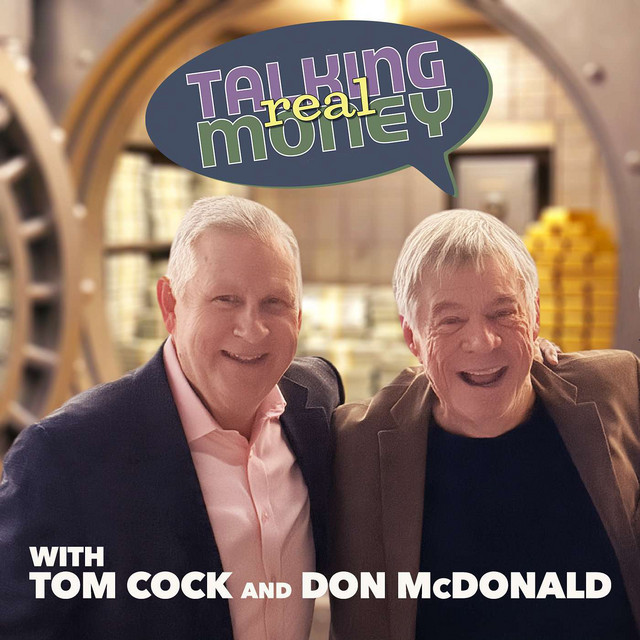
Pod Insights Talking Real Money - Investing Talk Q&A and Book Day About this episode Don opens the show with a deeply personal announcement: the release of his first novel, The Line Uncrossed, inspired by the life of his great-great-grandfather, a teenage Union soldier captured at Chickamauga and imprisoned at Andersonville. After sharing the journey behind the book, the episode shifts into listener Q&A covering the limited diversification benefits of international bond funds, skepticism toward direct indexing for retirees with taxable accounts, concerns about high-yield student loan investment schemes like Yrefy, ethical and practical issues surrounding Medicaid asset-protection trusts, and the surprising usefulness of adult-funded 529 plans as a backup Roth-style savings vehicle.0:05 Don announces the release of The Line Uncrossed and shares the personal Civil War inspiration behind the novel2:50 Q&A begins with a question about international bond funds like Vanguard Total International Bond ETF versus domestic-only bonds6:11 Direct indexing in a taxable account: why the tax benefits may be overstated for retirees slowly averaging in8:13 Skepticism about Yrefy and high-yield private student loan investing10:52 Medicaid asset-protection trusts, ethical concerns, and simplifying investments for heirs16:28 Using adult-funded 529 plans as a long-term tax-advantaged savings strategy with Roth rollover potentialQuestions? Comments? Click!
Transcript 0:05 Speaker 00 Your guides to a really great financial future. Tom and Don are talking real money.
0:11 Speaker 01 I know we're supposed to be talking about money on Talking Real Money, but you know, some of us, we've been hanging out together for a very long time. Some of us going back like, oh, I don't know, 38 years. So we're like family. And today, I just, I'm excited. I don't know if I have reason to be excited yet, we'll see. But this is a big day for me because I've wanted my entire life, really, my entire adult life since high school. When I was the editor of the Creative Writing Journal at our, or Creative Writing Magazine at our high school, I've always wanted to write a book.
0:54 Speaker 01 Now, I've written some short stories that I do on my podcast, Lit Reading, but I've always wanted to write a novel. I wrote a book. I wrote Financial Physics, but that was a little financial book. So this idea had been running around in my head for a long time about a fictional telling of the life of my great-great-grandfather, John Anderson, who was, who fought the Civil War as a teenager, enlisted at 14, and was captured at Chickamauga, and was imprisoned at multiple prisons, including Andersonville, which was the most horrible. And so I have spent the past, close to a year, working on this book to the, I mean, I haven't
1:39 Speaker 01 done any voice, I've done any voice work to speak of that whole time. I put all my efforts in this. And today, the 22nd of May, when this episode airs, is the day it goes public, the day before Memorial Day weekend, which is coming up, or Decoration Day, as it was known just after the Civil War. So my new book is out. It can be purchased. It's available at Amazon and at Barnes & Noble as an ebook, as a paperback book, and as two different kinds of hardcover. So you've got a choice, lots of choices. And I...
2:16 Speaker 01 I think it's good. Tom thinks it's good. My wife thinks it's good, but she's biased. Tom's biased too, but they both thought it was good. It's a story of a young man, a teenager, who enlists in the Union Army from Indiana and goes on to fight at Shiloh, Stones Mountain, Chickamauga, and is captured. And it's one of those bittersweet, you know, anyway. I hope you'll take a look at least, and maybe consider getting a copy.
2:50 Speaker 01 It's available today. This is the Q and A episode now. From here on, it's all Qs and my As. Your Qs, my As, you sent them in at TalkingRealMoney.com. You did it on the contact form. You spoke that question in, you recorded it, and then I made it sound even better. And then I put it in the show and I answer it, or at least try to answer it. So let's get to that part of the program now, shall we?
3:18 Speaker 02 Hi, Don. Thank you for taking my call. I appreciate what you and Tom do.
3:27 Speaker 02 I had a question about bond funds and particularly regarding BNDX, which is the Vanguard International Bond Fund.
3:42 Speaker 02 Not sure what your thoughts are on it, and if you find it to be necessary versus just having the domestic total bond fund, BND. Let me know your thoughts. My personal opinion is it may be.
4:06 Speaker 02 Just auxiliary and not necessary, but I'd like to hear what you what you think. Thank you.
4:14 Speaker 01 There may be a modicum, just the tiniest little bit of diversification improvement in terms of portfolio stability by having both an international and a US bond fund. It just gives you a little bit of a hedge against currencies, although BNDX and many other international bond funds currency hedge anyway. So the the benefit is small. We use them at Appella in our clients' portfolios. We use some international bonds for added diversification. That's really the only reason. It's just for that tiny bit of added diversification. But if you're just trying to do a simple portfolio of stocks and bonds and you're doing
4:58 Speaker 01 a well diversified equity fund and you just want bonds for their reasonable stability, then just having BND is fine. When your portfolio gets bigger and more complex and you're managing lots of different things, or if you're using an advisor, then you might want to have some high quality bonds outside of the US. But it's not, generally speaking, it hasn't made a big difference. The the US bond market is gigantic, but the international bond market is about the same size, all of the other markets combined.
5:31 Speaker 01 The benefit, because international bonds, if they're currency hedged, correlate so well with US bonds, you're not going to see much in the way of added stability. You're just not likely to see it. So it's a little bit more complexity for little or no payoff for a smaller portfolio or somebody who's just getting started. It's not worthwhile. As your portfolio gets bigger and you want additional diversification and you start slicing it up into lots of different asset classes, there may be a little bit of a benefit, but it's not gigantic. Thanks so much for your question. Send yours in at TalkingRealMoney.com using the contact form or the Ask a Question button like this person did.
6:12 Speaker 03 Looking to get some info on doing a direct indexing for a taxable brokerage account that has roughly $2 million in it. We also have about $3 million split between traditional IRA and Roth IRA, majority of it being in traditional IRA, 70 years old, retired. Looking to do about $2,000 a month into a direct indexing fund or account on public.com, S and P 500. Again, just seeing if you think this is worth it, or if we should go another avenue. Just been hearing a lot about tax incentive or tax advantage to doing this with this much money in a taxable brokerage. Thank you for your time.
6:52 Speaker 01 At this point, why bother? Yeah, direct indexing might make sense for people with bigger portfolios, with complex taxes, who want some slight little tax benefits, but the bulk of the tax benefits come from tax loss harvesting. And that's not an all the time thing. As a matter of fact, tax loss harvesting, we hope is something you don't have to deal with very often. And you're doing it on a small basis. It's not going to give you any benefit. Plus, you're locking yourself into the S and P 500. And I hope you have a much more diversified portfolio than that at lower costs than what public charges, which I think is 40 basis points.
7:30 Speaker 01 And you're limited to the S and P 500. Just, I really, when you're just averaging into it slowly, there's no benefit. I don't think there's going to be any benefit to you. So small is to be hardly noticeable. No, I would not even bother. Make sure your portfolio is properly structured as it is. If you're using ETFs, you already have some tax benefits there. And, you know, we can't get rid of taxes. We keep trying, but we can't, and we think too much about them. So I vote no. Thanks for your question, though. And send yours in at TalkingRealMoney.com. Speak it on the contact form and it becomes part of the Friday podcast.
8:13 Speaker 04 Hey, Don, this is Phil in Virginia. I was wondering if you had any insight on this Y refi? From what I understand, it's a privately held company that invests other people's money into defaulted private student loans. With the frequency of the ads on television, that would be my first red flag. They run about at least eight or 10 every hour.
8:48 Speaker 04 Secondly, I just can't find any information on this. They don't have financial statements. I don't really know how this quote, "investment" works, but I just smell a rat and I was wondering if you had any insight. So, thank you very much. I really appreciate it.
9:10 Speaker 01 Well, as the eternal skeptic, I wouldn't touch one of these with a 100-foot pole that had to be made out of a really strong material, otherwise it would bend. I just wouldn't. They may be totally legit, this Y refi. They're buying private loans and they're trying to buy them at really, really dramatic discounts to what is owed. And then they hope that they'll collect more than they paid for the notes so that they can make a bunch of money themselves and then pay their investors ridiculous returns. And the fact of the matter is, they're quoting some ridiculous returns. And when you get quoted ridiculous returns, you know, 8 to 10 to 12%, you're looking at a high-risk endeavor. Even if it's legit,
9:54 Speaker 01 it's super, super high-risk. And there's no, you have no security, no safety, none whatsoever. This is a flyer. Would you take it? And then, you know, when they're advertising it on TV, then I become even more concerned because if it's a really good deal, you don't need to advertise the heck out of it. So, I think your instincts are good. This is one best avoided. And there'll probably be a lot of copycats if this works for them. And then, some of these copycats will end up just flat-out failing at this, like we saw back in the old days. Remember the old viatical agreements where they'd buy life
10:38 Speaker 01 insurance and they were going to pay these big returns? Well, what's happened to all of those? Oh, yeah, all the late-night commercials went away. I'd skip it. Thanks for the question. Send yours in. TalkingRealMoney.com is the place. Here's our next one.
10:52 Speaker 04 Hey, Don. This is Vic. I'm in Lacey, Washington, and calling about, we had three members in our media family that... Have exhausted most of their investments because of major serious illness ALS in two cases and one Alzheimer's. So we're very cognizant. My wife and I, I'm 79, she's 78. We have a total portfolio of 1.2 million, of which about 500,000 is in Roth.
11:29 Speaker 04 We are working through to set up, or at least transfer out the Roth, which is about 500,000, into a medical asset protection called MAP. That if we start that now, Medicaid, then in five years, we, as you know, there's a look back. So we have five years to sit on that. But we then give up ownership and the Roth benefit and it then becomes in the trust, be controlled by my son, who is the trustee. I just want to make sure in his case that he is not going to be burdened with having
12:13 Speaker 04 to make financial decisions. So my question, the fact that that money is going to be used for our own health and if it's not needed, then basically would go to the heirs, our three children, is that I want to make it so easy that he doesn't have to even worry about it. So it, just wanted your opinions about whether just to use a target date fund and we're all in Vanguard, maybe a 2035, or just a good, honest blended bond, stock fund in Vanguard
12:54 Speaker 04 that we could still make six to eight percent, but it's just there, it's accruing and it wouldn't be used until needed if we needed serious health protection money down the road. So just would prefer your opinion about that, about not having to get a separate financial planner involved and just, my son could just let the money slide through the target date fund. So that's it. And. Appreciate any of your advice on that. Thank you.
13:27 Speaker 01 Oh, where to start? Okay, the investments, yeah, if you want to keep it simple. Have a target date product in there, but I hope, I'm sure you've considered this carefully. You can barely take any money out of this to live on if you, you know, don't end up in a nursing home. I, I hope you weren't counting on this money to live on because basically all you can take is dividends or income from bonds. Can't touch the principal, can't touch the principal.
13:58 Speaker 01 Otherwise Medicaid's going to count it. Um, and then there's the,
14:05 Speaker 01 there's the whole,
14:09 Speaker 01 I don't know, the ethical issue that has always bothered me and I've been talking about these for nearly 40 years on one of my various shows.
14:19 Speaker 01 You're sheltering assets to make
14:24 Speaker 01 taxpayers take care of you.
14:27 Speaker 01 Why? So you can give assets to your kids. That really bothers me.
14:35 Speaker 01 And you're not using them for yourself. My plan is to spend down my assets if I'm in long-term care and if they go away and they're all gone.
14:47 Speaker 01 Then I or my wife or both of us qualify for the last resort, which is supposed to be Medicare. Medicare is not supposed to be a financial planning tool. It's supposed to be a tool of last resort. So that's why I'm, they're legal, but boy, you gotta, they've, they've got to be written by a very good, usually very expensive attorney to make sure everything is done right. And then the, the trustee has to manage them right. The distributions right, and it becomes his responsibility to manage those distributions right. Or you're gonna have to pay back a bunch of money. I, oh, boy, I, these, these don't come up a lot anymore.
15:32 Speaker 01 But I have.
15:36 Speaker 01 Issues with them, but yeah, in terms of investing it, you're right where maybe an advisor would help and an advisor might be able to help your son manage the trust itself too, given their expertise. So that might alone make it worthwhile, but target date fund, sure. You're not going to get much money out of this. You guys are not going to be able to collect any money to speak of, to live on, if you're healthy. It doesn't feel comfortable to me. It strikes me as just a way to pass through assets to kids who probably don't need them as much as you might need them. And then the rest of us
16:17 Speaker 01 have to pick up the tab. Just makes me uncomfortable. Thanks for the question. Now we go to our last one for the day that came in through TalkingRealMoney.com, of course, and was spoken. You'll know that right away when you hear it.
16:31 Speaker 05 Hi, Don. I have another question about 529s. I was listening to Clark Howard the other day and someone called in and said that they were an adult who wanted to start a 529 so that they could save for graduate school. And I started thinking that maybe that might be an interesting concept because I have 529s for my grandchildren at the Utah 529 program where they have very good options for investments. And if in a given
17:08 Speaker 05 year I was unable to contribute to a Roth, my Roth IRA, because either too much income for that year, or because of not having earned income, for instance, either of those reasons, could I not just put it into a 529 and as long as I kept it there for 15 years and did not exceed the $35,000 limit, I would have a account that was growing?
17:46 Speaker 05 Tax-free, like a Roth. It would, you know, it would be a tax-advantaged account. What do you think about that? And thanks for your advice. Appreciate it.
17:58 Speaker 01 Adult, self-funded 529s are actually not a terrible idea, particularly if you plan for any kind of education. It can be not just graduate school. It can be a trade school, a flight school, continuing education classes, whatever. And then, of course, you've got the $35,000 rollover into a Roth after 15 years. And yeah, you're right. You're going to get tax-free money as long as you don't exceed that $35,000 in the account. Now, bear in mind, you can only put it into a Roth at the allowed amount for the year
18:42 Speaker 01 in which you can, for each year, you can contribute. So you've got to be careful that the money does not exceed $35,000 in the account at any point, because if it does, and you've used up all your $35,000 IRA rollover and you don't use it for education, that extra money is going to be taxed, and there'll be a 10% penalty because it wasn't used for education. That's really the only downside. Otherwise, it sounds like a pretty good strategy. Don't put too much in, and be sure and wait the 15 years. And even if it exceeds it somewhat, it's still kind of like fountain money. So yeah, why not? Do it. Have fun.
19:27 Speaker 01 Knock yourself out. And if you have questions, go to TalkingRealMoney.com, then click on the little contact form there and send us a question. You can type your questions in, or you can speak them in. There's a place to speak them in right there on the form. And then, the spoken ones come to me. I answer them on Fridays. Thanks for all the calls. Go check out my new book. It's called The Line Uncrossed. It's available at Amazon, BarnesandNoble.com, and other places, too. So, check it out. I hope you like it. I really do. Thanks for listening. Please tell a friend or two.
20:06 Speaker 01 And if you want some help and you need more of it with an advisor, just go to talkingrealmoney.com and click on the button that says meet an advisor and we'll set you up to meet an advisor. Thanks for listening. I'm Don McDonald, talking real money.
20:23 Speaker 06 The opinions and views expressed in this podcast were current on the date recorded. Opinions, estimates, forecasts, and statements of financial market trends that are based on current market conditions constitute our judgment and are subject to change without notice, including any forward-looking estimates or statements which are based on certain expectations and assumptions. Although information and opinions given have been obtained from or based on sources believed to be reliable, no warranty or representation is made as to their correctness, completeness, or accuracy. Information presented on the podcast is not personalized investment advice from Appella Wealth. The views and strategies described may not be suitable for everyone. This podcast does not identify all the risks, direct or indirect, or other considerations which might be material to you when entering any financial transaction. Past performance does not guarantee future results and profitable results cannot be guaranteed. We hope you realize that the information provided on Talking Real Money
21:05 Speaker 06 is for informational, educational, and hopefully enjoyable purposes only. The podcast is not trying to get you to buy or sell any financial products or securities. Instead, the program is provided as a public service by Appella Wealth, a fee-only registered investment advisor. Please see Appella Wealth ADV Part 2A on our website for information regarding Appella's fees and services. Appella Capital LLC, DBA Appella Wealth, is an investment advisory firm registered with the Securities and Exchange Commission. The firm only transacts business in the states where it is properly registered or excluded or exempt from registration requirements. Registration with the SEC or any state securities authority does not imply a certain level of skill or training. Appella does not provide tax or legal advice, and nothing either stated or implied here should be inferred as providing such advice. Thanks for listening, and please visit TalkingRealMoney.com for more information and important disclosure related to performance
21:50 Speaker 06 of any specific index or fund quoted in this podcast. And the lawyers get richer.
Previous Indexes Gone Wild Next Infinite Bubbles? Page updated November 14, 2026 · transcript and summary are machine-generated