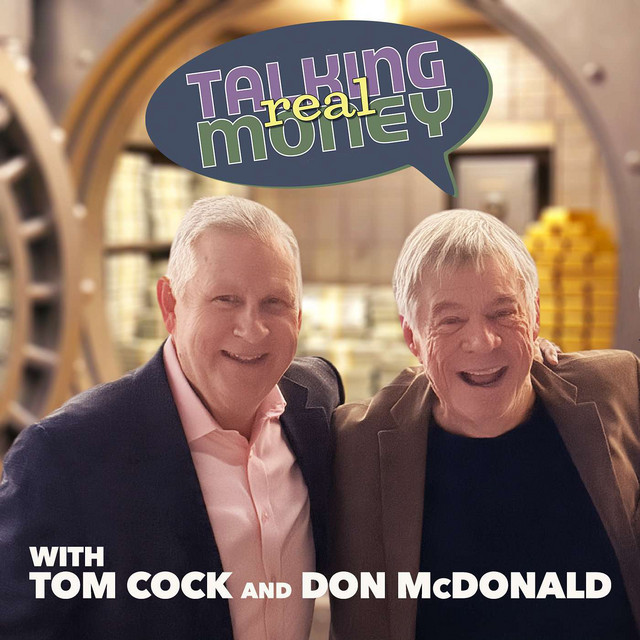
Pod Insights Talking Real Money - Investing Talk Money Talkin' Bros About this episode On this rare guest episode: 2:18 Getting to Know Joe Saul-Sehy 8:21 Transitioning to Teaching and Broadcasting 12:30 Exploring Stacking Benjamins Topics 18:50 Understanding Speculation vs. Investment 23:57 Upcoming Talk at RetireMeet Learn more about your ad choices. Visit megaphone.fm/adchoices
Transcript 0:04 Speaker 00 Reality radio for a really great future. We're talking real money.
0:11 Speaker 01 Welcome to a very special edition of the Talking Real Money Podcast. And by special, we don't mean that there's anything big going on. It just means special. You know, a euphemism for all kinds of things because our guest today is someone who's very special in the podcasting arena. We'll tell you who he is in a minute, but first I want to introduce your co-host, another special person in his own right. And I didn't say short bus special, even though I thought it. Mr. Thomas C. Cock, ladies and gentlemen, give him a big hand.
0:44 Speaker 02 You know, I gotta say, I got a slight protest because our guest today tried to take my place on this podcast. So there's gonna be some pretty sharp questions for him.
0:53 Speaker 01 Oh, really?
0:53 Speaker 02 You remember that? I was at it for like 10 minutes.
0:56 Speaker 01 Oh, that's right.
0:56 Speaker 02 And the next thing I know.
0:58 Speaker 01 Tom snuck away and Joe Saul Sehy snuck in to replace him.
1:03 Speaker 02 I've not forgotten that, so.
1:04 Speaker 01 And he's back for another audition.
1:07 Speaker 03 I need to defend my honor here because I did nothing of the sort. I was invited by the apparently backstabbing Don McDonald.
1:15 Speaker 01 Oh, throw me under the short bus. Oh, I don't like these guys anymore, Mom. Hey, everybody. Welcome to Talking Real Money, the podcast where today we're going to talk money with a guy who talks money like we do on a podcast that of course does better than ours in the rankings.
1:34 Speaker 02 Well, they were the best financial podcast of 2023, something like that, right? Was some.
1:39 Speaker 01 Stacking Benjamins was.
1:41 Speaker 02 Yeah, number one. Yeah. So this is, this is a big deal for us.
1:46 Speaker 01 He's, he's getting a little, he's glowing.
1:49 Speaker 02 He is actually getting redder by the moment. So.
1:52 Speaker 03 I feel like I owe the people at Bankrate and Kiplinger $10 because I have no idea where that came from. So thank you to Bankrate and Kiplinger.
2:00 Speaker 01 You do actually have a great podcast. We love occasionally participating.
2:04 Speaker 03 We have so much fun having you guys on the show. It's super fun.
2:08 Speaker 01 We love hanging out in the basement. The cookies to die for. Anyway, welcome to Talking Real Money, special edition, Don McDonald, Tom Cock, and Joe Saul Sehy from Stacking Benjamins. And the theme of today's show, I thought, since he's going to be joining us at retire meet, we've had him on the show many times, and we talk about money stuff, but. We don't know Joe. So this is getting to know Joe.
2:35 Speaker 02 I'm glad you spelled that out. You never told me. So this is good.
2:38 Speaker 01 I want to learn a little bit more about what makes Joe Saul Sehy, the host of Stacking Benjamins, tick and do the things that he does. Now I do know, for example, that you were once a, okay, a financial advisor. I hate that term with the white hot.
2:56 Speaker 02 Practitioner.
2:57 Speaker 01 Yeah. Correct?
2:58 Speaker 03 I was for 16 years. I, and this is interesting because when I started in 1993, of course, it was, it was all sales, right? I mean, it was, there was no such thing really as a, there were a few fee only planners, but not many. It was mostly join a big organization, learn how to sell. And then over time during the course of my career, it went toward fee only, which I really enjoyed. The, the more we got away from product and the more we got toward process during those 16 years, the, the happier I was. And the firm that I was with, Ameriprise, was the big firm with the most CFPs at that firm.
3:39 Speaker 03 More CFPs percentage wise than any other big firm there. And truly the people I learned from in my area in Detroit were all about process, which I very much enjoyed.
3:51 Speaker 01 Now Ameriprise though, that was once part of American Express, right?
3:55 Speaker 03 It was. Yeah. When I started, it was IDS Financial Services.
3:59 Speaker 01 Which was multi-level, multi-level financial planning at the time, wasn't it?
4:04 Speaker 03 I, no, no, no, no. That was Primerica.
4:07 Speaker 02 Yeah. He never got the soap. So he just stuck with the planning.
4:11 Speaker 01 I thought IDS was for some reason.
4:12 Speaker 03 No, not at all.
4:13 Speaker 01 Investors diversified services or something.
4:16 Speaker 03 Based in Minneapolis.
4:17 Speaker 01 Based in Minneapolis.
4:19 Speaker 03 Yes. And then the firm was purchased by American Express and then later spun off as Ameriprise. Most of my career was American Express Financial Advisors.
4:26 Speaker 02 And you were a planner there then, or a representative or a financial advisor?
4:31 Speaker 03 I was. I was a planner there and I owned my own franchise, which was, which was really the heart of how I'm doing, why I'm doing what I do now. Because the real heart of my story, I mean, we could talk about being a financial planner. The real heart of my story was I was 39 years old and we had this guy who was a couple of years younger than me, but was still quite a mentor named Chris. His name's Chris Klinky. And Chris put a note in all of our mailboxes at our office. And Chris was giving us a two week notice letter, which at the type of, you know, the type of firm that that was at the time, it was, that was not a two week notice place.
5:13 Speaker 03 You would leave at midnight with the client files, show up someplace else. And then, you know, like if people have seen the old show Jerry Maguire, you know, you're calling everybody at 4am.
5:22 Speaker 02 By the way, that still happens in the business, whether you might know that or not. It's these things still go on. So we've
5:27 Speaker 03 I totally believe it.
5:28 Speaker 02 Yeah. Oh, yeah.
5:30 Speaker 03 So that was a shock just to come into the office and Chris has this two weeks notice letter. And what it said really not only resonated with me, but resonated with a lot of my friends too. And to see all the things that we've done because of this one letter, because of Chris's leadership. Chris wrote us this note saying, you know what? I really like financial planning, but I don't love it. I think it's about 85%. And unless Shirley MacLaine is right, reincarnation is a thing. I've only got one life to live. And if I've got one life, why would I do something that's only 85 or 90%? Not only am I not going to do it, I would encourage you not to do something. Go out and find the thing. He said, so I am leaving because I did a nice job of saving.
6:13 Speaker 03 I have a good emergency fund that will buy me some time to go find out what the thing is. Because I work here so many hours a week, I don't know what the thing is. And now I'm 39, my business is just getting into, you know, really starting to roll. And I'm entering those peak earning years as a financial planner. But I also looked at it and I go, you know what? I don't think I love it either. I really like it, but I don't love it. I love being the Channel 7 Money Man in Detroit. I love the radio show we did. I love the PR stuff, but I truly didn't love the, uh, the ulcer I was giving myself by really worrying about individual clients' money. I did not like that at all. And I would go through all the, I went through all the pain of, you know, uh, 2000 to 2002.
6:57 Speaker 03 And then, uh, you know, uh, 2007, 2008 was roughly when this happened. Was it the same time? Like the pit in my stomach is these people lost goals, even though we did everything right. Really bothered the hell out of me. So. I saw this and Chris at the bottom said, I think I have other mountains to climb. And so I'm going to go climb those mountains. What's funny is I thought he was being metaphorical. It turned out that Chris went and climbed Everest twice. He's climbed most of the high peaks around the world. He now runs an adventure travel company in Boulder, Colorado.
7:29 Speaker 01 I was gonna say, where's the money in that?
7:31 Speaker 02 Yeah, I think I saw him on the Sound of Music as well, so.
7:34 Speaker 03 The Hills are Alive with Chris Klinky.
7:36 Speaker 02 That's an awesome story. So you decided then to become the broadcaster writer that you are today in many ways. I mean, you're providing education rather than providing the hands-on.
7:46 Speaker 03 It's actually, Tom, a little bit longer story than that, like it is for everybody, you know?
7:50 Speaker 02 This is a pretty short podcast though, so I gotta be honest with you. I don't know.
7:54 Speaker 01 How long does stacking Benjamins run? I think we're shorter.
7:57 Speaker 03 Well, this is a, this is just a good lesson because the lesson here is go through the door. Right? So the door for me was I gotta exit this thing. We're all afraid to exit the thing because I have this meal ticket in front of me, which is being a financial planner. It's a good, it's a great job. You know, in a lot of ways, it's, it's, it's bringing home the bacon. I'm feeding my family, but we're all afraid to go through the door. And the door I decided to go through was I sold my business. That gave me a big runway as well. I went back to school to become a middle school teacher and a track coach, which is where my wife and I met as track, middle school track coaches. Because I truly love doing that. And what happened was I found out that I really didn't want to be a teacher.
8:37 Speaker 03 I want to teach people about money. And through a series of door openings, because I went through that first door, you know, it's when you go through the door that the next door opens. None of these doors would have opened had I not done that.
8:49 Speaker 02 That's a cool story. By the way, who was chasing who on the track? I gotta know. I mean, that's.
8:54 Speaker 01 That is so curious because I have been, I, I, I keep, my kids keep saying, you need to write your memoir. And I, the title of my memoir, my working title is Through Open Doors.
9:06 Speaker 01 Because doors do open in life and we generally don't recognize them or we're afraid to look in there because we don't know what it holds. And it could be something horrible, but it could be something incredibly awesome.
9:23 Speaker 02 All right, but let's find out how he got from track coach to where he is today. A host of one of the most popular financial podcasts available. So what happened in that transition?
9:34 Speaker 03 I, so I go to school, I go into a post bachelor's teaching program at what is now a Texas A&M Texarkana branch. And I learned from very, very good people and I loved my teachers when I was clients. And I know that you guys have a ton of fans that are teachers. God bless you teachers, but what I learned was I would be fighting administration all the time to teach the stuff that I really wanted to teach. In fact, a lot of my clients that were teachers, they said, you'd be a really good teacher, but I don't think you're going to like it. In fact, this one awesome teacher, I had to audit some classes during my education. And this one, her name's Ryan Murray, and she was so amazing. She was such a great teacher, but she said, Joe, I have to make sure the kids know that
10:17 Speaker 03 the emperor, or the kids don't know that the emperor has no clothes. And that I have no power at all to do anything. And if I send anybody to the office, nothing good's going to happen when that kid goes to the office. None of the stuff I need to have happen is going to happen. It's going to end up horrible. And so I learned I didn't want to be a teacher. And at the same time, by the way, I'm in shorts and a t-shirt. I'm at home and my kids are getting home from school. They were freshmen in high school at the time and we were in a new community. So it was a really nice place to be. But I was also kind of bored during my off time. And because I'd done so much PR work, I had four, friends of mine who were either doing their TV stuff going, Joe, can you write my TV script? Or people going, Joe, can you write my client newsletter? Can you write my?
11:00 Speaker 03 So I start charging these friends of mine just to make a few bucks on the side. And then I do the math, guys, and I find out not only am I having more fun and I really like financial commentary, but I'm also making more than a first year teacher is. And I'm like, do I want to go through all this?
11:15 Speaker 01 Which is hard to do.
11:15 Speaker 03 Well, which is so sad, right?
11:17 Speaker 01 I know, doesn't it suck?
11:18 Speaker 02 Yeah, horrible.
11:19 Speaker 03 God bless our teacher friends. I mean, they're just amazing people, but I'm having...
11:24 Speaker 01 And then they get screwed on their 403B plan.
11:26 Speaker 03 Yeah, oh yeah, the annuity thing. Oh Lord. Yeah, so I got to teach the way that I wanted. And so I set up a, I started writing for other people. Then I set up a blog and then me and my friend, OG, 14 years ago, decided, you know what? Let's start this podcast thing. And now I ended up on the Talking Real Money show, which was my whole goal in the first place.
11:48 Speaker 01 No.
11:48 Speaker 02 Okay, so life is over.
11:49 Speaker 03 That was it. I'm here to announce my retirement because, I mean, what's better?
11:54 Speaker 01 Are you allowed to stay home with your spouse? We're not.
11:58 Speaker 03 What's, what's, what's funny is?
12:01 Speaker 01 We can't retire. We're not allowed to.
12:03 Speaker 02 Outcasts.
12:05 Speaker 03 Sadly, mom's basement is, is, is in my, I don't want to pull back the curtain too much, but mom's basement is in my house. So.
12:12 Speaker 02 What?
12:13 Speaker 03 Yeah.
12:13 Speaker 01 Well, then mom must live upstairs.
12:15 Speaker 03 I know. Cheryl has to come home to, to me every day. I feel bad for her.
12:21 Speaker 02 All right. Well, let's, okay. So, but there may be still a few, hard to believe, few people listening to Talking Real Money now that are unfamiliar with stacking Benjamin. So, give us a little color. For example, I saw you just did a show on increasing your income, which is something Don's very interested in, of course. So, but tell us, tell us about some of the topics you cover, how it all works.
12:41 Speaker 03 Well, the basic.
12:42 Speaker 01 My attention is wrapped.
12:44 Speaker 03 The basic framework of the show, guys, is I believe that we learn better when we don't think we're learning at all. Right? If, if we think we're just having fun and we are.
12:54 Speaker 01 That's our, that's our goal is to not teach you a darn thing. Don't learn anything.
12:58 Speaker 03 Well, I think that's why we get along so well is because if I'm enjoying it and I'm having a good time. So I'm very interested in the entertainment factor. But I definitely want to teach people three, four, five things per episode. Our show generally is a variety show. But to your point, we did a couple of special episodes, Tom, back to kickoff 2025, with a gentleman named Alex Hormozi, who normally works with entrepreneurs. He doesn't talk to most of the people that are my audience and your audience, which are people that work for other people. But you know what? All these things entrepreneurs do that Hormozi's talking about apply to everybody. Like, design your own curriculum. Don't wait for your boss to do it. Why are we waiting for our boss to tell? What our priorities are every day, figure out what we're, what it takes to get ahead and do
13:43 Speaker 03 those things. Forget about mentorship because mentors, the good mentors especially, they are, A, their time is precious and B, 50 million people are asking them to be mentors. They may pick you, but don't assume that they will. Do things that bring stuff to the table to help those people. Look at the people around you and be helpful as much as possible. He joined a networking group and this was really cool. He had a, he had a company that helped people with sales. So he said, if I, if I was these people's advertising department that are in this group, what would I sell them? And he offered to do it for free for these people for a limited
14:26 Speaker 03 time. And they all got to see exactly how they worked. And guess what happened? All these people end up hiring them. They all hired him and he ended up with more work than he wanted to do. So he, in his second year in business, made over $25 million with his gym launch program. Today, he teaches people how to make a hundred million dollars. And it sounds like, it sounds like hyperbole and maybe it is, maybe we won't make a hundred million dollars, but certainly there are things we can do. And the best one, I think for me, that he talked about was, and I think we all violate this one, and we do it with our money too. Focus on one thing. Find that one thing. And what's the one thing I can do that gets rid of the five crappy things I'm doing now? If I can look at all these things-
15:07 Speaker 02 Get off this podcast?
15:09 Speaker 03 I'm just, no, it's putting that out. Sorry. This is the best thing. This is the one thing I want to do. Absolutely. But those five things you're doing, how do I find one trigger that gets rid of five? And that's where I think a lot of the key for a lot of us lies.
15:23 Speaker 02 I love the first one, but go ahead, Don.
15:25 Speaker 01 In one paragraph, could be a long paragraph.
15:30 Speaker 01 What is stacking Benjamins though about except it's about money, but what's it really about? What are you trying to teach? Because you have a lot of disparate guests, a lot of different topics. It's not just in what is it?
15:43 Speaker 03 Our mission statement, Don, is this. There was a report just over a year ago from a group called nonfiction research, which dove into the banking industry and dove into the secret financial lives of Americans. And so people anonymously took these surveys and it was, it was a wide swath of people. What the studies show is that about half of us say we've cried about our money, that we have at one time or another cried. And you would think, by the way, that these are people living paycheck to paycheck. And while it was somewhere around, and I forget the exact number, maybe 53 or 54% of people
16:24 Speaker 03 living paycheck to paycheck that were crying about their money, about 48% of people making over $250,000 a year or more were also crying about their money.
16:34 Speaker 01 And you guys know. I don't know how you knew that, but he was.
16:37 Speaker 02 No, outkidding aside, I think I did cry at the end of my marriage, but okay.
16:41 Speaker 01 No, no, no. But when you had the two houses.
16:43 Speaker 02 There were no tears, but there were a lot of tremors, put it that way. So I agree. Yeah, some. You had to listen to most of it. So.
16:51 Speaker 03 So you think it's, all of us think that it's, you know, just if I earn more money, my life gets better, which isn't true.
16:57 Speaker 02 No, that's true.
16:58 Speaker 03 It's our money's going one way, our values are going another way. So for us, if we can earn, if we can earn, spend and save with a plan that's around our values, that if we can teach people that, then less, fewer people will cry about, our goal is to have fewer people cry about their money, which is why we often try to make sure it's an introductory level podcast. We use as little jargon as possible. We also have a wider swath of guests. We have a guy talking about money in the Wild West, right? And in Deadwood, the fact that in the old days in Deadwood, the only people making money were the people mining the miners. The miners weren't making any money. It's the people mining the miners.
17:35 Speaker 02 That's always the case, selling the shovels.
17:36 Speaker 01 It was Al Swearengen.
17:38 Speaker 02 I'm rewatching the show right now, which is just, it's just forget how base and horrible anyways, but there are some lessons here.
17:44 Speaker 03 Look at all the people in the financial industry that are mining us.
17:48 Speaker 02 That's it.
17:48 Speaker 03 Right? So you also have to beware the people mining us. And so.
17:53 Speaker 01 Wait a minute, isn't that almost all of the industry that's mining us?
17:57 Speaker 03 Well, you know, everybody needs to make a living, right? And our goal, our goal is to align ourselves with those people that, that A, are going to act like our agent, B, that have our best interests at heart, and that we truly have a good interface with. I prefer myself to hire people that are going to argue with me. I want people that are going to really Gordon Ramsay.
18:20 Speaker 02 You're gonna love Don then. Yeah, that's perfect.
18:22 Speaker 03 That's right. Don and I get a, get around, get along already.
18:25 Speaker 01 But to that point though, Joe, I mean, for example, we have, we're very out there about what we love and what we hate. And I know you have a lot of different guests. What do you personally think about things like crypto?
18:43 Speaker 03 I, I think A, it is, it can't be investing. It's only speculation. And the reason it's only speculation is because when I invest, I need data. I need backtested data. There is none. And also, I need to know what levers might have a chance of moving it in the future. Does anybody know? I have no idea. So in terms of speculation, okay, I, I get it. Is a spec, as an investment, is it investment? Is it a currency?
19:13 Speaker 01 Is it a currency? Is it even a currency?
19:16 Speaker 02 It may be soon. Who knows, right?
19:20 Speaker 02 And which brings me to, I mean, there's another one that we've come up a lot for us in the last month and a half. As you know, we have a new administration. Are people asking you like?
19:29 Speaker 01 There was an election?
19:30 Speaker 02 Yeah, apparently. So people are asking you probably like they're asking us, so what do I do? I mean, what's your response to like the, the, the topic du jour? I mean, what are you, what are you telling people about that?
19:42 Speaker 03 You know, we look back in time and saw this research that showed that if you invested only when Republicans were president.
19:53 Speaker 03 You did pretty damn good. If I had known this would have been a question, Tom, I would have told you exactly what the answer was.
19:58 Speaker 02 Nah, because we know the answer, by the way.
20:00 Speaker 03 But you did pretty damn good. If you invested only when Democrats were president, by the way, for all the people that think that the Republicans in charge is when you won, you actually did much better when Democrats were in charge, which I know shocks a lot of
20:12 Speaker 02 I know.
20:13 Speaker 03 our audiences. But you know when you did best? You did best by 10x if you just left the crap alone.
20:21 Speaker 02 Ah, there you go.
20:22 Speaker 03 Yes.
20:23 Speaker 02 We agree.
20:23 Speaker 03 By 10x.
20:24 Speaker 02 Yeah, crazy.
20:25 Speaker 03 Republicans, Democrats, come and go. You know what doesn't come and go? The economy and the fact that no matter what happens, there's smart people running these companies. You think when we have high inflation and the price of sugar goes up for Coca-Cola, that the heads of Coca-Cola just go, well, the price of sugar is up. There goes our profit margin. Now, you know what they do? They think of ways to raise the price. And so when the times of inflation happen, you want to own those things that go up with inflation. The people that have to, and by the way, as consumers, what do we do? We all take, we all go, well, it makes sense. Coca-Cola had to raise the price.
21:00 Speaker 02 Well, I think they also shrink how much they, but that's a whole other.
21:03 Speaker 01 Or they went to high fructose corn syrup.
21:06 Speaker 02 Yeah, something else. Yeah.
21:07 Speaker 01 So totally agree. Anyway, no, but, but to that point, we both have reasonably large audiences and they follow us pretty religiously, I think in both cases. And a lot of our audience, and I'm sure you found this on your show, they listen to us, but they don't take it to heart. They still continue to believe that they can count the cars in the Walmart parking lot, or that they know, because everybody else knows that tariffs are going to cause the economy to collapse, or whatever it is that they think they know. How do you, on Stacking Benjamins, try to convince people that they are just wrong?
21:51 Speaker 03 Well, A, I don't. Number one. But number two.
21:58 Speaker 03 What I try to convince you of is probability and risk management. And the problem that you guys know that you talk to your audience about, and we like to talk to ours about, is the fact that if you remove your money from the market because of gloom and doom coming up during any situation, if you think this next administration's doom and gloom, you think the last one's doom and gloom, you move your money out. You don't just have to be right then, you have to be right twice. And statistically, over long periods of time, and I'll get back to that, but statistically, over long periods of time, the stock market goes up 70% of the time. And I'll tell you what happens when you play this game, because, oh, I, back in my early
22:39 Speaker 03 days as a financial planner, before I knew better, I let clients talk me into this, right?
22:44 Speaker 01 Stockbroker.
22:45 Speaker 03 Yes, I said, okay, we will go ahead and we will holistic financial planner now.
22:50 Speaker 01 Yeah, you were selling commission.
22:51 Speaker 02 Holistically selling this, yes.
22:53 Speaker 01 Before you went to the, I know, I was one, so come on, I know the truth, you were, you were, you were collecting commissions.
22:59 Speaker 03 I was collecting commissions, but we can talk about how we were doing that holistically at the same time, which, which we were, I was getting paid on certain stuff, but we're not as holistic as fee only. Yeah, that's a four hour thing, however.
23:15 Speaker 01 But it's such a fun conversation.
23:16 Speaker 02 Yeah, I can tell.
23:18 Speaker 03 The, the 70% of the time, the stock market goes up, and what happens is, the second I move my money out, you know what I have to do? I have to bet on the stock market going down. So I'm betting on something that only happens over long periods of time, only about 30% of the time. I'm betting, I'm like a salmon, having to swim upstream.
23:38 Speaker 02 I think there's a pro shares mutual fund for you, though, doesn't it? The short one, Don, that's net negative like.
23:44 Speaker 01 The short triple Q.
23:45 Speaker 02 Yeah, we looked that up once, it was down like 300% in the last 10 years or something.
23:49 Speaker 01 You would have lost all of your money in the first five years, and then it was this, you just lost money you didn't even own.
23:54 Speaker 03 Yeah, well, you lose your money every day, but you make it up on value. That's a good point.
23:58 Speaker 01 There you go.
23:59 Speaker 02 All right, before we, before we let you go, we want to, what are you going to be, you're coming to retire meet, we appreciate that, he's actually going to be there, which is pretty cool, in Bellevue on February 8th. Don's kind of promised, you're, you're still showing up, right?
24:11 Speaker 01 Me?
24:11 Speaker 02 No, Don, yeah.
24:12 Speaker 01 I have a ticket.
24:13 Speaker 02 Okay, good, so Don's coming, um, no, all kidding aside, Joe's going to be there, we love it, we're glad to have you there. What are you going to be talking about, though? I don't even think I know what your topic is.
24:22 Speaker 03 Oh, I'm so excited, it's my favorite topic, what the happiest retirees know. And there's, there are two different things going on. There is the math of retirement that a lot of our money geek friends practice and talk about and get in online forums and, and debate over. And then there's what the happiest people know, which often those two things don't meet. The math and what the happiest people know are two totally different things. And why would the happiest people, people that are, by the way, very smart and have successfully navigated retirement, done things that mathematically seem like the dumbest things ever. And there's a reason for that. And that's going to be the topic of my talk.
25:01 Speaker 01 Tom, that's interesting that he's doing this because this is the topic that we've, we've been doing retirement for 10 years. And this is the topic that we have said every year, we need someone to talk about how you live a happy.
25:15 Speaker 03 And we've never found the right person.
25:17 Speaker 01 Never found the right person. So no pressure, Joe.
25:19 Speaker 03 Well, you found the wrong one again, but I'm happy to do it.
25:22 Speaker 02 So we're looking forward to seeing you for that.
25:24 Speaker 01 Yeah, we really are. Now bear in mind, given the late date of this, if you're, if you're a Seattle area listener, we may be sold out.
25:33 Speaker 03 Likely we are.
25:34 Speaker 01 For live seats. However, we have a thousand seats for the online, live, online version of retire meat. And you can sign up for that at retire meat, M E E T, because they took away the M E A T for some reason.
25:50 Speaker 03 We had that one for a while.
25:51 Speaker 01 I know. I thought people could get confused.
25:53 Speaker 03 With every person. Yeah. But yeah, not anymore.
25:56 Speaker 01 But they took it away. You know, that's when you, when you work for a bigger company, they don't let you play around with words anymore. But go to retire meat.com and sign up. Anything else you have, Tom, for Mr. Salty?
26:07 Speaker 03 I think I'm, I'm, yes, but you know, do we have time for that? I mean, I'm, yeah.
26:12 Speaker 01 We're coming up on the 30 minute mark.
26:13 Speaker 03 Because I was going to ask him what other podcasts he likes, but.
26:16 Speaker 01 Oh, that's a good one. That's a good one. I bet, I bet, I bet, I'm going to, I'm going to guess.
26:20 Speaker 03 Cool.
26:21 Speaker 01 Professor G and afford anything.
26:25 Speaker 03 Doc G. Yeah.
26:27 Speaker 01 Doc G. Doc G.
26:28 Speaker 03 Yeah, Doc G.
26:29 Speaker 01 Who's like number four.
26:31 Speaker 02 It doesn't have to be financial, it could be anything, so.
26:33 Speaker 03 Well, earn and invest, earn and invest. Doc G collaborates with us. I'm part owner of that show. So the show's very well produced by me. So I think that's a brilliant show, earn and invest.
26:45 Speaker 01 One of the best.
26:46 Speaker 03 And of course, everybody asked me, besides you two, you know, I think people know me most if they don't know me from Stack Your Benjamins from my every other week appearances on Afford Anything. So every other week, Paula Pant and the Afford Anything Show are just absolutely brilliant as well. But you know what my personal favorite is? And I've talked about this a lot. I love your show. I love those two shows. I have always been a big fan of Jill on Money. I just think Jill Schlesinger is such a wonderful.
27:11 Speaker 02 She's good.
27:11 Speaker 03 Human being. She knows her stuff. I love Jill on Money.
27:16 Speaker 01 Yeah, she does a very different kind of show, too. It's just kind of helping a person.
27:21 Speaker 03 Very much. Very, very much.
27:22 Speaker 01 Kind of fun. It's different.
27:24 Speaker 03 And getting to know her like I've gotten to know you guys, she is just a wonderful human being. You would absolutely love her. Just charming person.
27:31 Speaker 01 And, and do you believe like I do that somewhere probably around 90% of the investing podcasts are just pure drivel?
27:38 Speaker 03 Yeah, 100%. Yes. I can't, I can't stomach.
27:42 Speaker 02 Well, they're selling something. They got a product.
27:45 Speaker 01 We're all selling something.
27:46 Speaker 02 But we are, we are.
27:47 Speaker 01 It's America. We sell things here in America.
27:50 Speaker 03 And more often than not, it's, it is life insurance policies. Like so, so many of them talk about, you know, this infinite banking stuff or velocity banking that as you guys know, it can work really well until it doesn't. And then it unravels your entire personal financial situation, like everything.
28:09 Speaker 02 As you know, we don't believe in quick fixes. We don't believe in fast buy. I mean, that's all stuff that comes up. And it comes up because we get the questions every week. We have to tell them, no.
28:19 Speaker 03 So just don't do it. Just don't do it.
28:21 Speaker 01 Indexed annuities. Stop it. Stop, stop all of them.
28:25 Speaker 02 We're excited to see you. We thank you.
28:27 Speaker 01 We really are. We're looking forward to seeing you.
28:29 Speaker 02 Yeah, in, in.
28:30 Speaker 01 We actually get to hang out with you in person. I mean, for heaven's sake, I thought you were going to be in Minnesota when I went up there, but no, no Joe Salsi, just me.
28:39 Speaker 03 But I did hook you up with some cool people.
28:41 Speaker 01 Oh, my gosh, what a great group.
28:42 Speaker 03 We have one, we have one meetup group in the country and it's in Minneapolis and those people are amazing.
28:48 Speaker 01 But they're, I gotta tell you, the upper midwesterners are a breed unlike any other. When I was doing the old Don McDonald's show years ago, for some strange reason, my most rabid audience was in Minneapolis.
29:02 Speaker 03 They're such nice people.
29:03 Speaker 01 They're such nice people.
29:05 Speaker 02 And we had such a great visit to Wisconsin this summer.
29:07 Speaker 01 Oh, and Tom loved Madison.
29:09 Speaker 02 I guess, yeah, really fun.
29:10 Speaker 03 I went to Madison on my book tour a couple of years ago, I'd never been there. What a beautiful place. And again, wonderful people.
29:16 Speaker 01 Sparkling, yeah. All right, Joe Saul-Sehy from the Stacking Benjamins podcast, far more popular than ours.
29:24 Speaker 03 And we're working on it, though. We got guys in our basement that are gonna do stuff, so be ready.
29:29 Speaker 01 We'll never catch up. Look at how old we are compared to him.
29:31 Speaker 03 That's a good point. Our runway, as he said, is short. I got it. It's coming to an end.
29:36 Speaker 01 Joe, we're looking forward to seeing you in Bellevue, Washington on the 8th of February. We're also looking forward to seeing all of you there or online. And please keep listening to this show, go listen to their show, listen to all the good shows and stop listening to the bad ones. I'm Don, that's Tom, along with Joe Saul-Sehy and all of us. We do, we hang out almost every day, talking real money.
30:02 Speaker 04 The opinions and views expressed on this podcast were current on the date recorded. Opinions, estimates, forecasts and statements of financial market trends that are based on current market conditions constitute our judgment and are subject to change without notice, including any forward-looking estimates or statements which are based on certain expectations and assumptions. Although information and opinions given have been obtained from or based on sources believed to be reliable, no warranty or representation is made as to their correctness, completeness or accuracy. Information presented on the podcast is not personalized investment advice from Appalo Wealth. The views and strategies described may not be suitable for everyone. This podcast does not identify all the risks, direct or indirect, or other considerations which might be material to you when entering any financial transaction. Past performance does not guarantee future results and profitable results cannot be guaranteed. We hope you realize that the information provided on Talking Real Money is for informational, educational and hopefully enjoyable purposes only.
30:48 Speaker 04 Podcast is not trying to get you to buy or sell any financial products or security. Instead, the program is provided as a public service by Appella Wealth, a fee-only registered investment advisor. Please see Appella Wealth's ADV Part 2A on our website for information regarding Appella's fees and services. Appella Capital LLC, DBA Appella Wealth, is an investment advisory firm registered with the Securities and Exchange Commission. The firm only transacts business in the states where it is properly registered, or excluded or exempt from registration requirements. Registration with the SEC or any state securities authority does not imply a certain level of skill or training. Appella does not provide tax or legal advice, and nothing either stated or implied here should be inferred as providing such advice. Thanks for listening, and please visit TalkingRealMoney.com for more information and important disclosure related to performance of any specific index or fund quoted in this podcast.
31:33 Speaker 04 And the lawyers get richer.
Previous Disagree with Dave Next Short Sweeps Page updated November 15, 2026 · transcript and summary are machine-generated