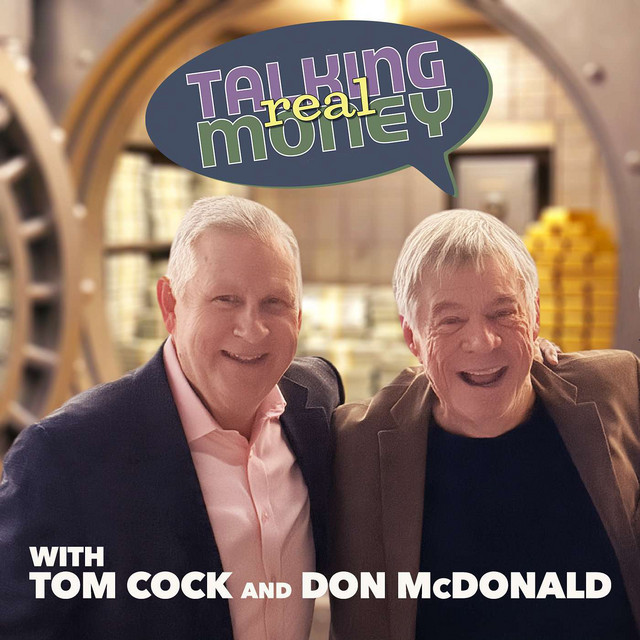
Pod Insights Talking Real Money - Investing Talk Extra Income? About this episode Don and Tom examine Kiplinger’s list of top retirement side gigs and separate practical ideas from pipe dreams, questioning whether executive coaching, IT consulting, online reselling, and landlord life truly offer “passive” or realistic income. They highlight more viable options like tutoring, handyman work, and tour guiding while emphasizing purpose over paycheck. Listener questions cover the risks of private credit and alternative investments, plus smart strategies for consolidating multiple 401(k) accounts without triggering unintended tax consequences.0:04 Old guys still podcasting intro1:38 Kiplinger’s retiree side-gig list3:26 Executive coaching reality check4:40 AI and tech consulting skepticism6:32 Consulting and client ego problems7:53 AI vs. content writers9:06 Bookkeeping for small businesses9:29 Online selling isn’t easy money11:19 Tutoring as a steady option12:17 Handyman work pays well13:44 Tour guide opportunities14:17 Landlord myth of “passive” income16:00 Where to find side gigs16:47 Bridge jobs for healthcare17:08 Purpose-driven retirement19:14 Private credit and alternative risks23:46 Consolidating multiple 401(k)sLearn more about your ad choices. Visit megaphone.fm/adchoicesQuestions? Comments? Click!
Transcript 0:04 Speaker 00 Reality radio for a really great future. We're talking real money.
0:10 Speaker 01 Those two old guys still doing that podcast thing? Yeah, I think so. Is that them? Oh, yeah, this is them. There he is. There's that Tom guy and that Don guy. Still talking real money. Hi, everybody. Welcome to Talking Real Money. I'm that Don guy. He's that Tom guy. We're so glad you're those guys and gals who listen to us on a almost daily basis. Thank you, thank you, thank you for continuing to actually listen. A lot of you do. We're still trying to figure out why, but thank you for doing it. Today, we are gathered here to discuss some of the bigger and smaller financial issues of the day and everything in between. We're also here to try to answer your questions.
0:51 Speaker 01 So, we do a little bit of everything when it comes to money, real money, fake money, any kind of money. You want to talk about it? We're going to listen. Just go to TalkingRealMoney.com, ask us questions. I'm Don McDonald, over there. Not really there, 3,000 miles away, but I see him magically somehow, is Thomas Charles Cock the second, the deuce. We're just going to call him the deuce from now on.
1:16 Speaker 02 Oh, God, no.
1:18 Speaker 01 Ladies and gentlemen, it's the deuce on the Talking Real Money Podcast.
1:22 Speaker 02 You could take that so many ways, too. No way. That's not happening. It's just not happening.
1:29 Speaker 01 I'm sorry. It's really early when we record this.
1:35 Speaker 01 I just, I'm, yeah.
1:38 Speaker 01 All right, today, retirement. Yes, we talk about retirement a lot, primarily because hopefully all of you, or most of you, are going to get there, or you're there already. And one of the things that we are concerned about when it comes to retirement is, what are we going to do with the rest of the time? I don't know too many people who truly just want to do nothing for 15 or 20 years. Just sit in a recliner and watch old streaming reruns on, on the television. I mean, how many of you want to do that? You want to do something. So what are you going to do with your life?
2:22 Speaker 01 Well, the folks at Kiplinger magazine threw together a list. In many ways, they threw it together. Cause I don't know that it's really well thought out, but we're going to talk about some of the things they put on their list of the top 10 side gigs for retirees. In 2026, aren't these like maybe the 2020?
2:45 Speaker 02 Yeah, I, I think you gotta go back maybe further. Some of these are, well, okay, let's just go through the list. You decide, you, the listener.
2:54 Speaker 01 Yeah, not me, the dog.
2:55 Speaker 02 Feasible these are. Yeah. Because their number one frankly, is a very limited number of people that can do this. And I used to work with a guy that, that did this for me for many years. In fact, he passed away last fall. Very sharp individual. He had been in a number of businesses, so he got business. He got me, I think. Uh, and what we're talking about.
3:17 Speaker 01 By the way, that was, that, this, that made him right there. That put him in very rare company. The fact that he actually got Tom.
3:26 Speaker 02 Yeah, exactly. Uh, business and professional coaching. And, and they say you can leverage decades of leadership experience and mentor or coach current C suite types and wannabes. And how to climb the corporate ladder like a master. This again, when I read this, there's not very many people that can do this well. It takes a very specific set of.
3:49 Speaker 01 I can think of, I can think of a couple. I can think of one that's coming up really soon. There's a guy who's about to retire, who would probably make a great mentor coach, but I don't think any of us could afford him. That would be like Bob Iger.
4:02 Speaker 02 Bob Iger would be terrific and maybe Bob takes one or two clients on it. I don't know. Maybe he does.
4:07 Speaker 01 When they say, when they say coaching C-suite people, it's like, I'm thinking you have to be a super C-suite for somebody to want to seek you out to coach them on being a lesser company C-suite person, don't you?
4:23 Speaker 02 Yeah, absolutely. And Bob, of course, has a modicum of experience. I couldn't believe how quickly they're pulling in. I mean, like next month, he's got gone, the end of March or something. I mean, he's still going to be the chair, but these, the day to day, it's over.
4:38 Speaker 01 Josh is, I think Josh was a good choice. He's, he's sort of an Orlando guy now because of the parts.
4:44 Speaker 02 There's very few people that can do that. Do I think it would be, you know, rewarding in some ways? Yeah. But in, in other ways, maybe frustrating. We could, I, I don't want to, I don't want to belabor it because that's, I think, pretty limited. Number two, perhaps more limited, data management and information technology consulting. Now, this is one where I can't get hired. I can be pretty sure of that.
5:05 Speaker 01 Yeah. And in people, there, there aren't a lot. There's a very, very, very small group of older Americans who are massively tech savvy, which is what you'd have to be to consult, to work in this area. Well, but the problem is, and they mention it in the article, but they sort of, you know, they, they, they mentioned that if you can coach on artificial intelligence, yeah, if you can coach on how to use it to make people more productive, yeah, but that's a very specialized area. And the other problem is, is when it
5:42 Speaker 01 comes to this kind of thing, AI actually teaches it really well. AI probably teaches it better than 99.99999% of humans. So eh.
5:58 Speaker 02 And who are your clients here? Is this small companies that you're trying to help that really don't have the resources to hire somebody in or want to do it more inexpensively?
6:07 Speaker 01 They're saying 85 to $150 an hour, but I'm pretty sure there are a lot of young people who are really savvy. In fact, I know one really well. We call her our daughter, uh, who can't seem to get a job doing exactly this.
6:22 Speaker 01 And she's probably forty years, thirty years younger, forty years younger than some of you retirees looking for this gig.
6:30 Speaker 02 And she's pretty well qualified and she's pretty up to date on recent things.
6:35 Speaker 01 So far, we're pretty depressing. These jobs aren't working. How about number three, professional consulting? Isn't that number one?
6:40 Speaker 02 Yeah. It kind of is number one, but the other thing about consulting, and you and I did a bit of this way back when, and we didn't love it because we told people, they hired us, they paid us, here's what you gotta do, and then they did some of it, and they didn't do the rest of it and things didn't work. We're like, well, because you gotta do one through 10. You don't get to just pick five, six, seven.
7:04 Speaker 01 And that has a lot to do with the egos of the people for whom you work. We know that from experience with our little consulting business, is that the egos are, it's like, I, okay, yeah, I hired you guys to tell me what to do, but I think my ideas are better than yours.
7:19 Speaker 02 Yep. I know better about all this. So again, that's a very limited area. Maybe you work in a specialized type of employment where you can take and plug that into something after. I just think it's very few people.
7:32 Speaker 01 I love number four, content publishing.
7:34 Speaker 02 You would be, this is you. This is Don McDonald's future, right? Writing, reading, recording. You're doing that already.
7:42 Speaker 01 But not since I've discovered, particularly for the kind of stuff they're talking about. They're talking about copywriting, you know, SEO-themed article writing. Again, I'm telling you, we don't realize how powerful AI is yet. I use AI all of the time. I am a regular artificial intelligence user, and I'm telling you, it's good at content. AI is really, really good at content. It is so good at content. I have done some tests and run some AI content and then my own personal content through AI content checkers.
8:23 Speaker 01 And sometimes AI looks more human than my writing, which scares me a little.
8:30 Speaker 02 That's kinda scary, no?
8:31 Speaker 01 Am I, am I real? You don't even know if I'm real right now. This could be just me with typing into AI.
8:40 Speaker 02 Let's not go there. What do you say? All right, number five, bookkeeping, financial back office service specialists.
8:48 Speaker 01 Not yet replaced with AI.
8:50 Speaker 02 Hiring somebody to balance the books and pay you the payroll and that stuff.
8:54 Speaker 01 I can see that for small business. This one I can see for small businesses because
8:58 Speaker 02 Absolutely.
8:59 Speaker 01 Entrepreneurs really hate the accounting side of the business.
9:06 Speaker 02 Yeah, they didn't, they did, that's not why they got in the business. They got in the business because they loved XYZ. The payroll and all the rest of the stuff is something you have to do, but who, who wants to get excited about doing that?
9:15 Speaker 01 You're, you're, you're, you're somebody who really likes the, uh, the, the accounting side of the business.
9:20 Speaker 02 And those people are out there.
9:22 Speaker 01 Pay much because again, you're dealing with small businesses. They're gonna be in the 20 to $40 an hour range. But if you look.
9:29 Speaker 02 But some of this, by the way, not about the money. It's about the engagement. So there could be that as well. All right, but here's one I know you're gonna love because this is huge, big, big, big money for you retirees out there. Online selling specialists. I'm kidding.
9:46 Speaker 01 Isn't that Amazon?
9:47 Speaker 02 Now, my wife does some of this stuff on, on, she's always saying, I'm gonna sell that. Cause I say, just throw it away. I'm, she does some of it. I'll give her credit. There's a few things here or there. It's, it's, it's not, it's not that much money frankly for the work.
10:01 Speaker 01 Analysis?
10:03 Speaker 02 No, because it would be shocking. So, but, um, and, but they're talking about, you know, Etsy, eBay, resellers, blah, blah, blah. And we've seen this stuff out there, but I don't put much faith in this as a business.
10:17 Speaker 01 Sounds a lot like, remember the podcasts years ago that were all the top 10 financial podcasts were about selling on eBay?
10:25 Speaker 02 How easy it is to make a huge living, yeah.
10:28 Speaker 01 Really hard.
10:29 Speaker 02 Yeah.
10:30 Speaker 01 I have run an online business where I sold a lot of, a lot of stuff online. Uh, and, uh, I mean, it died. It, in, in 2009, it died. Um, and I don't think I could make a go of it again. I think I would work a lot harder than I'm working now for a whole lot less money, but what do I know?
10:52 Speaker 02 Do you still have the maps?
10:54 Speaker 01 Oh God, yes. Anybody want to buy an antique map?
10:56 Speaker 02 So maybe we could roll the map.
10:57 Speaker 01 Let me know.
10:57 Speaker 02 Well, no, maybe we could roll the maps into the pizza thing.
10:59 Speaker 01 I don't know, but I have. I don't know, I probably have 4,000 19th century maps. If anybody wants to buy a bunch, I'll make you a great deal if you want to get into the antique map business.
11:13 Speaker 02 It's, and it's easy. It's easy to go online and make rich, rich, rich, big, big, big money. Uh, number seven. Actually, I kind of like this one, uh, because I've seen it done and, and I know people have done it and they've done it well. Teaching and tutoring specialists. There's a lot of kids now that have tutors. And so if you have, if you have, you have a topic that you're good at, math, whatever it is, um, there's a lot of people who'll hire you to help their, their children, et cetera, to get through things.
11:41 Speaker 01 I think this is one of the better ones. But again, it's one of the lower paying ones.
11:45 Speaker 02 Yeah, it's not going to make you rich.
11:47 Speaker 01 I mean, you're just going to get above babysitting money.
11:50 Speaker 02 Being, yeah, that's about right, yeah. Um, and here's the one that 100% I could never do, or I'd be fired the first five minutes, the home repair master.
11:59 Speaker 01 But, but if you are one of those handy home repair, Mr. Fix-It or Mrs. Fix-It people, you tend to be really good at like, you know, fixing a, a light switch or, uh, repairing a pipe or spackling a wall, I'm telling you, I will hire you. I need you.
12:19 Speaker 02 Yeah, I've done it.
12:20 Speaker 01 If you are an older person and you're good at this stuff, go on your local community website and say, I do this. I mean, really, a lot of communities have a Facebook page or your community has a, a website or some sort of a newspaper. Put a little ad in and say, I want to do this. I mean, we pay, when we get a good handyman, we're probably paying 40, $50 an hour.
12:46 Speaker 02 Oh, yeah. I think we'd pay more than that.
12:48 Speaker 01 Well, you're in Seattle. It's more expensive out there.
12:50 Speaker 02 We've got a couple of them.
12:51 Speaker 01 But yeah, that one I think is one of the best ones if you have those skills.
12:55 Speaker 02 I agree.
12:56 Speaker 01 I don't, Tom doesn't. We're different.
12:58 Speaker 02 No, both the teaching and tutoring and the home repair master. Now, here's one that I've used many times on trips and I love, and I think it's a great one. And I talked to many people that were doing this, a tour guide or experience host. So when I go to a major city, I always take a walking tour. And I always do it with somebody who lives there, who knows the area. Because you just learn a lot more than having a book and wandering around on your own. And so there's people that do this professionally. There was a, there's an actress that we worked with in, in London, for example, a student in, in Berlin. These people that grew up in the area, they know the area, they know the history. To me, it's a great gig for people that like that because you're outside, you're doing, you're talking to people.
13:41 Speaker 01 How do you advertise something like that, though? How did you find them?
13:44 Speaker 02 I can't remember, but you know, there, there were tourist site type sites where they're, they're, they, they pay something to be listed there.
13:52 Speaker 01 We found a guide in Iceland through one of those and I can't, we did not get it through the cruise. We actually went online and found it. I think it was Viator or something like that. I'm not sure, but I didn't prepare for this, as you can tell.
14:05 Speaker 02 And good news is there, they didn't leave you out in the cold.
14:07 Speaker 01 It was summer in Iceland.
14:10 Speaker 02 Oh, pardon me. So that one I like. Um, here's number 10. Now, you're, when I read this, you're going to go nuts, okay? So just be prepared to go nuts. Be a landlord.
14:21 Speaker 01 Yeah.
14:21 Speaker 02 If you have a good understanding of the real estate market, being a landlord is a great way to generate, and I'm quoting here, steady passive income.
14:30 Speaker 01 Even Dave Ramsey has said that buying real estate and managing it.
14:39 Speaker 01 For a paycheck is not passive income.
14:44 Speaker 02 No.
14:45 Speaker 01 This is as active as it gets. You are literally starting your own small business. And anyone who has ever started a small business knows there's nothing passive about it. It's longer hours than you worked at your job. So how are you retired if, you know, at 2 a.m. your tenant calls and says, oh, the water heater went out, or the furnace stopped, or whatever it is. Is that like passive? Uh, no. This is a dumb, dumb, dumb, dumb, dumb suggestion. It's hard work.
15:21 Speaker 02 Now, for those of you who have built a business doing this, we have a lot of respect for you. And I know people that have done this.
15:27 Speaker 01 It's hard work, though, and all of them will tell you that. The only ones who will tell you it's not are the people who wrote the Get Rich Cricket, Get Rich Quick in real estate books, or teach Get Rich Quick in real estate courses.
15:41 Speaker 02 You don't see as many of those, by the way, on the podcast numbers anymore.
15:44 Speaker 01 I wonder why.
15:46 Speaker 02 That was easy money. Um, so then, and at the end, they talk about sort of where to find these gigs. They mentioned LinkedIn, they mentioned Upwork, Fiverr, TopTall. I don't know those. Of course, LinkedIn, I'm on LinkedIn. Um, those are, but I would go more specific. I would go to the specific industry of which you're interested and try to find it there. In today's world, I think it's pretty easy to, uh, to, to search around and find those things. By the way, I, I thought about my top three.
16:13 Speaker 01 Oh, you.
16:14 Speaker 02 Three suggestions, because this one comes up a lot. There's a lot of people who want to retire at 60, and then they got to figure out healthcare from 60 to 65, right, until you're on Medicare. Um, and we used to have a list of these, but major corporations, you know, uh, like a Starbucks, Home Depot, you work there part-time and you get healthcare benefits. So that's something to think about, and that, we, we see a lot of people that face that.
16:37 Speaker 01 Pay's not great, but the benefits are good.
16:39 Speaker 02 No. Yep. Uh, I would also be, and we've talked about this, I think, previously. I would be thinking about a passion project. For me, it's things interesting, like in aviation, soccer, money, things like that.
16:52 Speaker 01 I'm sorry, but if you fly a plane, I'm not getting in.
16:56 Speaker 02 I wouldn't get within 20 miles.
16:59 Speaker 01 Aviation, what are you gonna do in aviation? You're gonna fix?
17:02 Speaker 02 I could be, I could, I could work at the Museum of Flight.
17:05 Speaker 01 You're talking about being a tour guide?
17:08 Speaker 02 Yeah, I could, I'd stay right firmly on the ground, but I could know about a lot about the planes.
17:12 Speaker 01 Don't they do that though on a volunteer basis? The docents there?
17:15 Speaker 02 I'm not, I'm not doing it in retirement.
17:18 Speaker 01 We're talking about a side.
17:19 Speaker 02 Nope, that's right.
17:20 Speaker 01 Yeah.
17:21 Speaker 02 And here's the other one that I see that is very satisfying to people and that is doing something that is supportive of others, especially your family. I think I told this story once about the very famous soccer coach I ran into a few, maybe a decade ago. And I asked him what he was doing. He said, "I have the most important job in the world. I get up every morning, I drive my grandkids to school and every afternoon I drive them home." Now, that doesn't pay anything, but it's a, you know, it's, you're dialed in, you're helping others and it gives you a purpose.
17:49 Speaker 01 Sounds like Tom's Friday.
17:50 Speaker 02 I love that.
17:51 Speaker 01 Isn't that your Friday?
17:52 Speaker 02 It does sound like my Friday.
17:53 Speaker 01 You pick up the grandkids, you turn on Talking Real Money, you make them listen?
17:58 Speaker 02 That's right. That's right. They're learning. And by the way, if none of those work, then I'll take my other dream job, which is being a World Cup soccer referee. The only issue is I'm about 25 years past that and my knee stands in the way. So, but other than that, I'm ready to go.
18:14 Speaker 01 I'm telling you though, Tom, Tom, Tom, listen. Technology's gonna bail you out. I did some checking. And these, no, these exoskeleton things, you really, actually, you ought to get one. You'd be like, like the bionic ref.
18:29 Speaker 02 Yeah, that's not the issue so much as the brain doesn't work quickly enough either. I see stuff and it takes me about five seconds to recognize what I saw. That's the other issue.
18:38 Speaker 01 So, I don't know of anything to fix that.
18:41 Speaker 02 No, that's, they're working on that, I'm sure, but not there. Okay, so I'm not out of luck. Anyway, there you go. So, there's a few ideas. I, some of that stuff is good, some of it I think very specific for people, but there's some, there's some things there, there's some nuggets that you could use.
18:57 Speaker 01 I'm just gonna keep doing podcasts.
18:59 Speaker 02 And you're, you do a lot of great podcasts and again, it's passion for you.
19:02 Speaker 01 I'm gonna just do my short stories. I've got it, I've got more ideas. I've got so many ideas for podcasts. If I wasn't doing Talking Real Money, there are just so many podcasts I'd be doing right now.
19:14 Speaker 02 And they'd be good.
19:15 Speaker 01 Like it. I do. I never have to leave my room.
19:20 Speaker 02 You're stuck there forever. Uh, from Virginia Beach, Virginia. James writes, I listened to you guys, Paul Merriman, Jesse Kramer.
19:29 Speaker 01 Oh, yeah, Jesse. We've, no, no, no, Jesse Kramer. Jesse's a podcaster. He's been on stacking with me. And I was on his podcast once. Uh, Jesse's great. Jesse's, uh, Jesse's, uh, he thinks like we do.
19:43 Speaker 02 Okay. And the white coat investor. Yeah, we know that one.
19:47 Speaker 01 That's the doctor. It's great advice. Great advice on white coat.
19:51 Speaker 02 Yeah, well, he says that. They have very similar, uh, investment philosophies and, and as you, low cost, broad based index fund with domestic and international exposure, small cap tilts. One area he differs is real estate.
20:03 Speaker 01 We just did this.
20:04 Speaker 02 I'm on your side with the real estate argument. Outside of REITs, unless you want it as a second job business, it's best to avoid. However, I haven't heard you talk much on debt financing, which the white coat investor references, DPL lending fund, et cetera, et cetera.
20:20 Speaker 01 Okay. What he's doing, he's getting into some of the alternatives that, that a lot of companies are pushing or have been pushing over the past decade. These, you know, alternative lending products, uh, some of these, uh, illiquid, uh, uh, real estate deals. We've always shied away from those.
20:44 Speaker 02 I don't want to take chances with your money. My money, I could take a chance with because, you know, then I'm responsible, but for yours, no.
20:51 Speaker 01 They've done some studies, but I questioned them. And I questioned, by, by the way, I questioned this with Larry Swedro, person to person. I mean, when we talked with him at one time, he was an advocate of these. He's becoming a little less so of these alternative investments. And as a matter of fact, just recently I read a story about how, uh, some of these alternative lending companies that create these products that the public invests in are having trouble getting money to lend.
21:26 Speaker 02 To get investors to put money into the fund so they can lend the dots to others and make the big money.
21:31 Speaker 01 Right, because they're, and this was my concern. I kept saying, wait a minute, so they're paying higher than normal interest rates. In my book, that always means there's a piper to be paid someday. Potentially, there's a potential piper to be paid someday. That's, ooh, that's very, I could use that for plosive testing.
21:51 Speaker 02 P, p, p, p, p.
21:52 Speaker 01 Peter Piper picked a peck of pickled peppers.
21:54 Speaker 02 I think, right now, if you surveyed our industry, not that they can see the future any better than you can, but they've been around the block, most people would say that the issue ahead is either private credit or private equity, in some way, right? That there's a lot out there that we don't know about. It's, eh, if something goes wrong, what's going to be the cost of all this?
22:13 Speaker 01 That's the problem with most of these alternatives, is the opacity. They're not, you can't clearly discern what you're buying. Whereas with a publicly traded ETF that is invested in publicly traded stocks or bonds, it is easy to understand the underlying risks of your investment. With these private, these private alternative products, it isn't easy. It's impossible.
22:43 Speaker 02 No. And in fact, The Wall Street Journal has had another piece this week, talking about a pension fund that went out, didn't pool their money with others, went out and did their own projects, and has lost
22:54 Speaker 01 Well, that was a couple of weeks ago.
22:55 Speaker 02 Ten to millions of dollars. Yeah. No, there was a brand new one a couple of days ago.
22:59 Speaker 01 No, that was a couple of weeks ago.
23:00 Speaker 02 Oh, okay. Well, I'm getting old. It's coming fast.
23:02 Speaker 01 Okay, we're gonna do this again. Tom, when does this podcast air?
23:06 Speaker 02 Oh, that was a couple of weeks. Remember the whole thing about me taking five or 10 seconds to see something and then realize that? That's what I'm talking about.
23:15 Speaker 01 I'm trying to teach him that this is delayed.
23:18 Speaker 02 You need to have a large flashing sign or something.
23:21 Speaker 01 This is today's date for the podcast. This is not gonna air until, would you like to know exactly what date it'll air on?
23:27 Speaker 02 Till the cows come home, or till
23:30 Speaker 01 Let's see, so we're recording here, this is going to air on the 23rd of February.
23:38 Speaker 02 Okay, so it's a couple of weeks out. Didn't you say something about that? Uh, let's squeeze in one more question. What do you say? From a beautiful Ellensburg, Washington, the home of Central Washington University. Jordan writes us, "Hi, Don and Tom. I recently changed jobs. I've yet to consolidate my old employer's 401K or the 401K from the job before that. I'm feeling the hodgepodgeitis with three 401K accounts. What should I consider when deciding whether to roll my old employer 401K accounts into my new employer 401K or into my existing IRA?"
24:14 Speaker 01 Well, the best...
24:17 Speaker 02 Great question.
24:18 Speaker 01 I personally think the best way to consolidate is to consolidate in the IRA because it gives you greater flexibility of choices generally. It depends on what the choices are in the current 401K. That really is, that's what it boils down to. And generally speaking, that you're gonna miss a lot of asset classes that we'd like to see, or they're not gonna make small-cap value tilted funds available to you. They're gonna be very broad in general, and/or they're gonna be active, and that's bad. Um, so generally, rule of thumb, move it to the IRA.
24:56 Speaker 02 Yeah. That said, now, if your income is high enough and you only can do a backdoor Roth IRA, having money in an IRA, not to get too complicated here, is a problem because then you have to use the prorata rule. You have to move a certain amount of the IRA to the Roth and pay tax on it. It gets complicated. That's what I'm saying.
25:16 Speaker 01 If you're planning to do a future backdoor, then that could be negative because the 401Ks do not, do not, uh, cause the prorata rule to come into effect.
25:28 Speaker 02 I will say, one way or the other, all that pre-tax money should be in one place. It should either be in the new 401K or the IRA. Don't leave things scattered about.
25:40 Speaker 01 Well, and it's easy to lose track.
25:41 Speaker 02 Bad.
25:42 Speaker 01 As he says, when the, when you, your brain takes a little longer to make that connection.
25:48 Speaker 02 Remember the 10-second rule?
25:49 Speaker 01 The 10-second rule.
25:50 Speaker 02 I'm just, I'm trying to keep it to 10, if that's okay. So, um, and speaking of that, I do want to mention that I'm coming to the desert to recharge in April.
25:59 Speaker 01 He's got solar panels now on his head.
26:03 Speaker 02 Really gets things going a little bit quicker.
26:07 Speaker 01 There's no sun in Seattle, so he has to go to the desert.
26:11 Speaker 02 God sakes, there's gonna be sun again, they said. Um, uh, April 7th in Scottsdale, I'm taking some meetings. If you'd like me to review your portfolio, if you'd like to talk about your retirement, all you do is go to talkingrealmoney.com, click on
26:24 Speaker 01 No, meet an advisor.
26:27 Speaker 02 Meet an advisor and
26:28 Speaker 01 No, you can do contact, either one.
26:29 Speaker 02 Either one, and send a note to say, I want to meet with Tom in Scottsdale, April 7th, and I'll be glad to see you. By the way, speaking of meeting you-
26:37 Speaker 01 What if they're in Mesa?
26:40 Speaker 02 They gotta drive to Scottsdale. I'm not driving to Mesa, so I'm sorry.
26:44 Speaker 01 What if they're in Tucson?
26:45 Speaker 02 Um, that's a different story. I'm not driving to Tucson. Well, I might go to Tucson, because that's, my wife spent a part of her youth there, so we do get there from time to time. And I have a very good friend who lives there. At any rate, um, also, might go to Tucson, but doubtful. So plan on April 7th in Scottsdale. Uh, you know, another place to be on March 7th is at RetireMeat 2026. You're gonna be there.
27:09 Speaker 01 But the only way you can go is virtually.
27:13 Speaker 02 We are sold out for in person.
27:17 Speaker 01 And, and it's just like, soon. It's coming up in a little over a week.
27:23 Speaker 02 Yep. And it's all online at retiremeet.com. Very inexpensive to take in the virtual session. And by the way, all the money that we raise from that goes right to financial literacy organizations, so we're not pocketing a dime of that.
27:36 Speaker 01 I get nothing?
27:37 Speaker 02 You get nothing, sir.
27:38 Speaker 01 I want a piece of the action, dang it.
27:41 Speaker 02 Always, always, always, always. So, join us for RetireMeat. You can go to retiremeet.com and see what a great group of speakers we have. It's really, really great. People love it. People love it.
27:52 Speaker 01 All right. I think we're done now. Are you done, Tom?
27:57 Speaker 02 That's it for me. I gotta wait for the 10-second rule.
28:00 Speaker 01 I'm going away now because really soon, in fact, in a few seconds, Tom and I are going to be talking real money.
28:11 Speaker 03 The opinions and views expressed in this podcast were current on the date recorded. Opinions, estimates, forecasts, and statements of financial market trends that are based on current market conditions constitute our judgment and are subject to change without notice, including any forward-looking estimates or statements which are based on certain expectations and assumptions.
28:25 Speaker 04 Although information and opinions given have been obtained from or based on sources believed to be reliable, no warranty or representation is made as to their correctness, completeness, or accuracy.
28:34 Speaker 03 Information presented on the podcast is not personalized investment advice from Appella Wealth. The views and strategies described may not be suitable for everyone. This podcast does not identify all the risks, direct or indirect, or other considerations which might be material to you when entering any financial transaction. Past performance does not guarantee future results, and profitable results cannot be guaranteed. We hope you realize that the information provided on Talking Real Money is for informational, educational, and hopefully enjoyable purposes only. The podcast is not trying to get you to buy or sell any financial products or securities. Instead, the program is provided as a public service by Appella Wealth, a fee-only registered investment advisor.
29:07 Speaker 04 You can see Appella Wealth's ADV Part 2A on our website for information regarding Appella's fees and services.
29:12 Speaker 03 Appella Capital LLC, DBA Appella Wealth, is an investment advisory firm registered with the Securities and Exchange Commission. The firm only transacts business in the states where it is properly registered or excluded or exempt from registration requirements. Registration with the SEC or any state securities authority does not imply a certain level of skill or training. Appella does not provide tax or legal advice, and nothing either stated or implied here should be inferred as providing such advice. Thanks for listening, and please visit TalkingRealMoney.com for more information and important disclosure related to performance of any specific index or fund quoted in this podcast. I think I need a nap.
Previous Even 500 Is Too Few Next Rules of Thumb Page updated November 14, 2026 · transcript and summary are machine-generated