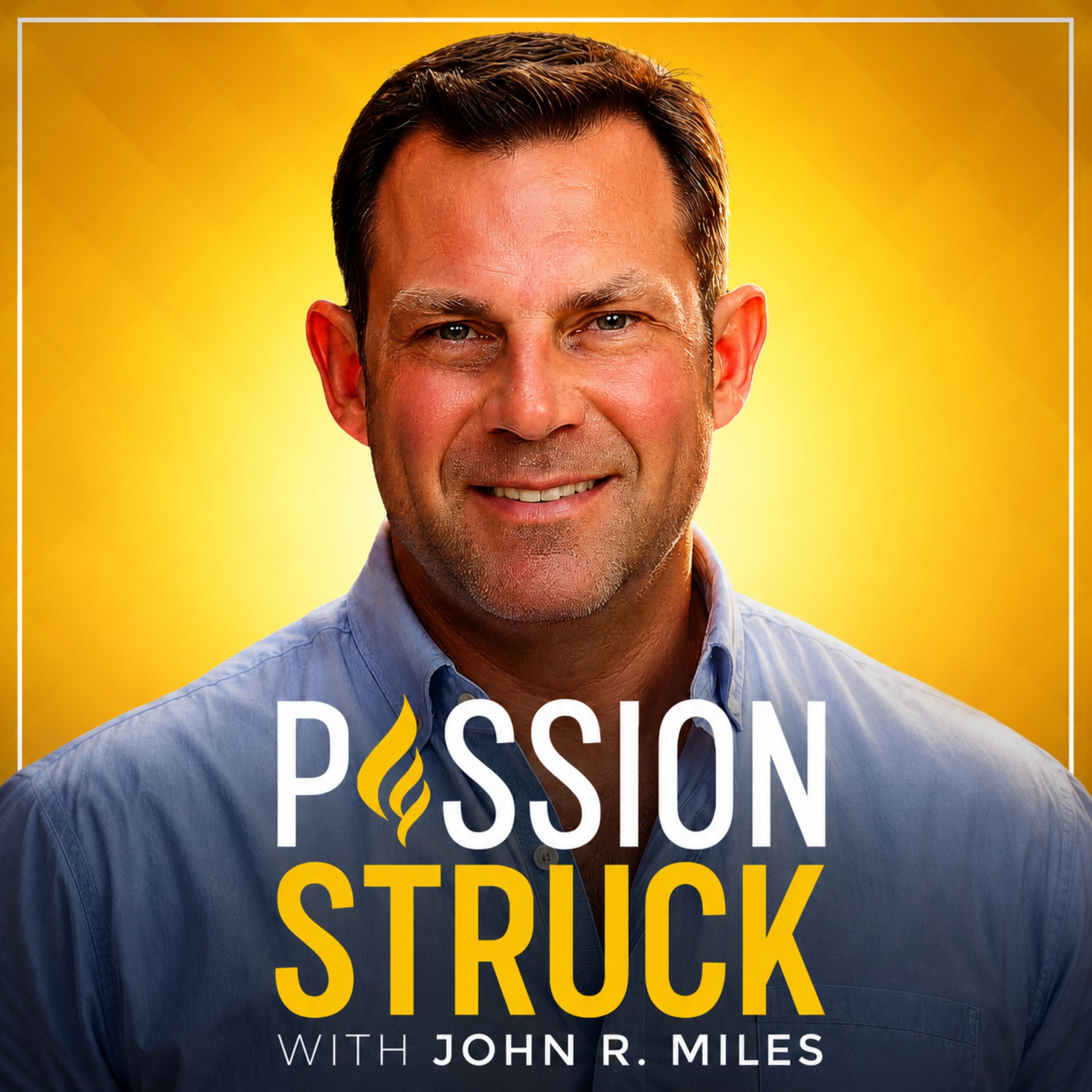
Pod Insights Passion Struck with John R. Miles Why You Keep Repeating the Same Patterns (And How to Finally Break Free) | Kati Morton - EP 781 About this episode In this episode of Passion Struck, John R. Miles sits down with licensed therapist, bestselling author, and mental health educator Kati Morton to explore why so many of us continue repeating behaviors we know no longer serve us.
Transcript 11,812 words · 3 speakers
Speaker names marked ? are inferred from speaking time and the show’s known hosts — they are not voice-verified.
0:00 John R. Miles? Coming up next on Passion Struck.
0:02 Speaker 01 I think in general, as humans, it's a very, I know people will always say, there's a lot of people online that'd be like, I don't like to be around other people. I prefer to be alone, or we want to be like, the different person, the loner, the weirdo. And where people are trying to take ownership over that. But to this research's point, there's such a huge part of our creation as humans that are about us being connected and mattering to other humans.
0:34 John R. Miles? Welcome to Passion Struck. I'm your host, John Miles. This is the show where we explore the art of human flourishing and what it truly means to live like it matters. Each week, I sit down with changemakers, creators, scientists, and everyday heroes to decode the human experience and uncover the tools that help us lead with meaning, heal what hurts, and pursue the fullest expression of who we're capable of becoming. Whether you're designing your future, developing as a leader, or seeking deeper alignment in your life, this show is your invitation to grow with purpose and act with intention. Because the secret to a life of deep purpose, connection, and impact is choosing to live like you matter.
1:22 John R. Miles? Hey friends, and welcome back to episode 781 of Passion Struck. We are now into week three of our series on the connection crisis, and we've been exploring a deceptively simple question. What makes people feel truly connected? Last Tuesday, I was joined by Greg McKeown, the bestselling author of Essentialism and a leading voice on how we design our lives around what truly matters. Together, we explored one of the hidden barriers to human connection, a concept he calls confident misunderstanding. And then last Thursday, Marcus Buckingham, a world-renowned researcher and a pioneer of the global strengths movement, shared a powerful perspective on one of the most overlooked forces in leadership and organizational
2:03 John R. Miles? success, which is the power of love. We discussed why connection, significance, warmth, and human Flourishing are not just soft ideals, but the absolute essential ingredients we need to build thriving teams and communities. Those conversations focus on what happens between people. But today, we're turning inward because sometimes the greatest barriers to connection aren't found in our workplaces, our friendships, or our relationships. They're found within ourselves. Most of us have experienced the frustration of repeating behaviors we promised we'd stop. We overwork even when we're exhausted. We people-please when we know we should set boundaries. We stay in relationships that no longer serve us.
2:47 John R. Miles? We chase achievement long after to stop bringing fulfillment. And no matter how much self-awareness we gain, we often find ourselves returning to the same emotional patterns again and again. The uncomfortable truth is that many of our most persistent behaviors were learned long before we ever had the language to understand them. As children, we develop internal blueprints about love, belonging, approval, conflict, and safety. Those blueprints don't simply disappear as we grow older. They operate quietly beneath the surface, shaping our decisions, our relationships, and our reactions in ways we often fail to recognize. My guest today is Katie Morton, licensed therapist, mental health educator, and bestselling
3:31 John R. Miles? author, Why Do We Keep Doing This? Her work has helped millions better understand the hidden emotional patterns driving their lives and how they can begin creating meaningful and lasting change. In today's conversation, you'll learn why perfectionism, burnout, people-pleasing, and self-abandonment are often rooted in old emotional adaptations rather than personal weakness. We discuss why awareness alone isn't enough to create transformation, how childhood experiences shape adult relationships, and why curiosity may be one of the most powerful tools we have for changing our lives. If you've ever felt trapped inside a version of yourself you've outgrown, this conversation will help you understand why.
4:13 John R. Miles? Before we dive in, if this episode helps you better understand your own patterns or gives you language for a struggle you've been carrying, please share. With someone who might benefit from hearing it. Taking 60 seconds to leave a rating or review on Spotify or Apple Podcasts helps us reach more people searching for these conversations. And make sure you're subscribed on YouTube so you never miss an episode. You can also download the companion workbook and access our free weekly reflections right now on my Substack at theignitedlife.net. Now, let's dive in with Katie Morton. Thank you for choosing Passion Struck and choosing me to be your host and guide on your journey to creating an intentional life that matters. Now, let that journey begin.
5:00 John R. Miles? I'm absolutely thrilled today to welcome Katie Morton to Passion Struck. Hi Katie, how are you doing today?
5:06 Speaker 01 I'm doing well, how about yourself?
5:08 John R. Miles? I'm doing fantastic. I'm enjoying it here because in Florida, we've had a little bit of a cold streak. And growing up mostly in the Midwest and Pennsylvania, I love a few weeks of the cold, especially as we get into the summer.
5:22 Speaker 01 I'm in Texas and I feel you on that. It's finally cool and I'm like, ooh, winter is upon us and I get excited.
5:28 John R. Miles? Yeah, I hear you. I moved here from Austin, so I am very familiar with Texas winters and springs.
5:35 Speaker 01 Yes.
5:37 John R. Miles? So I want to start with a question that I've been sitting with myself. When you catch yourself doing something that you know you've outgrown, maybe it's overworking, over explaining, trying to push through. How quickly do you notice it today compared to earlier in your life?
5:53 Speaker 01 That's a great question and obviously depends on the situation and how egregious the action is. However, I would say that back when I was younger, I don't know if I ever caught it because I wasn't really aware. There was a huge chunk of my life where I didn't know that overworking or pushing myself through or trying to do things perfectly was bad. I think that realization came around for me probably in my like mid to late twenties. And then I'm 42 now and I feel like in the last five years, I've gotten much better and am able to identify it more quickly. I would say now it probably takes me sometimes just a couple of days at most a week.
6:32 John R. Miles? I love that. And what do you find that you usually say to yourself in the moment now when it happens?
6:38 Speaker 01 I usually ask myself questions because I try to be, and I always tell my audiences too, to be curious, not judgmental. Back in the day, I used to kind of like shame myself for stuff. Oh, why are you doing this? This is so stupid. I don't know why you keep doing things this way and thinking it's going to be different and making it worse. And so now, when I catch myself doing something, I'm like, what is it that I'm afraid of? That's usually the first question because I operate in that perfectionism, overworking, burnout space when I'm scared of something. Like, I'm scared of scarcity of finances. I'm scared of losing a connection. I'm scared of, I don't know, people thinking that I'm not intelligent or that I can't do something properly.
7:21 Speaker 01 It's always, for me at least, I've learned, very fear-based. So the first question in my head to myself is usually, what am I so afraid of?
7:29 John R. Miles? I think that's a question that needs to be asked more because fear is what typically drives many of the actions that we have, and especially our self-abandoning behavior that we allow ourselves to inhabit. Today, we're going to be talking about your brand-new book, Why Do I Keep Doing This? How to Unlearn the Habits Keeping You Stuck and Unhappy, which I'm thrilled to say was a Next Big Idea Club must-read, and one of their top books that they picked for the year. I know personally how big an honor that is. So Katie, congratulations.
7:59 Speaker 01 Thank you. Yeah, I was so privileged to be part of that list.
8:03 John R. Miles? Before we go into the book, I thought maybe it would be best to start inside one of your stories because I think it's a story many of the listeners can relate to. I related to it because it happened to me too. You describe a time when you were snapping at your husband. You resented walking your dog, and you felt irritated by the very life that you had worked so hard to build. I know this all so well. And then judging yourself along the way for feeling that way. When you think back to that version of yourself, what was the first signal that you missed?
8:36 Speaker 01 I think probably exhaustion, which I know people are like, how do you miss exhaustion? Doesn't it just knock you down? I think when I'm in that space, when I'm in this overworking, burnout, push-through type of space in my brain, I don't check in with my body. I just think about, I have to keep going. This is what people are expecting. I don't want to let anybody down. Again, I'm afraid of losing connection or making people think some kind of way about me. And so the first cues are usually, I'm more tired and I needed more sleep and I didn't take the breaks. I just kept going. And yeah, and then it ends up, obviously, leading to the story you shared that I wrote about in the book as being agitated and irritated by the very thing that I've wanted.
9:20 John R. Miles? I know for me, it presented itself a little differently. I've recently been reading Rebecca Goldstein's new book, The Mattering Instinct. And in it, she talks a lot about the laws of physics and then goes into entropy. And then she does a clinical and philosophical review of dysthymia. In my case, this is what I experienced was dysthymia. And I remember at the time I was working at Lowe's and all I could say was that it didn't happen overnight, but it was like the days were suddenly becoming less bright. And I couldn't figure out why. I finally went and I saw a therapist and that's what he diagnosed me with. And he said it probably at that point had been occurring in the background for eight or nine years. And then unfortunately, it ended up carrying forward into severe depression.
10:04 John R. Miles? And at one point, I think whether it's exhaustion I went through, it's becoming more and more common to people. Did you find that not only in your research, but the patients that you work with as well?
10:15 Speaker 01 Yes, I do unfortunately think that dysthymia and depressive symptoms are more and more common. I can get into why, because I think there's a lot of different causes. I've seen it. Grow exponentially since COVID and part of that, I think to what you and I experienced, this overworking, burnout type of, I guess, behavior pattern happened because we were brought home from work. So we don't go to the office as much. A lot of people are still working remotely from home. So there's no separation between work and life. And so it makes it easier to keep working or keep doing things because you're just at home and you're just doing it anyways. I also think we're more disconnected from people.
10:56 Speaker 01 And so I think that the isolation that we experience has made us more lonely and has exacerbated any depressive symptoms. And also because our, as a whole, I feel like our world, but especially our nation in the United States is very divided, can make us feel alone there, too. I think there's just a lot of different factors that are, as bad as it sounds to say it so abruptly, but so many factors making us feel bad.
11:21 John R. Miles? When I started to really do research on this, and I have a book, The Mattering Effect, coming out on October 6th this fall, I started to really try to uncover, why do we have all these epidemics occurring of burnout, disengagement, loneliness, helplessness? The list goes on and on, including, as you mentioned, depression and anxiety. What I started to see was that these were symptoms of something larger. And so I started to look into this more, and it led me to a gentleman from Toronto, Canada, named Gordon Flett, who's now a retired professor from the University of York. I know in the book, you have a chapter on belonging. I wonder if you ever thought about connecting it to this concept of antimattering?
12:06 Speaker 01 I love that phrase. I'm not familiar with his work, but now I'm going to have to look him up. My husband's from Canada and York has a special place in my heart. They'd reached out years ago, using some of my videos to help train their police force. So I'm always like, oh, York, Ontario. But the antimattering, feel it viscerally when you said it. I think it's a very powerful term. And I think in general, as humans, I know people will always say, there's a lot of people online that'd be like, I don't like to be around other people. I prefer to be alone, or we want to be like, the different person, the loner, the weirdo. And where people are trying to take ownership over that. But to this researcher's point, there's such a huge part of our
12:48 Speaker 01 Creation as humans that are about us being connected and mattering to other humans. Part of that, you could think back to caveman days that it would be in my best interest to be connected with you, John, and to have other people in our group because that would mean we would survive, right? That was increased our ability to survive because you could be hunting, I could be gathering, there's all these different roles that people play. And I know people might say, oh, I hear that all the time and whatever. But I think we devalue the impact of mattering, of connection with other people and act like it's not as big of a deal to our survival still. I know we're not in caveman days, but I would argue
13:30 Speaker 01 that it just as we're talking about all these things that can come up, whether it's the depression, the anxiety, the irritation with your life, all of these symptoms and signs that I think could be soothed. And we could actually look into research on the polyvagal theory about how soothing to our system it is for us to be connected to other people, to matter to someone else, how important. And just think about how good it makes us feel if we're having a tough time and one of our friends calls to just check in, or if we have a family member who comes over to see how we're doing. That is so impactful. I remember when my dad passed away when I was 24, and my husband still brings this up because he didn't realize this was important, is tons of people at the time when it happens
14:13 Speaker 01 show up for you and are like, I'm so sorry for your loss. And that's wonderful and beautiful. However, I will never forget the people who kept showing up like a week after, a month after checking in, how are you doing? Again, because my well-being mattered to them and oh, that was so necessary at the time. It was so soothing, so life-affirming, and we can't discredit it. So I love that anti-matter because we need to matter to people. It's part of our biology.
14:42 John R. Miles? For the listeners, if you want to learn more about this, I interviewed Gord on the show last year. It was somewhere in the 500s, if you want to search for it, but the New York Times just did two articles based on his research. And when I was talking to him, he laughed about it because he said it only took them three and a half decades to finally write the article. Zach Macurio also wrote a great book about this called The Power of Mattering. And then the Harvard Business Review did a large, I think, 5,000-word piece on it. So lots of good sources on this. Katie, I want to go back to this exhaustion you were feeling because that's also something I felt. I was an executive at Dell after I left Lowe's. And I think, like many people, I didn't learn my lesson. I just kept trying
15:26 John R. Miles? to work my way through the conditions I was facing. And when I got to Dell, I was in a global role. I was traveling overseas. I was in one of five continents every two weeks out of the month. And then I would get home, and it was like I was playing catch up. So I was working 100-hour weeks. And what was so tiring to me was, while all this was happening, I really felt myself becoming less and less seen. It was like I was almost invisible because I felt like I was worked to death, and I was given all to a system that didn't even care about me. Because no one was asking how I was doing. No one really cared. They just expected you to do the grind. And what I found is, it was just adding up.
16:06 John R. Miles? It was as if I started losing the meaning. And as I've talked to people, I think this is one of the reasons people are feeling so disengaged, is because we treat them like a cog instead of a person.
16:21 Speaker 01 Yes, I agree with you there. I think, back to the mattering, that we have to matter. I think there's a big piece that we've learned, if you look at research, about how things operate well in a business setting. People need to be rewarded, and they need to feel appreciated for their effort. Like you said, it felt like nobody cared, just like a cog in a wheel, and as long as you do your thing. That's not fulfilling. And I did a bunch of research, this is probably Oh God, 2017, maybe about burnout in particular. And what I learned through that was that when we put in a ton of effort, like you're doing these hundred hour weeks, the effort that we put in has to be at least commensurate with the reward that we get. And people always think, oh, reward is just, oh, I make a good paycheck.
17:04 Speaker 01 That's only a part of it. We have to feel fulfilled. We have to feel like people appreciate it. And we often forget about that piece of reward. Obviously, if we're not getting paid well for our job, the reward's gonna be down, but there's these other elements to it. Think of stay at home mothers, their reward isn't financial. Their reward is raising good children and being able to be there for all their firsts and things like that, right? The reward can be different. So we have to make sure that effort is at least commensurate with the reward. And we forget that. And yes, jobs have ebbs and flows and think the reward can go up and down as well as the effort. But I think in general, when we go and go and push, like in your case, working these crazy weeks, traveling all this time,
17:48 Speaker 01 they could have paid you more and more, but it wouldn't have made you feel any better. There was this, I'm forgetting the year, but I want to say it was Ford Motors. They had decided that their production was down and they couldn't figure out why. And so they tried to increase people's paychecks. They were like, we're gonna pay them more to do this job because people aren't feeling good about their job. We were having big turnover rates that they're just not as productive as they used to be. Instead of paying them, and I'm making up these numbers because I don't remember exactly, let's say $10 an hour, we're gonna pay them 20. And this should motivate them. It didn't. And they tried to increase their pay again to $25. It did not increase their productivity.
18:28 Speaker 01 But what did is when they let them move from one station to another and they could rotate what they were doing. They essentially weren't rewarded by their cog in the wheel effect of like, oh, I do the rivet. That's all I do all day. They were burnt out by that effort and there was no reward. And when they allowed them to move around their stations, productivity went up. It had nothing to do with how much they paid them. And I think we often forget that and we can get caught like you, doing all of this work, thinking that it'll make it better or that this, what I'm doing, I should be feeling good, this should be fulfilling. I should be more thankful. That's how I talk to myself. I'm like, I should be so thankful I had this opportunity. We forget that we're humans who need appreciation. We need variety.
19:13 Speaker 01 We need to feel like we're valued.
19:17 John R. Miles? Before we continue, thank you for supporting Passion Struck and for helping us grow this community. One of the biggest themes emerging throughout the Connection Crisis series is that disconnection rarely begins with other people. It often begins with the stories we carry about ourselves. Many of us spend years chasing achievement, approval, productivity, or perfection, believing that if we accomplish enough, we'll finally feel worthy, significant, or secure. Yet even after achieving the things we thought would make us feel fulfilled, many people still feel unseen. That's one of the central questions I'm exploring in my upcoming book, The Mattering Effect. Why do so many people who appear successful on the outside still struggle with feeling like they matter on the inside?
20:01 John R. Miles? To help you apply these conversations more intentionally, we create companion workbooks, reflections, and practical exercises for every episode. You can access all of those resources completely free at theignitedlife.net. Now, a quick break for our sponsors. Thank you for supporting those who support the show. You're listening to Passion Struck right here on the Passion Struck Network. Now, let's get back to the conversation. During this time, I had an organization of thousands of employees. And Dell thought that you needed to have a large span of control. So, they wanted you to have somewhere between 12 and 20 direct reports. And at the time, I had something like 16 or 17.
20:46 John R. Miles? And I couldn't just figure out this idea of mattering. Like, why would you support that broad a level of direct reports? Because there's no way I can meet with every one of them every single week. And even when I could, I was only able to give them 15 to 30 minutes. And I have to say, half the time, my mind was somewhere else because there were so many things hitting me. Yeah, I think back at that period in my life. And since you brought up kids, I want to go there next. There's this big element of what I'm working on now. Because I- This new book coming out called You Matter Luma in a month. But I've been really trying to look at this because a lot of what you write about in the book is based on belief systems, the value systems that we develop when we're young.
21:31 John R. Miles? And so much is about what side of the railroad tracks you're born on. And it's also what kind of family systems you're born into, because some of us are born into families where we're told to be quiet, not to say a word. And so we learn that our invisibility is what gives us the most attention. And then I think the more relevant thing in contemporary society is the helicopter, lawnmower, or soccer parents were putting so much pressure on their kids to perform that the child then starts to think that they have to perform or achieve to be seen. Either way, there's this void that the child now is bringing into adolescence, which is why I think 50% of high schoolers are feeling hopeless and sad.
22:13 John R. Miles? And then that carries its way even to more work environments, into the communities we belong in. So all of this is just an opening to how big a deal do you think this really is?
22:25 Speaker 01 I think I call it the blueprint in the book, the way that we're raised. And I'll explain that a little bit in just a second, but I think that blueprint or the way that we're raised by our family is important and valuable to at least understand. Now, yes, our parents could have set us up for success and we could not feel like we have to earn love or attention. And we could also feel like it's okay to take up space and speak our needs. But regardless of whether they did that or didn't, it's really important for us to understand that piece, meaning that it's helpful in our healing journey to know what the blueprint is for better, for worse. And this isn't to blame parents, and this also isn't condone abusive behavior, anything like that.
23:08 Speaker 01 It's more in understanding of self. And when I talk about the blueprint, what I mean is that, to your point, John, that like when we're raised, we could have been told kids are supposed to be seen, not heard, right? So essentially sit down and shut up. And so as children, we don't know anything about love, connection, conflict, respect, what does that mean? All of these terms, all these relational dynamics are new to us. And so what we're doing as we're told and shown different ways of interacting with each other is we're drawing this blueprint. So we're putting together, okay, this is what it means to be loved. This is what it means to get attention. This is how I get attention. And this is how I get the attention that I really need.
23:51 Speaker 01 This is how I deal with conflict. This is how I tell someone I'm upset. All this stuff is, we're absorbing it and we're putting it into our blueprint for relationships going forward. Now, as we go out into the world, and for better, for worse, I feel like no one comes out with a perfect blueprint. I know parents, we try our best, whatever we can do, we do the best we can, but no one's blueprint is perfect. And the healing part of the part when people find themselves in my office, or when you found yourself in a therapist's office, a lot of it has to do with figuring out what that blueprint is because we've often just been autopiloting it for years. I know I did that. I didn't realize that I felt like I had to earn love and attention.
24:33 Speaker 01 I write in the book about how my father worked away from home a lot because he thought his biggest role or the most important role was to provide. Because he grew up very poor and my grandpa had a dirt floor when he was growing up. And so my family, they were farmers and they came from nothing. And so the men thought that was their duty. I provide. Well, I wanted time with my dad. I honestly could have cared less if I had the newest shoes. I would have rather seen him and spent time. And so I thought in order to get him to stay home more often, I had to do everything perfectly and really hustle to get him there and to keep him there. So that was my blueprint. It wasn't because my dad's a bad guy or was trying to harm me. But I thought that because of that behavior and the things that I saw, that then I really had to hustle
25:17 Speaker 01 to get more attention. And so I just give that as an example that all of us have these blueprints. We have these kinds of patterns of behavior from childhood. And if I didn't know, that's where my perfectionism, my people pleasing, me feeling like I had to hustle to earn someone's attention and worth. If I didn't know where that came from, then I wouldn't really know how to undo it. Because it's like, we can't, I like to think of it like a weed. And maybe it's because I was raised on a farm, like a weed, if you just snip the top, it'll grow back. Right? So if I just try to curb that behavior where I'm like, don't do everything just perfectly. Turn it in, Katie, send it, send the email. But that doesn't actually undo the main reason why I feel that urge, if that makes sense.
26:02 Speaker 01 It's like, I need to pull it out from the root. And if we understand that blueprint, that's like seeing the root, seeing where it grew from. So that we can actually dig down and we can rip it out. I don't know if that makes sense, or if that's too.
26:15 John R. Miles? It makes complete sense. So my father was very much like your father. He grew up in a very poor home in Detroit. And I remember him telling me stories that the first car he bought, it actually made me think of Fred Flintstone, didn't even have a floor in it. He went to the hardware store back in the day and bought plywood. And that's what he ended up fastening to his car. So his car would actually have a floor. But when I was growing up, my dad probably traveled 250 days out of the year. And I remember there were long periods of time when I didn't get to see him. So when he would show up for high school events, it was really a treat to see him there.
26:52 Speaker 01 Same for me. I'd be so excited if my dad got to come. And you'd always say he could come, but then work would hold him over and he wouldn't be able to fly home. And it's tricky when your parents are away.
27:01 John R. Miles? In this chapter, you bring up that you eventually went to see a therapist because you started to see a repeated relationship pattern that you experienced with your father, where you were choosing men who didn't show up. And it became predictably familiar. How often do you see that pattern happen to the people that you work with?
27:19 Speaker 01 All the time, in so many different ways, too. That's why it's important for us to realize what our blueprint is and what things happened in our life. I also think it's helpful, or for me, I should say, it was helpful to look at my grandmother and my mother and how the women interacted in my family, too. Because that shows the way that women's behavior was modeled for me. In all of that, whether people want to admit it or not, there's a reason a lot of us say, oh, my God, I sound just like my father or my mother, or I'm doing the same thing. Because we keep acting out in that same way. We have that blueprint. And we go out into the world and we look for somebody else who feels very comfortable. Notice I didn't say healthy, but they feel comfortable because it's what we're used to.
28:03 Speaker 01 And so even as uncomfortable as it was growing up, having my dad not there, that became familiar. That became what I was used to. I knew what it was like to have someone let me down and to say they were going to show up and not. And so unfortunately, I dated a lot of guys who'd be like, yeah, I'll be there. And then they wouldn't. And I would get so pissed and be so frustrated. But as my therapist said, it's mainly with myself because I picked a partner who couldn't show up for me again. Because that's what I grew up with.
28:31 John R. Miles? Katie, I was talking months ago to a friend of mine, Lori Santos, who teaches at Yale. And we were talking about this course that she teaches, which has become the most popular course in Yale's history. But she created this course because she kept looking at the students on campus. And at the time, she had the privilege of actually living on campus and she described them to me as ducks. You could see them walk around campus, but underneath the water, their feet were just going so fast. And she was saying that this was a result of perfectionism. They were having to perform all the time because they were trying to earn their worth, which is something that you write about in chapter two. Why is inconsistent attention or approval so tied to how children learn, love,
29:15 John R. Miles? and how it must be deserved through compliance, excellence, achievement, etc.?
29:21 Speaker 01 The truth about it is we, as adults, we look back on our childhood with all of this intelligence, all of this experience. And all of that is something that only time could teach, right? We didn't know that when we were younger. And it's hard for us to remember what it was like to be six, seven, eight years old. And the reason I bring that up is because when we're young and we have a parent who is inconsistent, like my dad and your dad, they worked away from home. They'd come back, we'd be so excited. I remember running out to my dad's truck being like, he's all, oh, my good. I was so excited. I wanted him there all the time. My little kid brain didn't understand that my dad had no say over his work schedule.
30:07 Speaker 01 He signed up for this job. He didn't want to lose his job. I also didn't understand the fact that he believed it was his biggest role to provide, right? I didn't understand that either. And so what children do is when we don't understand why the love or the attention is inconsistent, we make up our own story with the information that we have, which is usually about ourselves. So even if our parents are around, but they have a stressful job, so they're not really present with us. We don't understand work stress. We don't understand all the things that adults have to manage. All we know is its impact on us. And we take that information and then we try to fill in the spots in our story with what we do know, which is our role.
30:52 Speaker 01 And that's why children blame themselves for divorce a lot. That's why I thought that if I just worked harder, if I was first in band, if I got the lead in the play, if I was on varsity team at soccer or softball or basketball, all the sports I played, I thought that then my dad would come home because it'd be so attractive to him. I even, this is, I haven't thought about this in a long time, but I actually told my dad, John, that I was gonna try to, I was gonna try out for the football team because my dad loved football so much. I was like, I'll be the kicker. Kickers just come out and go back. No one's gonna hit me. I'll be fine. He was all tickled about it. And I actually thought in my little kid brain that if I'm the kicker for the football team, my dad won't want to miss any of those games.
31:34 Speaker 01 And so I use it as an example because we as kids fill it in with what we have control over and what we know, which is ourselves. And so that's why we often believe that this inconsistent attention is our fault. And what we can do to get it back is to work harder, is to be the perfect child, to do everything in a certain way. And that's why I said it shows up all sorts of different ways depending on how we were raised and what we internalized. And so it's important for us to maybe try, if you can, it helps to have a picture of yourself as a little kid. Think back to what it was like then, like, how did he or she think? And what did you expect? Or what were you bummed about? And is that why you think you have to do it perfectly?
32:19 Speaker 01 What were you hoping to gain by being a perfect child? Consider those thought processes because that's the why behind it is because we didn't have all that information. We didn't understand why our parent wasn't there all the time. We just filled it in with what we knew. And unfortunately, that usually means we make it our own, our fault. It's our fault and we have to do something to change it.
32:40 John R. Miles? When I think about worth, I think about motivation, especially intrinsic motivation, because I think the two are linked. And to me, self determination theory by Richard Ryan and Edward DC probably is the best science that there is out there that looks at intrinsic motivation. And they really look at three things, autonomy, mastery, and then relatedness. I want to ask you a question about autonomy. When you think back to the child that you were and the child that so many of us get influenced into becoming, how does that shape our autonomy and our ability to make the choices that we do?
33:12 Speaker 01 It shapes a lot of it. I guess I would say that when we're children, we, going back to that blueprint, we have certain beliefs early on, as we were learning along the way, about what it means to be another person in our family. We also learn what it means to, to be like on our own. As we reach our teen years is when we try to push back against our family and become more independent. And depending on how our family reacts to that or supports that, that can affect our ability to act on our own, to be autonomous, to feel like we can do things outside of that.
33:53 Speaker 01 And there's so many factors here, but just depending on the way that we were raised, if it was okay or not okay to do something on your own or to push back against your family, maybe do something that's different, depending on how much support or lack of we received, that can definitely affect our ability to think on our own and make decisions on our own. I even share, I think it stayed in the book, some of the stories got pulled by my editor, but. One of the stories I share from my community is that she was raised in a very tight knit, enmeshed family. And so she didn't really believe that she could go on her own and do her own thing. She felt like she needed the support of her family and her mom and parents never really wanted her or her sisters to move away. And the one that did, they talked trash on. She doesn't know what
34:37 Speaker 01 family means. I can't believe she'd move away. And that really affected this member of my community as she shared because she never really, she doesn't even feel like she could take a big trip to Europe because her parents wouldn't want her to. And she never went away for college, even though she really wanted to make that choice and do that. And I think in general, a lot of the ways that our family interacts with us and the messages we receive, either overtly or inadvertently, we internalize that and it, it shapes a lot of our independence and autonomy and how able we feel to make the best decision for ourselves.
35:13 John R. Miles? One of the reasons I'm asking this is that as I went through my life, and it sounds like you and I had very similar upbringings, I discovered that the more visible my achievement became, the more the architecture of my life began to mask a sense of authorship. And what I mean by this was the primary mechanism of this drift is this concept of the next logical step. Success presents a sequence of choices that appear optimal to the people who are observing your life from the outside, while it remains fundamentally unchosen by the participant. And that's where I was going with my question. Your answer was fine as well, but I really think this is the paradox of autonomy. It's a state kind of where we're most busy when we feel less
35:55 John R. Miles? free. And I know when I was feeling exhausted, that's exactly how I was feeling. Does that relate to you as well?
36:03 Speaker 01 Yes, I've felt a lot of my life as on autopilot. And I know that sounds maybe crazy to people from the outside. Like you said, it looks like, oh, but this is, this trajectory is good. And I even have friends that are like, but you're so successful. That's so great. And I'm like, but did I really choose to do that thing? It just was the thing that was presented and logically it makes sense, but it might not be the thing that I really wanted. It's like that, there's a huge disconnect sometimes between what we really feel like if we took the time, because I don't even know if I took the time to decide whether or not that was what I wanted to do versus is that just what's presented? I even have friends, and I don't know if this resonates with you, John, but I have a lot of friends that'll say,
36:47 Speaker 01 I don't know how I ended up in HR, but I got that in my first job and then I just stayed there because I just kept getting promoted and I was making a decent living. And a lot of us can do that, almost live by default. I had a video I put out a couple of months ago about how not making decisions is a decision. It's like you're living by default, just whatever the next thing is, if this is okay, you want me to? Okay, sure. And life just happens to us versus what I think we all desire, or at least I desire, is a more empowered place, operating in my life from a more empowered place where I'm able to make choices that best align with what I want versus feeling like, well, that's the next best thing. That's what people expect of you.
37:29 Speaker 01 That is the next logical step in this path that you're on. And yeah, I think that deciding to be an active participant in our life versus being a little bit more autopiloty is how we curate the life we love versus waking up that beast and thinking, where'd the time go? What is this? What am I doing?
37:49 John R. Miles? Katie, you don't know this, but I wrote a whole book on it. So the first chapter of the book I call the mission angler. I live here in Tampa Bay and I have a lot of friends who fish. And the people who love to go out there and do deep sea fishing, which is kind of funny because here in Tampa, you can go out 40 miles and the water is probably only 40 feet deep, but typically they're planning for days, if not weeks in advance. They're looking at title shifts, what fish are in season, where they want to go, et cetera. But how many of us apply that same discipline to our lives? Not many. And that kind of gets into self discrepancy theory where people end up living the life that they feel they could. And that gets into self discrepancy theory where people end up living the life that
38:33 John R. Miles? they feel they should instead of the ideal life that they could build. And I think most of us live in this gap between those two things. The way I refer to this in my book, Passion Struck, is that when most people hear the word autopilot, we think we're pointing the plane in the right direction. It's taking us to where we want to go, but I prefer to use the analogy that more of us are living. In what I call a pinball life. Because I think what so many of us are doing instead of learning how to play the game of pinball and taking control is that we become the pinball in the game and we're just bouncing through life aimlessly. As it sends us all these different distractions and signals, never taking control of our trajectory. And so we stay, as you say, in the state of should.
39:18 John R. Miles? And that's what happened to me. And I think we're best positioned to serve the people that we once were. And that's exactly what happened. It came out of a stint working for Arthur Andersen, the company collapsed because of Enron. And I really wanted to go back and get my PhD at that point in behavior science. And unfortunately, I was at a point where we just had a child. And I felt I had to support modeling my father's behavior. So I kept going down this track. Went back into industry, but the whole time, even though I was successful at what I did. I really didn't have a sense of meaning towards it. And so it really took some time for me to make some very intentional choices. To go down the path of what I'm doing now, which is completely different.
40:02 John R. Miles? But I think what stops so many of us and what was stopping me is you kind of see this life that you want, but it's as if you're standing on the top of Mount Everest. And you see Mount Kilimanjaro in the distance and you have no idea, how do I get from? Point A Everest to point B Kilimanjaro. Do you think that's the main stumbling point?
40:22 Speaker 01 Yes, a hundred percent. Because some, I feel like 90% of the time, it feels easier just to stay where you are. Right? You're already at Everest. Why do I need to go to Kilimanjaro? I really would like to, and I think it's where I'm meant to be, but that's a lot of work. That's a lot of effort. And I'm not saying that all of us are like effort adverse. Both you and I are saying we overwork ourselves and we do a lot of things, but I think sometimes we're so pulled out, we're looking down on this big change. Okay, if I have to get all the way over there, that could take years. Oh, and we preemptively snuff it out versus thinking, which is something that I've been practicing myself is that.
41:02 Speaker 01 Instead of looking out at like, this is this big goal that I have. I have to get all the way over there. How in the world am I going to do that? And oh, my God, it's so scary. And this could take so long. Instead of psyching myself up and out of it, I think, okay, well, what would be the one step I could take to move me in that direction? What would be something that I could do that's honestly, some of it's very low lift? Maybe it means I send an email. Maybe it means that I start practicing or I take a little online course about this thing that I want to learn and see if I'm interested. We often get so overwhelmed by the sheer scale of what we want that we get scared.
41:44 Speaker 01 Again, going back to our earlier conversation about fear and what am I afraid of? I think a lot of us get afraid of what if I fail, right? What if it doesn't work out? But if we move our eyes away from the horizon onto Mount Kilimanjaro and we look back down at our own feet and we're like, hey, you know what I could do, though? I could take two steps in that direction. And that actually is not so overwhelming. Maybe I sit down and think about it for a little bit. Maybe I catch my breath and keep going. It's those little steps, but we get so overwhelmed with the big picture, thinking we have to make these drastic changes. That's the interesting thing when you learn about the nervous system, that when we try to make drastic changes, it's like New Year's resolutions, why they always fail is they're too intense.
42:25 Speaker 01 And our nervous system is wired to constantly be seeking, looking in our environment for any threat to our nervous system. Right? Is it threat physically? Is there a threat emotionally? When something's too scary, too overwhelming, guess what? We want to shut down. We want to freeze. We want to revert back.
42:43 Speaker 01 So us looking at Mount Kilimanjaro all the way over there is too scary. It's too much. Our nervous system is like, oh, we go into freeze or it pulls us back, right? We retreat back to our old behavior. However, if we take small steps, little things that aren't huge commitments, these aren't drastic changes, it doesn't get overwhelmed. We don't freeze. It doesn't feel, because we're not making a big decision yet. We're just testing the water. It's like putting your little tippy toe just to see how cold is the ocean today? Is it warm? Is it, could I walk along? I could get in a little bit more, right? We're just seeing how it goes. And so if anybody out there is feeling like I have been wanting this big life or I've been wanting these things, but oh, my God, I just don't think I can. It's going to take so much work and so many years.
43:28 Speaker 01 And pause, breathe.
43:31 Speaker 01 Is that something that you want and you want to maybe think about it? Give yourself an opportunity to think about it and do the least resistant, small little thing first. Because no one says that you have to end up making all those decisions. No one says you have to go to Mount Kilimanjaro. But at least for now, we want to entertain the idea without letting ourselves freak out essentially.
43:53 John R. Miles? If there's one thing I've learned from doing a lot of study on behavior science, it's the power of microchoices. I think so many people think that there are these large events in our life that shape their future. And they don't realize everything happens in the 10,000 decisions you make a day. And the more that you can subconsciously start pointing yourself in a direction that you want your life to go. The more microchoices you start making, orienting and compounding in a way that starts closing the gap. But I think we fall into this trap of thinking we need to make big change or it's never going to happen. That's why so many New Year's resolutions fail weeks after we get into the new year.
44:33 Speaker 01 They're done by February 1st. It's too overwhelming. It's too scary. It's too much. It's not sustainable. Right? I always tell my audience in general, even in the month of January, I did this little workshop on my Patreon about these small habit shifts. And I encourage them to pick the easiest thing. I was like, I want you to not pick something that you're excited to tell people about. Oh, my God, I stopped drinking soda or I don't do this anymore. I don't want you to even feel any kind of ego about it. I want it to be really easy. I want you to be like, why is it even on this list? This is so simple because those small things do add up and it also builds motivation. And we feel good about ourselves versus what can happen is we set these huge lofty goals. And I think it has to be this one big jump. And then we feel bad about the fact that we didn't, couldn't quite make that jump.
45:18 Speaker 01 But let's build some stairs as we make our, build our way toward that, you know?
45:23 John R. Miles? Absolutely. Katie, I want to ask you about why we can't calm down until everyone is happy. And this is a question that I myself am really interested in. A few weeks ago, I had Ingrid Clayton on the show who has a new book on fawning. And this is something that you really cover in the book as well. And for many in my audience, if you didn't catch that episode, I didn't know what fawning was. I think it's the least known trauma responses that there is out there. But in the book, you talk about a woman named Yvette, who was the strong one who never asked for help. And I was hoping maybe you could use her story as a way to explain this.
45:58 Speaker 01 Yes, just so everybody knows what fawning is before we start talking about it in a bigger way, it's essentially what I would call an extreme form of people pleasing. When we talk about our stress response, we often talk about fight-flight. I'm gonna run away, or I'm gonna fight back, but especially when we're younger and littler, we can't do those things. We're not strong enough to fight. We aren't fast enough to run. And so we opt for another way, and that is to try to make the person so happy that they won't harm us. So I'm gonna try to keep you happy so that I don't feel like I'm under threat. And I think in general, a lot of us do some form of, we call it people pleasing, like a lighter form, but fawning is very much the same. I would use them interchangeably
46:42 Speaker 01 in this case, because we're so concerned, again, what am I afraid of? I'm so afraid that someone could be upset with me, or I'm so afraid that I could lose connection. That is scarier to me than me lighting myself on fire to keep you warm. Meaning, I'll just do everything in my power to make sure you're happy, to make sure that those things work for you and that you're okay. Because once you're calmed, I know I'm not under threat anymore. I can be calm. And I forget Yvette's story perfectly. I'd have to pull it up out of my book. If you want me to directly connect it, I definitely can.
47:25 John R. Miles? She was 48 years old, but she was the strong one who never asked for help. She was praised for being reliable, but could never...
47:31 Speaker 01 Oh, and then she, didn't she swing to the complete opposite?
47:34 John R. Miles? Yeah.
47:35 Speaker 01 Okay, I can tie into that. When you said it, I'm like, I don't remember. It's hard to recall. Also, their names, I had to change them. So I'm like, which one is Yvette? Okay, I can connect that. When it comes to Yvette's story, the interesting thing there is that she used to take pride in the fact that everyone could count on her, right? She would do everything people asked, essentially like lighting herself on fire to keep them warm, this extreme fawning. But instead of being able to figure out where that's coming from and find a healthy balance, because we should be reliable, right? We do want people to count on us. Some things as we would want to count on them, but instead of finding that healthy middle ground, she swung to the complete opposite where she would just say no to everything. She didn't even show up for things with her family that were really important to them.
48:20 Speaker 01 And then she almost felt even worse. Oh, my God, now I'm really letting them down. It was like we're this pendulum swinging from extreme to extreme. And I think that a lot of us don't really know how to live in the middle. Because it's uncomfortable for us to sit with that potential conflict, right? We'd rather just people please. And instead of trying to figure out how we can keep ourselves happy and keep them happy, which is this, I would say it's like a dance that we have to do. Instead of trying to learn that new dance, we'd rather just slam the door shut, say no to everything and go to the complete opposite. And that's that story is that she really couldn't figure out how to do it healthily. She felt like it was either all or nothing.
49:06 John R. Miles? Yes. Thank you for sharing that. This fond response is something that I've really start to pay a lot more attention to because I think it's often misunderstood, although it's a pretty simple concept. Once you understand the mechanics behind it, like you said, and I think one of the biggest things people need to understand is when you're doing it, you're really causing yourself self erasure.
49:29 Speaker 01 Yes, because you aren't showing up as authentically you. You're so busy considering what would make them happy, what would they like? How are they feeling? I used to call it my superpower. I can walk in the room and just read how things are. Is someone upset? Is somebody happy with this? How is this going? Oh, they're not getting along and it is a superpower. But if I don't know how to manage it, again, finding that healthy middle. If I don't know how to manage it and recognize their emotional experience is not my responsibility. I can be aware, but I don't have to act in a certain way. Until I can handle that healthily, it was just exhausting to me to try to always be tippy toeing,
50:09 Speaker 01 making sure everybody's happy, all because it felt too uncomfortable for me to be around a situation where I thought someone was unhappy. It's like I don't even exist in that moment because I'm so busy looking outward, right? I'm not even checking in with myself in any of this. I'm just making sure that they're happy first. I don't know if that resonates with anybody else, but it's like, yeah. And it's all throughout my life too. And the way it pops up, you think you get one, it's like whack a mole, another one pops up.
50:38 John R. Miles? What do you think is the hidden cost showing up over time when you work with people who have a fond response?
50:46 Speaker 01 Quite a few costs. The main one, I think, is lack of true intimacy, meaning that their relationships almost always have issues, or they end up in a relationship where the person doesn't know them at all. I had a member of my community just yesterday share with me that her husband doesn't know she's in therapy. He doesn't know she ever struggled with any eating disorder behaviors, or even has depression. He doesn't know she's on medication. He doesn't know anything about that part of her. We were on a live stream, and I mentioned, could you share something with him? And she did not feel like it was okay. She was afraid it would upset him. I don't want to share that. And so if we don't show up authentically in our relationships, there's no real connection. It's almost like inadvertently, the thing that we're trying to prevent, right? We want to keep people around. We want to keep them happy.
51:30 Speaker 01 We're trying to ensure that connection is maintained. In this self-erasure, in this self-abandonment, we inadvertently end up disconnecting because they don't really know who we are. We don't have any safety in that relationship because we don't feel like if we did show up, that they would stay. Like that member of my community, I'm afraid it would really upset him. I don't know if he could handle it. And so we lose intimacy in our relationships. I think we can also lose our identity. I can't tell you the number of patients I've seen over the years that will tell me they'll get out of a relationship, like they'll divorce after, let's say, 25, 30 years. And they're like, I don't know who I am anymore. And that's because they didn't really exist in that relationship fully.
52:12 Speaker 01 I know we can still have these, like, well, if I'm not married to them, my life is shifted and there's going to be changes. But this is a deeper identity problem where it's like, I'm not sure what food I like. I'm not sure what movies I want to watch. Simple things that other people might take for granted. If we've been abandoning ourselves for years, we have lost touch with who we are. And it can take us some time to get back connected. Like I talk about in the book, like taking yourself on a date. Go out. What do we do? How do we get to know people? We spend time with them. So you have to spend time with yourself and get reconnected.
52:46 John R. Miles? Katie, I personally tried to do that every morning, but I start the day with about an hour-long walk. I walk between four to five miles and I spend the first 30 minutes of it in complete silence, just meditating and reflecting on the previous day and how I want to live out the day ahead of me. And I do affirmations and other things. It has really changed my self-esteem in so many ways doing that. So Katie, I want to come full circle. You admit in the book that letting go once sounded terrifying to you, like irresponsibility. What helped you redefine what safety actually means to you?
53:21 Speaker 01 Letting go is hard for me. I talk about it a lot, that I still struggle and I'll still find myself trying to tightly clench onto something. I had to, as I talk about in the book, redefine what letting go meant. That if I let go of something, let go of an outcome, it wasn't because I didn't care. It wasn't because it wasn't important in any way to me. I realized that letting go meant I'm not going to waste my energy and my brain space on something that I don't have control over anyways. And easier said than done. And so what I really had to do is, instead of, again, instead of going to Mount Kilimanjaro, I have to go all this way, I have to just let go. Let go and let God,
54:06 Speaker 01 as people say. I instead realized that it's a bunch of tiny, again, those micro-choices, that in this moment, maybe I don't have to follow up on that right now. Maybe I can wait another day. Or maybe instead of me letting myself spiral out about something, I meditate, or I take a breather, or I go for a walk. I love to walk also. I think having movement with mindfulness is really healing for me too. So there's, I think...
54:38 Speaker 01 It's those micro movements, the micro habits, the little steps in that direction versus that all or nothing. I've always been very curious and I haven't done research on it, but I have my own hypotheses as to why our brain loves all or nothing thinking like black or white. We like to think I'm either letting go or I'm completely held on to something. It wants to do one or the other, like to that story, it either wants to be completely fawning, people pleasing or the other. I would assume it's because our brain loves certainty and those are very clear and direct paths, but it's finding that gray for us. For me, at least in the letting go, I had to redefine what it meant. I had to change the way I talk to myself about it. And then I had to make little
55:22 Speaker 01 micro shifts instead of swinging to the complete opposite.
55:28 John R. Miles? Katie, as we come to a close, one of the things that really stays with me from the book is the idea that habits weren't mistakes throughout our lives. They were protection and maybe the real work isn't fixing ourselves. It's learning how to feel safe without armor. There's a listener out there who took nothing but one thing away from today's conversation. Where's the gentlest place for them to begin?
55:51 Speaker 01 I always want to encourage people to just start being curious through journaling. I know a lot of times we feel like we have to make changes. We have to do things, action. We like to take action. It gives us a sense of agency over our life, right? It makes us feel like we're in control. However, I think the gentlest way to actually learn about yourself and your experience and figure out how, to your point, John, we can feel safer in our life without all of these defense mechanisms, all this armor on, is through being curious about our experience and what's coming up for us. Just start tapping in. I find when we're really struggling, we're the most disconnected from self. We talked
56:36 Speaker 01 about autopilot or I'm just letting other people make choices for me. I'm not participating actively. And journaling for me has been life changing. And if you don't know what to write, I encourage you, first of all, you don't have to read it back. It doesn't have to make sense. It doesn't have to be spelled properly. It doesn't have to be legible. I'm left-handed. My penmanship is terrible. It doesn't matter, but we're gonna just jot down. At least two or three things you're grateful for could be the breath in your lungs. It could be a roof over your head. Make them different every time you journal. But then just start writing or even tell me what you're excited about. What are you looking forward to? Is there a goal that you have? Let's pretend it's already happening and let's get in there.
57:19 Speaker 01 I think starting to open up a conversation with ourselves in writing is the gentlest way to learn about yourself, to get back in touch with who you are and to then if you feel so inclined to then decide what those micro steps are, those little habits that you want to maybe shift or change. But first, we have to get to know ourselves, be a little curious, not judgmental about who we are and where we're at.
57:44 John R. Miles? And then lastly, Katie, what does it mean for you to be passion struck?
57:49 Speaker 01 Ooh, first of all, I just love the phrase passion struck. I think for me to be passion struck means that I'm living in alignment with my values in a place of excitement and enjoyment for life. It's honestly what I strive to be all the time, struck by passion. What a great way to live your life.
58:06 John R. Miles? Love it, Katie. If people want to learn more about you, where's the best place for them to go?
58:11 Speaker 01 I'm on YouTube. All of my social media is just Katie Morton, K A T I M O R T O N. I have a podcast called Ask Katie Anything that comes out on Thursdays as well. And I have three books. They're sold wherever you find your books. Are You Okay is my first book, Traumatize is my second, and my third that we talked about today, Why Do I Keep Doing This is available again wherever you purchase your books.
58:32 John R. Miles? Katie, thank you so much for joining us on Passion Struck. It was a real honor to have you.
58:36 Speaker 01 Thank you for having me. My pleasure.
58:38 John R. Miles? That brings us to the end of today's conversation with Katie Morton. What I hope stays with you is the realization that many of the behaviors we criticize in ourselves once served an important purpose. Perfectionism may have been an attempt to earn attention. People pleasing may have been an attempt to preserve connection. Overworking may have been an attempt to prove our worth. The challenge is that adaptations that helped us survive childhood can quietly limit us in adulthood when they continue operating unchecked. Next time on Passion Struck, we'll continue this journey. With attachment expert Adam Lane Smith. If Katie helped us understand the emotional blueprint, Adam will help us understand the attachment system operating beneath it.
59:22 John R. Miles? We'll explore why relationship chaos is rarely random, how attachment patterns become embedded in our nervous systems, and why so many people unknowingly recreate the same relationship dynamics throughout their lives.
59:34 Speaker 02 Our family of origin maps out how we are going to function. So our caregivers train us to understand, are people going to care about us and meet our needs? Or are we not worthy of that? Or are we not in a system where people have the capacity to care for each other? And there's different ways that we can split from that. I think it was the novel Anna Karenina, where she said at the beginning, the author says, happy families are all exactly the same, but each unhappy family is unhappy and unique in their own similar, in their own special way. And that's what we're finding is you can have a lot of dysregulated families that map out to a lot of dysregulation, but there's only really one healthy pathway with variants, but one healthy pathway towards secure families that build real lasting connection.
1:00:16 John R. Miles? If today's conversation resonated with you, please share it with someone who may be wrestling with similar patterns in their own life. And if you haven't already, leaving a review on Spotify or Apple Podcasts is one of the most impactful ways you can help others discover the show. You can find today's companion workbook and additional resources at theignitedlife.net. And be sure to subscribe on YouTube as we continue the connection crisis series. Until next time, remember that awareness isn't the finish line. It's the beginning of change. I'm John Miles and you've been passion struck.
Previous Why We Feel So Disconnected (And How to Find Our Way Back) | John R. Miles - EP 780 Next Why You Keep Repeating the Same Relationship Patterns | Adam Lane Smith - EP 782 Page updated October 30, 2026 · transcript and summary are machine-generated