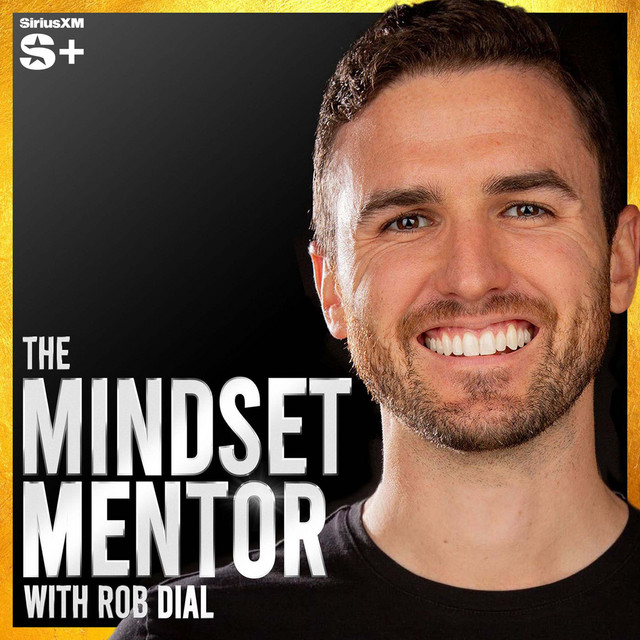
Pod Insights The Mindset Mentor | SiriusXM Podcasts+ Stop Being a Victim About this episode Are you unknowingly holding yourself back with a victim mindset? I share how my own victim mentality kept me stuck for years — and how taking full responsibility changed everything. I'll show you how to spot when you're giving away your power, shift your mindset, and finally take control of your life. Feeling stuck? It's time to take back control. If you're ready to master your mind and create real, lasting change, click the link below and start transforming your life today. 👉 http://coachwithrob.com The Mindset Mentor™ podcast is designed for anyone desiring motivation, direction, and focus in life. Past guests of The Mindset Mentor include Tony Robbins, Matthew McConaughey, Jay Shetty, Andrew Huberman, Lewis Howes, Gregg Braden, Rich Roll, and Dr. Steven Gundry. Hosted by Simplecast, an AdsWizz company. See pcm.adswizz.com for information about our collection and use of personal data for advertising.
Transcript 0:00 Speaker 00 With the Discover Cash Back Card, it's payback time when you earn cash back on everyday purchases. Activate and earn 5% cash back at different categories each quarter on up to $1,500 in purchases. That's 5% cash back at different places each quarter, like grocery stores, on gas, and at restaurants. It pays to discover. Terms apply. See discover.com/five for details.
0:26 Speaker 01 Your care changes lives. At Fidelity, we help put that same care into your financial future. Get support through your employee benefits with free tools and resources to help you tackle debt, save, and invest with confidence. Learn more at fidelity.com/healthcare. Fidelity Brokerage Services, LLC, member NYSE, SIPC.
0:50 Speaker 02 What do I gift my mom and nieces?
0:59 Speaker 02 Oh, Dad loves music.
1:07 Speaker 02 And my coffee-obsessed bestie?
1:12 Speaker 02 All those great brands at Walmart? Who knew?
1:17 Speaker 00 Shop gifts, no love at Walmart.
1:28 Speaker 03 Welcome to today's episode of the Mindset Mentor Podcast. I'm your host, Rob Dial. If you have not yet done so, hit that subscribe button so you never miss another podcast episode. And if you're out there and you love this podcast, send me a text message right now. I'll text some inspirational tips and tricks to you throughout the week. 512-580-9305. Once again, 512-580-9305. Today, I'm going to talk to you about why you should stop being a victim and having a victim mindset in your life, and how it's going to be holding you back. And I definitely had a victim mindset when I was younger. And so I can speak to this. It's something that I really had to work through because I used to be really, really good. At making myself the victim.
2:12 Speaker 03 So I, and I would say stuff like, oh, I always have bad luck or just things don't really work out for me or things, things out, things work out for better people. You know, for, for other people, other people get lucky, but I have bad luck. Or I would make excuses for everything in my life and I would take no responsibility for basically anything. And the problem is that most people are not really even aware that they're using and playing the victim. It's just something they've been doing for so long. It's something they picked up in childhood. And so it requires self-awareness within ourself to notice it. But the biggest problem with playing the victim is that if you play the victim, it completely takes all of the control out of your life.
2:55 Speaker 03 If you're constantly blaming other people or the economy or other circumstances, everybody else, then you have no control in your life. If you make yourself the victim, you're basically resigning to the fact of like, I can't control my life and I'm just at the whim of whatever the universe wants to beat me over the head with. If you're listening to this podcast, you want your life to be different. You want your life to be better. You want to grow and you want to improve, but you cannot change your life for the better if you have a victim mindset, because you are never going to be in control of your life. And so if you're somebody who is out there that makes too many excuses, or you feel like
3:34 Speaker 03 you blame too much, or you have trouble stepping up and making change in your life, this episode's really going to help you to stop being a victim. And if you know someone who plays the victim, send this to them. And you know, it might be triggering for some people. This episode might be triggering for some people. The reason why is because it will start to disrupt your false thinking patterns. Let's dive into it. What, what exactly is a victim mindset? A victim mindset is an attitude where people perceive themselves as powerless and blame external circumstances or other people for their problems. It's a mindset that is basically chronic complaining, excuses, avoiding responsibility. And you know, maybe this belief that like, hey,
4:20 Speaker 03 No matter what I do, I can't change myself and I can't change the situation. I have found it, I don't know if it's just, you know, just anecdotal, but I've seen, it seems like more and more and more people are at least presenting a victim mindset than they ever have. Seems to be very common nowadays when you look out into the world. It's kind of like, I always talk about this, but it's kind of like this cartoon I saw like 15 years ago. And it's cartoon of this guy on stage and he's on stage and he's in front of a podium and he says, who wants change? And all of the people in the cartoon that are in the crowd raise their hand. And then right under it, there's another picture of him and he says, who wants to change? And everybody's hand is down. It's kind of like the world that we live in, you know?
5:01 Speaker 03 If you are constantly making yourself a victim, as I said, you're gonna have no control over your life. But then you look at it and you go, okay, I always go, why does this exist? Where does this come from? And so the victim mindset often takes root in, you guessed it, childhood. Yep, that's what we seem to talk about a lot here, isn't it? Usually it's a condition that comes from childhood. It is a protection mechanism in some sort of way that you developed. Or it can also be a way that you got attention or love from your parents. Maybe you had, you know, a, a big family. And the way you only really got attention or felt like you got attention was when you played the victim or something was wrong. And so also parenting style really plays a critical role in this as well because
5:46 Speaker 03 there are some overprotective parents, like if you had overprotective parents, their attempt to protect their children are basically saying to the child, hey, the world is too dangerous for you and you're incapable of navigating it alone. And so in turn, they grow up and they feel like, well, I'm helpless, you know, I'm, I'm dependent. And so I can't really do anything on my own and then they start blaming outside circumstances. On the other hand, the parental style of, of being an overly controlling parent can do this as well because it instills fear in the child in this belief that, that your actions are always dictated by external forces. And so it kind of like takes the autonomy out of the child.
6:30 Speaker 03 And their personal responsibility. If someone's had an overly controlling parent, this happens as well. You know, like one of the things I've been looking at a lot recently is, is the benefit of letting your children fail and mess up. You know, obviously be there to support, but letting them mess up without stepping in. Cause when you step in, that unconsciously says to the child, hey, you're not able to do this, let me do it for you. And over time, that thought process going into adulthood can make people feel like they're a victim. Another thing that it comes from in childhood can be modeling the behavior of their parents as well. And so children learn by observing the behaviors and the attitudes of the adults around them. And so if parents or caregivers are victims themselves, like some of you guys listening are like,
7:14 Speaker 03 oh yes, my mom or my dad plays the victim all the time. Well, you know, children tend to model the behavior of their parents. Maybe your parents blamed other people or played the victim or talked about how powerless they were. Or maybe they just wanted people who just took no responsibility for their actions. I know there's a lot of people like that out there. Children tend to see that and adopt similar attitudes as well. Then what happens is, is children pick it up in childhood somehow in some way. And then it starts to morph into adulthood. And so victim mindset then carries into being an adult. And one of the most common signs of a victim mindset in adulthood is the tendency to blame other people
7:57 Speaker 03 for one's problems or mistakes or failures. You know, blaming the boss for lack of career advancement. Oh yeah, well, you know, he doesn't like me. And so that's why I've never been promoted. Or, you know, blaming a partner for your relationship issues. It's their fault that our, you know, relationship is where it is. Or blaming society because of, you know, where, what you look like, or where you grew up, or your socioeconomic status. And it's this, this pattern of thinking that we need to become aware of because it removes our individual sense of responsibility. And if we don't have our individual sense of responsibility, how in the hell are we going to change our own lives?
8:38 Speaker 03 And so the problem is, once again, it takes all, it completely takes all the control away from you. And you have to have control of your life in order to change your life. And so more than anything, it makes somebody feel powerless in their own life. And so you can have basically a perspective of one of two things in this world. You can either think that life is happening to you. Or life is happening for you. And so if life is happening to you or to somebody, if it's happening to you, then you have basically no control over your destiny. If you believe that it's happening to you, then there's basically nothing you can do about it. And so it's like this, oh, well, I guess I'll just have to see what the world gives me. There's nothing that I can do about it. It's this fixed mindset.
9:23 Speaker 03 If you've ever read the book mindset by Carol Dweck, that's a fixed mindset where it's just like, there's nothing I can do about it. That's how it is. A growth mindset is the exact opposite of that. And so a fixed mindset and victimhood is is chronic complaining more than anything else. Complaining doesn't fix a problem. But, you know, for me, I I knew that complaining didn't fix my problems, but I didn't want to step up and actually fix my own problems. So I just complained all the time and and I made excuses and it made me feel like, okay, well then, you know, the reason why I don't have the money that I want, the reason why I don't have the success that I want, to have the happiness that I want and why my life is in shambles is because this person or because of that person, because of the economy, because of where I grew up, because my dad was an alcoholic and I just blame everybody else. But if I do that, I'm not in control.
10:08 Speaker 03 So there's the victim mindset on one side. And then what we want to actually have is the empowered mindset. Right. The empowered mindset is really what we're trying to work towards. And so if you look at these different examples, like, let's say, career advancement, right? And getting promotions and moving up the corporate ladder. Victim mindset might believe that their boss doesn't recognize their hard work and they'll never get promoted. Oh, Stacy got promoted and she's she hasn't even been here as long as I have. It's because he doesn't like me. And he thinks that she's better looking. Or the boss, he's so creepy. He's got a little crush on her and that's why he promoted her and not me. It's like the victim mindset, right? Empowered mindset would And we will be right back.
10:52 Speaker 03 For kids, summer means freedom and as adults, summer still means freedom thanks to Mint Mobile's summer sale. Right now, all of Mint's plans are $15 per month, even unlimited. Free yourself from big wireless and switch to Mint for high speed data and coverage on the T-Mobile 5G network. My experience with Mint Mobile has been really simple. The setup was easy. The service has been reliable and I love that I'm getting what I need without over complicating my phone plan. To get your new wireless plan for just 15 bucks a month, go to mintmobile.com/mindsetmentor. That's mintmobile.com/mindsetmentor. Cut your wireless bill to 15 bucks a month at mintmobile.com/mindsetmentor. That's it. There's no catch. Upfront payment of $45 for three months, $90 for six months, or $180 for 12 months.
11:37 Speaker 03 Plan required. $15 per month equivalent. Taxes and fees extra. Initial plan term only. Greater than 50GB may slow when network is busy. Includes up to 20GB hotspot. Capable device required. Availability, speed, and coverage varies. See mintmobile.com.
11:52 Speaker 02 What do I gift my mom and nieces?
11:53 Speaker 04 Walmart has top brands you know, like Ninja, Disneyland.
12:00 Speaker 02 Oh, Dad loves music.
12:01 Speaker 04 Sonos can bring his songs to life with sound that hits just right.
12:08 Speaker 02 And my coffee obsessed bestie?
12:10 Speaker 04 The Longy Brews Coffee, right for mornings extra bright.
12:13 Speaker 02 All those great brands at Walmart? Who knew?
12:15 Speaker 04 We knew, now you do too.
12:18 Speaker 00 Shop gifts, no love at Walmart.
12:22 Speaker 05 Tyler Reddick here from 2311 Racing.
12:24 Speaker 06 And Bubba Wallace.
12:25 Speaker 05 You know what's the worst part of a race? A rain delay.
12:28 Speaker 06 Sitting around and waiting for the track to dry is dull.
12:32 Speaker 05 But instead of waiting, we hang out with Chumba Casino.
12:35 Speaker 06 Social casino slots, bingo, solitaire, plenty of fun to keep us entertained.
12:39 Speaker 05 So why let a rain delay slow you down? Play now at chumbocasino.com. Let's chumba!
12:46 Speaker 07 No purchase necessary. VGW Group void where prohibited by law. CT&Cs 21+, sponsored by Chumba Casino.
12:54 Speaker 03 And now, back to the show. Would sit there and proactively ask for feedback. Try to go, okay, how can I improve my skills? And look for opportunities so they can showcase their work. These are the things that they can control. I can, I can ask for feedback. I can improve my skills. I can find opportunities and show how good I actually am. These are things that they control. So that's what empowered mindset would do in career advancement. If you look at like health and fitness, for instance, a victim mindset would say, um, You know, I can't lose weight because it's just my genetics. You know, diets never work for me. That's like the victim, oh, it's my genetics. Like if it's your genetics, you're a victim of your genetics. There's nothing you can do. You might as well just resign to that.
13:37 Speaker 03 An empowered mindset would say, okay, you know, maybe it is genetics. Maybe I, it is going to be harder for me to lose weight than the average person, but it's not impossible for me to get healthier and to lose weight. So maybe I'll consult with a nutritionist. Maybe I'll create a fitness plan. Maybe I'll decide to be consistent and make sure every single week that I'm going to the gym four times a week. And make small, little adjustments so that I can achieve my goals. And more than anything else, I will work hard to get there. See the difference between victim mindset and empowered mindset? You know, if you look at like finances, for instance, a victim mindset might feel like they never get out of debt because of the bad economy or low income or because of their parents, because of the president
14:20 Speaker 03 or because of who they are, what they are, all of that stuff. My boss doesn't pay me enough. He doesn't give me a raise. It's the economy. I got a bad degree. Right? Like that's the victim mindset. An empowered mindset might say, yeah, okay, maybe I did not get the degree I wanted. Maybe I didn't, you know, do this right the past 10 years, but I'm going to create a budget. I'm going to cut unnecessary expenses. I'm going to find additional income sources if I want to. Or they just, you know, make themselves more, more valuable in the marketplace so that they get paid more. And so it's like, that's the difference between victim and empowered mindset. You know, if you look at like how the empowered mindset and the victim mindset pop up in relationships, a victim mindset might say, well, you know,
15:02 Speaker 03 my partner never listens to me and the relationship is doomed because my partner does X, Y, and Z. An empowered mindset would say, hey, I need to get better in this relationship because it's a relationship. It's two people relating to each other. And so maybe I should do the one thing that I can do, which is work on myself, work on my emotions, work on my communication skills, work on my feelings and get better at communicating those. And so I need to get better at communicating my needs clearly. And I need to work on improving the relationship and make decisions that are best for, for my wellbeing and their wellbeing. And the reason why is because if I change in the relationship, because a relationship is two people relating to each other,
15:46 Speaker 03 well, then the other person has to change the way that they relate to me if I change, which means the relationship has to change. And so that's just saying, okay, that's victim mindset versus empowered mindset. You know, an empowered mindset, which is what you want to step into, gives you a sense of personal agency. It gives you responsibility. It says, I'm going to be proactive here and it involves taking control of your life, being proactive and maintaining a positive and resilient outlook and say, I'm going to do this no matter what. And I'm going to find the strategies to get better at this thing. The thing I love about being a human is that we're not a tree. We can move, we can change, we can grow, we can do something different.
16:29 Speaker 03 And so it's just about going, hey, what do I need to, I need to identify, what do I need to improve in? And then I need to improve at that thing. And so the first thing that's really important is, is self-awareness and reflection are really critical steps. And so you have to recognize that, yeah, I might have a little bit of a victim mindset, or I might have a lot of bit of a victim mindset. And you start reflecting on your thoughts and your patterns and your behaviors and your attitudes. Another thing that really helps with it? Try journaling, try meditating, try going to therapy. Ask your friends and family what they think. You know, that's one thing that's, that 1% of people listens to podcasts are going to do, but the 1% are going to have the biggest amount of change in your life is ask the people you love, what they think about you?
17:14 Speaker 03 The good, but then also ask for the bad. Because really that's where you're going to, those are people who know you the most. They're going to tell you the things that you might not know about yourself. So that's the first thing is you have to become very self-aware. The second thing is you've got to just go, if it's going to change, it's up to me. You play a role in everything in your life and the way you show up changes the way that everyone else shows up and the way that everything else happens. And so it's, it's this idea of, of when you notice yourself getting into the, oh, why is this happening to me? Woe is me, why is this always happening to me? Instead of getting into that mindset, when you become aware of it, you got to shift it and you got to say, okay, what can I do about this? This is really key.
17:56 Speaker 03 Because things that have happened to you in your life are not necessarily all your fault. Things that happened in your, in your life and your childhood, not your fault. But if they happen to you, it is your responsibility. Like if you've been listening to this podcast for a while, you know, that my father passed away when he was, when I was 15 years old, he was an alcoholic throughout my childhood. I could just play victim and just blame all of my bullshit on him if I wanted to. It's not my fault that he was a alcoholic, but it is my responsibility to do what I need to do in order to create the life I want, with that being part of the cards that I was dealt. Same thing for you, is it's not all your fault, but it is your responsibility.
18:36 Speaker 03 So that's the second thing is to, to get this, it's really understand, you gotta embrace personal responsibility. And the third thing is to try this thing called cognitive reframing. It's a really powerful tool for, for changing your negative thoughts. Setbacks, challenges, all of those things are gonna pop up. And so you've got to learn, instead of seeing them as something that's like insurmountable, just a mountain that cannot be climbed, but you won't overcome. So you've got to look at those things and cognitively reframe them, reframe them as a set of setbacks, as hey, this is an opportunity for me to learn and grow. The only way that you grow is from setbacks, from failures, from things getting harder in your life. So it's this idea of consciously replacing negative thoughts with more positive and empowering ones.
19:21 Speaker 03 And, you know, see life as a video game. I love to look at life as a video game, as if like, hey, this challenge was brought to me, it's a new challenge in my life for me to learn and grow and get better. And then the last thing is having this mindset of failure as feedback. Failure is feedback. It doesn't mean like, oh, this is happening to me. Oh, I'm not gonna be able to overcome this. Why does this always happen to me? It's going, hey, okay, I just failed, but I don't want that to just be a failure. What I want is I want to pull and extract the lesson from that thing. And so really, there's this idea of, of if I'm going to change my life, if my life is going to change, I'm gonna have to be the person to do it. And so if you don't have that, I'm, I'm sorry. No one's coming to save you.
20:05 Speaker 03 There's no knight in white, shining armor that's coming around the corner to help you change your life. If you want to change your life, you have to develop this empowered mindset. All aspects of your life, I promise you this, just please trust me in it, all aspects of your life will become better when you switch from a victim mindset to an empowered mindset. And so if you're really here and listening to this episode and you've gotten this far, you've realized, yeah, I do need to take full responsibility. You take full responsibility, stop blaming, stop playing the victim, your life will change dramatically, quickly. So that's what I got for you for today's episode. If you love this episode, please do me a favor, share it on your Instagram stories, tag me in it, @robdialjr.
20:48 Speaker 03 The only way this podcast actually grows is from you guys sharing it. And so it's done through grassroots. And so if you've ever gotten any value from anything I've ever said, please do me a favor, just share it, spread the love. I would greatly appreciate it. And with that, I'm gonna leave you the same way I leave every episode, make it your mission to make somebody else's day better. I appreciate you and I hope that you have an amazing day.
21:07 Speaker 01 Your care changes lives. At Fidelity, we help put that same care into your financial future. Get support through your employee benefits with free tools and resources to help you tackle debt, save, and invest with confidence. Learn more at fidelity.com/healthcare. Fidelity Brokerage Services, LLC, member NYSE, SIPC.
21:31 Speaker 02 What do I gift my mom and nieces?
21:32 Speaker 04 Walmart has top brands you know, like Ninja, Disney, Letgo.
21:39 Speaker 02 Oh, dad loves music.
21:41 Speaker 04 Sonos can bring his songs to life. What sound that hits just right.
21:47 Speaker 02 And my coffee obsessed bestie.
21:49 Speaker 04 Delongi Brews, copyright for mornings extra bright.
21:52 Speaker 02 All those great brands at Walmart? Who knew?
21:54 Speaker 04 We knew, now you do too.
21:57 Speaker 00 Shop gifts, no love at Walmart.
Previous Stop Being a People Pleaser Next Why You Fall in Love with the Wrong People Page updated November 7, 2026 · transcript and summary are machine-generated