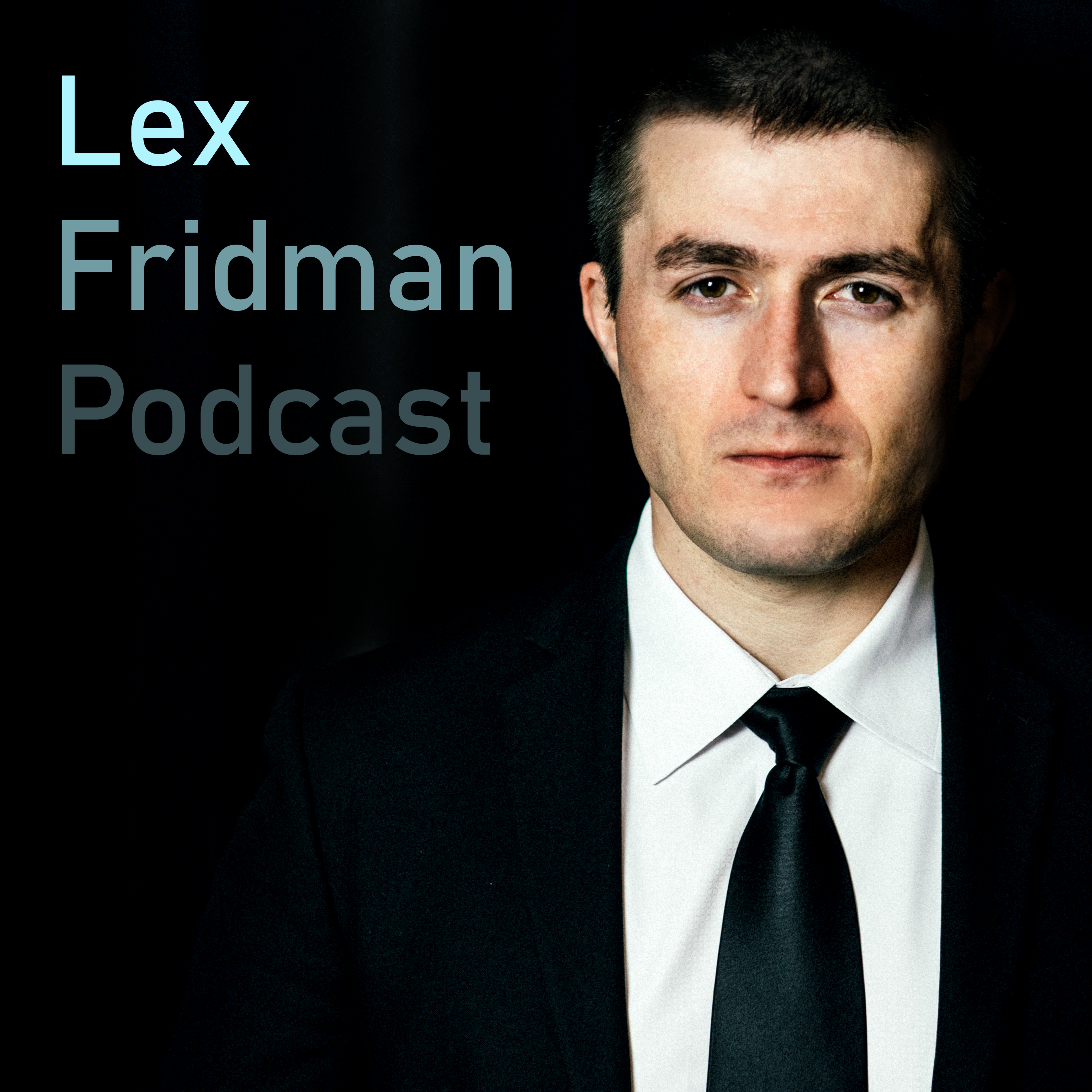
Pod Insights Lex Fridman Podcast Rajat Monga: TensorFlow About this episode Rajat Monga is an Engineering Director at Google, leading the TensorFlow team. If you would like to get more information about this podcast go to https://lexfridman.com/ai or connect with @lexfridman on Twitter https://twitter.com/lexfridman, LinkedIn https://www.linkedin.com/in/lexfridman/, Facebook https://www.facebook.com/lexfridman, Medium https://medium.com/@lexfridman, or YouTube https://www.youtube.com/lexfridman where you can watch the video versions of these conversations.
Transcript 12,194 words · 2 speakers
Speaker names marked ? are inferred from speaking time and the show’s known hosts — they are not voice-verified.
0:00 Lex Fridman? The following is a conversation with Rajat Monga. He's an engineering director at Google, leading the TensorFlow team. TensorFlow is an open source library at the center of much of the work going on in the world in deep learning, both the cutting edge research and the large scale application of learning based approaches. But it's quickly becoming much more than a software library. It's now an ecosystem of tools for the deployment of machine learning in the cloud, on the phone, in the browser, on both generic and specialized hardware, TPU, GPU, and so on. Plus, there's a big emphasis on growing a passionate community of developers. Rajat, Jeff Dean, and a large team of engineers at Google Brain are working to define the
0:41 Lex Fridman? future of machine learning with TensorFlow 2.0, which is now in alpha. I think the decision to open source TensorFlow was a definitive moment in the tech industry. It showed that open innovation can be successful and inspired many companies to open source their code, to publish, and in general, engage in the open exchange of ideas. This conversation is part of the Artificial Intelligence Podcast. If you enjoy it, subscribe on YouTube, iTunes, or simply connect with me on Twitter at LexFriedman, spelled F R I D. And now here's my conversation with Rajat Monga.
1:34 Lex Fridman? You were involved with Google Brain since its start in 2011 with Jeff Dean. It started with this belief, the proprietary machine learning library, and turned into TensorFlow in 2014, the open source library. So what were the early days of Google Brain like? What were the goals, the missions? How do you even proceed forward once there's so much possibilities before you?
2:04 Speaker 01 It was interesting back then, you know, when I started or when you were even just talking about it.
2:11 Speaker 01 The idea of deep learning was interesting and intriguing in some ways. It hadn't yet taken off, but it held some promise. It had shown some very promising and early results. I think the idea where Andrew and Jeff had started was, what if we can take this, what people are doing in research and scale it to what Google has in terms of the compute power and also put that kind of data together. What does it mean? And so far, the results had been if you scale the compute, scale the data, it does better and would that work? And so that was the first year or two, can we prove that out? And with disbelief when we started the first year, we got some early wins, which is always
2:56 Speaker 01 great.
2:57 Lex Fridman? What were the wins like? What was the wins where you were, there's some promise to this, this is going to be good?
3:02 Speaker 01 I think that two early wins were, one was speech that we collaborated very closely with the speech research team, who is also getting interested in this. And the other one was on images where we, you know, the cat paper, as we call it, that was covered by a lot of folks.
3:19 Lex Fridman? And the birth of Google Brain was around neural networks. That was, so it was deep learning from the very beginning. That was the whole mission. So what would, in terms of scale, what was the sort of dream of what this could become? Like, were there echoes of this open source TensorFlow community that might be brought in? Was there a sense of TPUs? Was there a sense of like, machine learning is now going to be at the core of the entire company, is going to grow into that direction?
3:52 Speaker 01 Yeah, I think so. That was interesting. And like, if I think back to 2012 or 2011, and first was, can we scale it? In the year or so, we had started scaling it to hundreds and thousands of machines. In fact, we had some runs even going to 10,000 machines and all of those shows great promise. In terms of machine learning at Google, the good thing was Google's been doing machine learning for a long time. Deep learning was new, but as we scaled this up, we showed that yes, that was possible and it was gonna impact lots of things. Like, we started seeing real products wanting to use this. Again, speech was the first. There were image things that photos came out of and then many other products as well. So that was exciting.
4:36 Speaker 01 As we went into with that a couple of years, externally also academia started to, you know, there was lots of push on, okay, deep learning is interesting, we should be doing more and so on. And so by 2014, we were looking at, okay, this is a big thing, it's gonna grow. And not just internally, externally as well. Yes, maybe Google's ahead of where everybody is, but there's a lot to do. So a lot of this start to make sense and come together.
5:02 Lex Fridman? So the decision to open source, I was just chatting with Chris Latner about this. The decision to go open source for TensorFlow, I would say, for me personally, seems to be one of the big seminal moments in all of software engineering ever. I think that's when a large company like Google decides to take a large project that many lawyers might argue has a lot of IP, just decide to go open source with it and in so doing, lead the entire world and saying, you know what, open innovation is is a pretty powerful thing and it's okay to do. That was, I mean, that's an incredible, incredible moment in time. So do you remember those discussions happening where their open source should be happening?
5:47 Lex Fridman? What was that like?
5:48 Speaker 01 I would say, I think, so the initial idea came from Jeff, who was a big proponent of this. I think it came off of two big things. One was research-wise, we were a research group. We were putting all our research out there. We wanted to, we were building on others' research and we wanted to push the state of the art forward. And part of that was to share the research. That's how I think deep learning and machine learning has really grown so fast. So the next step was, okay, now would software help with that? And it seemed like there were existing a few libraries out there, Tiano being one, Torch being another, and a few others.
6:30 Speaker 01 But they were all done by academia, and so the level was significantly different. The other one was, from a software perspective, Google had done lots of software, or that we used internally, you know, and we published papers. Often, there was an open source project that came out of that, that somebody else picked up that paper and implemented, and they were very successful. Back then, it was like, okay, there's Hadoop, which has come off of tech that we've built. We know the tech we've built is way better for a number of different reasons. We've invested a lot of effort in that. And turns out, we have Google Cloud, and we are now not really providing our tech,
7:13 Speaker 01 but we are saying, okay, we have Big Table, which is the original thing. We're going to now provide HBase APIs on top of that, which isn't as good, but that's what everybody's used to. So there's like, can we make something that is better and really just provide? Helps the community in lots of ways, but it also helps push the right, a good standard forward.
7:34 Lex Fridman? So how does cloud fit into that? There's a TensorFlow open source library. And how does the fact that you can use so many of the resources that Google provides and the cloud fit into that strategy?
7:47 Speaker 01 So TensorFlow itself is open, and you can use it anywhere, right? And we want to make sure that continues to be the case. On Google Cloud, we do make sure that there's lots of integrations with everything else, and we want to make sure that it works really, really well there, so.
8:03 Lex Fridman? You're leading the TensorFlow effort. Can you tell me the history and the timeline of TensorFlow project? In terms of major design decisions, so like the open source decision, but really, you know, what to include and not? There's this incredible ecosystem that I'd like to talk about. There's all these parts, but what, if you just some sample moments that defined what TensorFlow eventually became through its, I don't know if you're allowed to say history when it's just, but in deep learning, everything moves so fast, and in just a few years, it's already history.
8:39 Speaker 01 Yes, yes. So, looking back. We were building TensorFlow. I guess we open sourced it in 2015, November 2015. We started on it in summer of 2014, I guess.
8:56 Speaker 01 And somewhere like three to six, late 2014, by then we had decided that, okay, there's a high likelihood we'll open source it. So we started thinking about that and making sure we're heading down that path.
9:10 Speaker 01 At that point, by that point, we had seen a few, you know, lots of different use cases at Google. So there were things like, okay, yes, you want to run in at large scale in the data center. Yes, we need to support different kind of hardware. We had GPUs at that point. We had, our first GPU at that point was about to come out, you know, roughly around that time. So the design sort of included those. We had started to push on mobile, so we were running models on mobile. At that point, people were customizing code, so we wanted to make sure TensorFlow could support that as well, so that that sort of became part of that overall design.
9:51 Lex Fridman? When you say mobile, you mean like a pretty complicated algorithm is running on the phone?
9:56 Speaker 01 That's correct. So when you have a model that you deploy on the phone and run it there, right?
10:01 Lex Fridman? So already at that time, there was ideas of running machine learning on the phone?
10:05 Speaker 01 That's correct. We already had a couple of products that were doing that by then.
10:08 Lex Fridman? Right.
10:09 Speaker 01 And in those cases, we had basically customized, handcrafted code or some internal libraries that we're using.
10:16 Lex Fridman? So I was actually at Google during this time in a parallel, I guess, universe, but we were using Theano and Caffe.
10:23 Speaker 01 Yep.
10:24 Lex Fridman? Was there some degree to which you were balancing, like trying to see what Caffe was offering people, trying to see what Theano was offering, that you want to make sure you're delivering on whatever that is? Perhaps the Python part of thing, maybe. Did that influence any design decisions?
10:43 Speaker 01 Totally. So when we built this belief and some of that was in parallel with some of these libraries coming up, I mean, Theano itself is older.
10:53 Speaker 01 But we were building this belief focused on our internal thing because our systems were very different. By the time we got to this, we looked at a number of libraries that were out there. Tiano, there were folks in the group who had experience with Torch, with Lua. There were folks here who had seen Caffe. I mean, actually, Yang Cheng was here as well.
11:15 Speaker 01 There's, what other libraries? I think we looked at a number of things, might even have looked at Chainer back then. I'm trying to remember if it was there. In fact, yeah, we did discuss ideas around, okay, should we have a graph or not? And they were, so putting all these together was definitely, you know, there were key decisions that we wanted. We, we had seen limitations in our prior disbelief things.
11:45 Speaker 01 A few of them were just in terms of research was moving so fast, we wanted the flexibility. We want, the hardware was changing fast, we expected to change that, so that those probably were two things. And yeah, I think the flexibility in terms of being able to express all kinds of crazy things was definitely a big one then.
12:03 Lex Fridman? So what the, the graph decision, so that with moving towards TensorFlow 2.0, there's a more, by default, it'll be eager execution, so sort of hiding the graph a little bit.
12:15 Speaker 01 Yep.
12:15 Lex Fridman? Because it's less intuitive in terms of the way people develop and so on. What was that discussion like with, in terms of using graphs? It seemed, it's kind of the Tiano way, did it seem the obvious choice?
12:27 Speaker 01 So I think where it came from was our, like, disbelief had a graph-like thing as well, a much more, it wasn't a general graph, it was more like a straight line, you know, thing. More like what you might think of Caffe, I guess, in that sense. But the graph was, and we always cared about the production stuff, like even with disbelief, we were deploying a whole bunch of stuff in production. So graph did come from that when we thought of, okay, should we do that in Python? And we experimented with some ideas where it looked a lot simpler to use.
13:01 Speaker 01 But not having a graph meant, okay, how do you deploy now? So that was probably what tilted the balance for us. And eventually we ended up with a graph.
13:09 Lex Fridman? And I guess the question there is, did you? I mean, so production seems to be the really good thing to focus on. But did you even anticipate the other side of it where there could be? What is it? What are the numbers? Something crazy, a 41 million downloads?
13:25 Speaker 01 Yep.
13:29 Lex Fridman? I mean, was that even like a possibility in your mind that it would be as popular as it became?
13:35 Speaker 01 So I think we did see a need for this a lot from the research perspective. And like early days of deep learning in some ways. Forty one million? No, I don't think I imagine this number then.
13:53 Speaker 01 There it seemed like there's a potential future where lots more people would be doing this. And how do we enable that? I would say this kind of growth, I probably started seeing somewhat after the open sourcing, where it was like, okay, you know, deep learning is actually growing way faster for a lot of different reasons. And we are in just the right place to push on that and leverage that and deliver on lots of things that people want.
14:23 Lex Fridman? So what changed once the open source? Like how, you know, this incredible amount of attention from a global population of developers? What? How did the project start changing? I don't even actually remember during those times. I know looking now, there's really good documentation. There's an ecosystem of tools. There's a community blog, there's a YouTube channel now, right?
14:47 Lex Fridman? It's very, very community driven. Back then, I guess 0.1 version.
14:55 Lex Fridman? Is that the version?
14:56 Speaker 01 I think we called it 0.6 or 5, something like that. I forget.
14:59 Lex Fridman? What changed leading into 1.0?
15:03 Speaker 01 It's interesting, you know, I think we've gone through a few things there. When we started out, when we first came out, people loved the documentation we have. Because it was just a huge step up from everything else. Because all of those were academic projects, people doing, you know, who don't think about documentation. I think what that changed was, instead of deep learning being a research thing, some people who were just developers could now suddenly take this out and do some interesting things with it. Right? Who had no clue what machine learning was before then. And that, I think, really changed how things started to scale up in some ways and pushed on it. Over the next few months, as we looked at, you know, how do we stabilize things?
15:48 Speaker 01 As we look at not just researchers, now we want stability, people want to deploy things. That's how we started planning for one dot O. And there are certain needs for that perspective. And so, again, documentation comes up, designs, more kinds of things to put that together. And so, that was exciting to get that to a stage where more and more enterprises wanted to buy in and really get behind that. And I think post one dot O and, you know, with the next few releases, that enterprise adoption also started to take off. I would say between the initial release and one dot O, it was, okay, researchers, of course. Then a lot of hobbies and early interest, people excited about this who started to get on board.
16:32 Speaker 01 And then over the one dot X thing, lots of enterprises.
16:35 Lex Fridman? I imagine anything that's, you know, below one point O, gets pressure to be a enterprise problem or something that's stable.
16:44 Speaker 01 Exactly.
16:45 Lex Fridman? And do you have a sense now that TensorFlow is stable? Like, it feels like deep learning in general is extremely dynamic field, so much is changing. Do you have a, and TensorFlow has been growing incredibly, do you have a sense of stability? At the helm of it. I mean, I know you're in the midst of it, but.
17:04 Speaker 01 Yeah, it's, it's, I think in the midst of it, it's often easy to forget what an enterprise wants and what some of the people on that side want. There are still people running models that are three years old, four years old. So inception is still used by tons of people. Even ResNet 50 is what, a couple of years old now or more, but there are tons of people who use that and they're fine. They don't need the last couple of bits of performance or quality. They want some stability and things that just work. And so there is value in providing that with that kind of stability and in making it really simpler.
17:41 Speaker 01 Because that allows a lot more people to access it. And then there's the, the research crowd which wants, okay, they want to do these crazy things exactly like you're saying, right? Not just deep learning in the straight up models that used to be there. They want R N Ns and even R N Ns are maybe all there transformers now and now it needs to combine with R L and GANs and so on. So, so there's definitely that area that like the boundary that's shifting and pushing the state of the art. But I think there's more and more of the past that's much more stable. And even stuff that was two, three years old is very, very usable by lots of people. So that makes it, that part makes it a lot easier.
18:23 Lex Fridman? So I imagine, maybe you can correct me if I'm wrong, one of the biggest use cases is essentially taking something like ResNet 50 and doing some kind of transfer learning on a very particular problem that you have. It's basically probably what majority of the world does. And you want to make that as easy as possible.
18:43 Speaker 01 So, so I would say for the hobbyist perspective, that's the most common case, right? In fact, the apps on phones and stuff that you'll see, the early ones, that's the most common case. I, I would say there are a couple of reasons for that. One is that everybody talks about that. It looks great on slides. That's a very big presentation. Yeah, exactly.
19:06 Speaker 01 What enterprises want is that is part of it, but that's not the big thing. Enterprises really have data that they want to make predictions on. This is often what they used to do with the people who were doing ML was just regression models, linear regression, logistic regression, linear models, or maybe gradient boosted trees and so on. Some of them still benefit from deep learning, but they want that that that's the bread and butter, like the structured data and so on. So depending on the audience you look at, they're a little bit different.
19:35 Lex Fridman? And they just have, I mean, the best of enterprise probably just has a very large data set or deep learning can probably shine.
19:44 Speaker 01 That's correct. That's right. And then the, I think the other pieces that they want, again, with to point over that the developer summit we put together is the whole TensorFlow standard piece, which is the entire pipeline. They care about stability across doing their entire thing. They want simplicity across the entire thing. I don't need to just train a model. I need to do that every day again, over and over again.
20:07 Lex Fridman? I wonder to which degree you have a role in, I don't know. So I teach a course on deep learning. I have people like lawyers come up to me and say, you know, say, when is machine learning going to enter legal, the legal realm? The same thing in all kinds of disciplines, immigration, insurance. Often when I see what it boils down to is these companies are often a little bit old school in the way they organize the data. So the data is just not ready yet. It's not digitized. Do you also find yourself being in the role of an evangelist for like, let's get, organize your data, folks, and then you'll get the big benefit of TensorFlow?
20:51 Lex Fridman? Do you get those, have those conversations?
20:54 Speaker 01 So, yeah, yeah. I, you know, I get all kinds of questions there from, okay, what can I, what do I need to make this work, right?
21:05 Speaker 01 Do we really need deep learning? I mean, there are all these things. I already used this linear model. Why would this help? I don't have enough data, let's say. You know, or I want to use machine learning, but I have no clue where to start. So it varies back to all the way to the experts who watch very specific things. So it's interesting.
21:24 Lex Fridman? Is there a good answer? It boils down to oftentimes digitizing data. So whatever you want automated, whatever data you want to make prediction based on, you have to make sure that it's in an organized form. Like within the TensorFlow ecosystem, there's now you're providing more and more data sets and more and more pre-trained models. Are you finding yourself also the organizer of data sets?
21:48 Speaker 01 Yes, I think with TensorFlow data sets that we just released, that's definitely come up where people want these data sets. Can we organize them and can we make that easier? So that's definitely one important thing. The other related thing I would say is I often tell people, you know what? Don't think of the most fanciest thing, that the newest model that you see. Make something very basic work and then you can improve it. There's just lots of things you can do with it.
22:15 Lex Fridman? Yeah, start with the basics. True. One of the big things that makes TensorFlow even more accessible was the appearance, whenever that happened of Keras, the Keras standard sort of outside of TensorFlow. I think it was Keras on top of Theano at first only, and then Keras became on top of TensorFlow. Do you know when Keras chose to also add TensorFlow as a backend? Who was the, was it just the community that drove that initially? Do you know if there was discussions, conversations?
22:53 Speaker 01 Yeah, so Francois started the Keras project before he was at Google. And the first thing was Theano. I don't remember if that was after TensorFlow was created or way before. And then at some point, when TensorFlow started becoming popular, there were enough similarities that he decided to, okay, create this interface and put TensorFlow as a backend. I believe that might still have been before he joined Google. So I, you know, we weren't really talking about that. He decided on his own and thought that was interesting and relevant to the community.
23:29 Speaker 01 In fact, I didn't find out about him being at Google until a few months after he was here. He was working on some research ideas and doing Keras on his nights and weekends project and stuff.
23:40 Lex Fridman? Oh, interesting. So he wasn't like part of the TensorFlow? He didn't join initially?
23:46 Speaker 01 He joined research and he was doing some amazing research. He has some papers on that and research. He's a great researcher as well. And at some point, we realized, oh, he's doing this good stuff. People seem to like the API and he's right here. So we talked to him and he said, okay, why don't I come over to your team and work with you for a quarter? And let's make that integration happen. And we talked to his manager and he said, sure, my quarter's fine.
24:16 Speaker 01 And that quarter's been something like two years now. And so he's fully on this.
24:21 Lex Fridman? So Keras got integrated into TensorFlow like in a deep way?
24:27 Speaker 01 Yeah.
24:28 Lex Fridman? And now with 2.0, TensorFlow 2.0, sort of Keras is kind of the recommended way for a beginner to interact with TensorFlow. Which makes that initial sort of transfer learning or the basic use cases even for enterprise, super simple, right?
24:45 Speaker 01 That's correct. That's right.
24:46 Lex Fridman? So what was that decision like? That seems like a, that's kind of a bold decision as well.
24:54 Speaker 01 We did spend a lot of time thinking about that one. We had a bunch of APIs, some picked by us. There was a parallel layers API that we were building. And when we decided to do Keras in parallel, so they were like, okay, two things that we are looking at. And the first thing we was trying to do is just have them look similar, like be as integrated as possible, share, all of that stuff. There were also like three other APIs that others had built over time because we didn't have a standard one.
25:25 Speaker 01 But one of the messages that we kept hearing from the community, okay, which one do we use? And they kept seeing like, okay, here's a model in this one and here's a model in this one, which should I pick?
25:35 Speaker 01 So that's sort of like, okay, we had to address that straight on with 2.0. The whole idea was we need to simplify. We had to pick one. Based on where we were, we were like, okay. Let's see what are the people like. And Keras was clearly one that lots of people loved. There were lots of great things about it. So we settled on that.
26:00 Lex Fridman? Organically, that's kind of the best way to do it. It was great. It was surprising, nevertheless, to sort of bring in an outside. I mean, there was a feeling like Keras might be almost like a competitor in a certain kind of a two TensorFlow. And in a sense, it became an empowering element of TensorFlow.
26:18 Speaker 01 That's right. Yeah, it's interesting how you can put two things together, which can align, right? In this case, I think Francois, the team, and I, you know, a bunch of us have chatted. And I think we all want to see the same kind of things. We all care about making it easier for the huge set of developers out there. And that makes a difference.
26:39 Lex Fridman? So Python has Guido van Rossum, who until recently held the position of benevolent dictator for life. Right, so does a huge, successful open source project like TensorFlow need one person who makes a final decision? So you've did a pretty successful TensorFlow Dev Summit just now, last couple of days. There's clearly a lot of different new features being incorporated and amazing ecosystems, so on. Who's a, how are those design decisions made? Is there a BDFL in TensorFlow? And or is it more distributed and organic?
27:22 Speaker 01 I think it's somewhat different, I would say. I've always been involved in the key design directions. But there are lots of things that are distributed where there are a number of people, Martin Wick being one, who has really driven a lot of our open source stuff, a lot of the APIs. And there are a number of other people who've been, you know, pushed and been responsible for different parts of it. We do have regular design reviews. Over the last year, we've really spent a lot of time opening up to the community and adding transparency. We're setting more processes in place, so RFCs, special interest groups, really grow that community and scale that.
28:09 Speaker 01 I think the kind of scale that ecosystem is in, I don't think we could scale with having me as the lone point of decision maker.
28:18 Lex Fridman? I got it. So yeah, the growth of that ecosystem, maybe you can talk about it a little bit. First of all, when I, it started with Andre Karpathy when he first did ConvNet JS. The fact that you can train in your own network in the browser was in JavaScript was incredible. So now TensorFlow JS is really making that a serious, like a legit thing, a way to operate, whether it's in the backend or the frontend. Then there's the TensorFlow Extended, like you've mentioned. There's TensorFlow Lite for mobile. And all of it, as far as I can tell, it's really converging towards being able to, you know, save models in the same kind of way.
28:59 Lex Fridman? You can move around, you can train on the desktop and then move it to mobile and so on.
29:05 Speaker 01 That's right.
29:05 Lex Fridman? There's that cohesiveness. So can you maybe give me, whatever I missed, a bigger overview of the mission of the ecosystem that's trying to be built? And where is it moving forward?
29:18 Speaker 01 Yep. So in short, the way I like to think of this is our goals to enable machine learning. And in a couple of ways, you know, one is we have lots of exciting things going on in ML today. We started with deep learning, but we now support a bunch of other algorithms too. So, so one is to, on the research side, keep pushing on the state of the art. Can we, you know, how do we enable researchers to build the next amazing thing? So BERT came out recently. You know, it's great that people are able to do new kinds of research. There are lots of amazing research that happens across the world. So that's one direction. The other is how do you take that across all the people outside who want to take that research and do some great things with it?
30:02 Speaker 01 And integrate it to build real products, to have a real impact on people?
30:08 Speaker 01 And so if that's the other axis in some ways. You know, at a high level, one way I think about it is there are a crazy number of compute devices across the world. And we often used to think of ML and training and all of this as, okay, something you do either in the workstation or the data center or cloud. But we see things running on the phones. We see things running on really tiny chips. And we had some demos at the developer summit. And so the way I think about this ecosystem is, how do we help get machine learning on every device that has a compute capability? And that continues to grow.
30:50 Speaker 01 And so in some ways, this ecosystem is looked at, you know, various aspects of that and grown over time to cover more of those. And we continue to push the boundaries. In some areas, we've built more tooling and things around that to help you. I mean, the first tool we started was TensorBoard. You wanted to learn just the training piece. The FX for TensorFlow Extended to really do your entire ML pipelines. If you're, you know, care about all that production stuff. But then going to the edge, going to different kinds of things. And it's not just us now. There are a place where there are lots of libraries being built on top.
31:32 Speaker 01 So there are some for research, maybe things like TensorFlow Agents or TensorFlow Probability that started as research things or for researchers for focusing on certain kinds of algorithms. But they're also being deployed or used by, you know, production folks. And some have come from within Google, just teams across Google who wanted to do, to build these things. Others have come from just the community because there are different pieces that different parts of the community care about. And I see our goal as enabling even that, right? It's not, we cannot and won't build every single thing. That just doesn't make sense. But if we can enable others to build the things that they care about and there's a broader community
32:16 Speaker 01 that cares about that and we can help encourage that. And that's great. That really helps the entire ecosystem, not just those. One of the big things about 2.0 that we're pushing on is, okay, we have these so many different pieces, right? How do we help make all of them work well together? So there are a few key pieces there that we're pushing on. One being the core format and then how we share the models themselves through SaveModel and TensorFlow Hub and so on. And, you know, a few of the pieces that really put this together.
32:50 Lex Fridman? I was very skeptical that that's, you know, when TensorFlow JS came out, it didn't seem, or Deep Learning JS.
32:55 Speaker 01 Yeah, that was the first.
32:57 Lex Fridman? It seems like technically very difficult project. As a standalone, it's not as difficult, but as a thing that integrates into the ecosystem seems very difficult. So, I mean, there's a lot of aspects of this you're making look easy, but on the technical side, how many challenges have to be overcome here?
33:16 Speaker 01 Lot.
33:17 Lex Fridman? And still have to be overcome?
33:19 Speaker 01 Yes.
33:19 Lex Fridman? That's the question here, too.
33:20 Speaker 01 There are lots of steps to it, right? And we've iterated over the last few years, so there's a lot we've learned.
33:27 Speaker 01 I, yeah, often when things come together well, things look easy. And that's exactly the point. It should be easy for the end user, but there are lots of things that go behind that. If I think about still challenges ahead, there are,
33:45 Speaker 01 you know, we have a lot more devices coming on board, for example, from the hardware perspective. How do we make it really easy for these vendors to integrate with something like TensorFlow? Right? So there's a lot of compiler stuff that others are working on. There are things we can do in terms of our APIs and so on that we can do. As we, you know, TensorFlow started as a very monolithic system and to some extent it still is. There are less, lots of tools around it, but the core is still pretty large and monolithic. One of the key challenges for us to scale that out is how do we break that apart with clearer interfaces?
34:26 Speaker 01 It's, you know, in some ways it's software engineering one-on-one, but for a system that's now four years old, I guess, or more, and that's still rapidly evolving and that we're not slowing down with, it's hard to, you know, change and modify and really break apart. It's sort of like, as people say, right? It's like changing the engine with a car running or trying to fix that. That's exactly what we're trying to do.
34:51 Lex Fridman? So there's a challenge here because the downside of so many people being excited about TensorFlow and becoming to rely on it in many of their applications is that you're kind of responsible, like it's a technical debt. You're responsible for previous versions to some degree still working. So when you're trying to innovate, I mean, it's probably easier to just start from scratch every few months.
35:22 Speaker 01 Absolutely.
35:23 Lex Fridman? So do you feel the pain of that? A 2.0 does break some back compatibility, but not too much. It seems like the conversion is pretty straightforward. And do you think that's still important, given how quickly deep learning is changing? Can you just? The things that you've learned, can you just start over? Or is there pressure to not?
35:45 Speaker 01 It's a tricky balance. So if it was just a researcher writing a paper, who a year later will not look at that code again? Sure, it doesn't matter. There are a lot of production systems that rely on TensorFlow, both at Google and across the world. And people worry about this. I mean, these systems run for a long time. So it is important to keep that compatibility and so on. And yes, it does come with a huge cost. There's a, we have to think about a lot of things as we do new things and make new changes. I think it's a trade off, right? You can, you might slow certain kinds of things down,
36:29 Speaker 01 but the overall value you're bringing because of that is much bigger. Because it's not just about breaking the person yesterday. It's also about telling the person tomorrow that, you know what? This is how we do things. We're not going to break you when you come on board. Because there are lots of new people who are also going to come on board. You know, one way I like to think about this, and I always push the team to think about as well. When you want to do new things, you want to start with a clean slate. Design with a clean slate in mind. And then we'll figure out how to make sure all the other things work. And yes, we do make compromises occasionally. But unless you design with the clean slate and not worry about that, you'll never get to a good place.
37:14 Lex Fridman? That's brilliant. So even if you're do, you are responsible when in the idea stage, when you're thinking of new, just put all that behind you. That's okay. That's really, really well put. So I have to ask this because a lot of students, developers, ask me how I feel about PyTorch versus TensorFlow. So I've recently completely switched my research group to TensorFlow. I wish everybody would just use the same thing. And TensorFlow is as close to that, I believe, as we have. But
37:45 Lex Fridman? Do you enjoy competition? So TensorFlow is leading in many ways, in many dimensions, in terms of ecosystem, in terms of the number of users, momentum, power, production levels, so on. But, you know, a lot of researchers are now also using PyTorch. Do you enjoy that kind of competition, or do you just ignore it and focus on making TensorFlow the best that it can be?
38:08 Speaker 01 So, just like research or anything people are doing, right? It's great to get different kinds of ideas. And when we started with TensorFlow, like I was saying earlier, one, it was very important for us to also have production in mind. We didn't want just research, right? And that's why we chose certain things. Now, PyTorch came along and said, you know what? I only care about research. This is what I'm trying to do. What's the best thing I can do for this? And it started iterating and said, okay, I don't need to worry about graphs. Let me just run things. I don't care if it's not as fast as it can be, but let me just, you know, make this part easy. And there are things you can learn from that, right? They, they again had the benefit of seeing what had come before,
38:53 Speaker 01 but also exploring certain different kinds of spaces and they had some good things there, you know, building on, say, things like Chainer and so on before that. So, competition is definitely interesting. It made us, you know, this is an area that we had thought about, like I said, you know, very early on. Over time, we had revisited this a couple of times. Should we add this again? At some point, we said, you know what? Here's, it seems like this can be done well, so let's try it again. And we, that's how, you know, we started pushing on eager execution. How do we combine those two together? Which has finally come very well together in 2.0, but it took us a while to get all the things together and so on.
39:32 Lex Fridman? So let me, I mean, ask, put another way, I think eager execution is a really powerful thing that was added. Do you think it wouldn't have been?
39:42 Lex Fridman? You know, Muhammad Ali versus Frasier, right? You think it wouldn't have been added as quickly if PyTorch wasn't there?
39:50 Speaker 01 It might have taken longer.
39:51 Lex Fridman? No longer?
39:52 Speaker 01 Yeah, yeah. It was, I mean, we had tried some variants of that before, so I'm sure it would have happened, but it might have taken longer.
39:58 Lex Fridman? I'm grateful that TensorFlow responded in the way they did. It's doing some incredible work last couple of years. What other things that we didn't talk about or are you looking forward in 2.0? That comes to mind. So we talked about some of the ecosystem stuff, making it easily accessible to Keras, eager execution. Is there other things that we missed?
40:19 Speaker 01 Yeah, so I would say one is just where 2.0 is and, you know, with all the things that we've talked about. I think as we think beyond that, there are lots of other things that it enables us to do and that we're excited about. So what it's setting us up for, okay, here are these really clean APIs. We've cleaned up the surface for what the users want. What it also allows us to do a whole bunch of stuff behind the scenes once we've, we are ready with 2.0. So for example, in TensorFlow with graphs and all the things you could do, you could always get a lot of good performance if you spend the time to tune it. Right? And we've clearly shown that, lots of people do that.
41:04 Speaker 01 With 2.0, with these APIs, where we are, we can give you a lot of performance just with whatever you do. You know, if you're, because we see these, it's much cleaner. We know most people are going to do things this way. We can really optimize for that and get a lot of those things out of the box. And it really allows us, you know, both for single machine and distributed and so on, to really explore other spaces behind the scenes after, you know, 2.0 in the future versions as well. So right now, the team's really excited about that, that over time, I think we'll see that. The other piece that I was talking about in terms of
41:45 Speaker 01 Just restructuring the monolithic thing into more pieces and making it more modular. I think that's going to be really important for a lot of the other people in the ecosystem, other organizations and so on, that wanted to build things.
42:01 Lex Fridman? Can you elaborate a little bit what you mean by making TensorFlow more ecosystem more modular?
42:06 Speaker 01 So the way it's organized today is there's one, there are lots of repositories in the TensorFlow organization at GitHub. The core one where we have TensorFlow, it has the execution engine. It has, you know, the key backends for CPUs and GPUs. It has the work to do distributed stuff. And all of these just work together in a single library or binary. There's no way to split them apart easily. I mean, there are some interfaces, but they're not very clean. In a perfect world, you would have clean interfaces where, okay, I want to run it on my fancy cluster with some custom networking. Just implement this and do that. I mean, we kind of support that, but it's hard for people today.
42:51 Speaker 01 I think as we are starting to see more interesting things in some of these spaces, having that clean separation will really start to help. And again, going to the large size of the ecosystem and the different groups involved there, enabling people to evolve and push on things more independently just allows it to scale better.
43:12 Lex Fridman? And by people, you mean individual developers and?
43:15 Speaker 01 And organizations.
43:16 Lex Fridman? And organizations?
43:17 Speaker 01 That's right.
43:18 Lex Fridman? So the hope is that everybody sort of major, I don't know, Pepsi or something uses, like major corporations go to TensorFlow to this kind of?
43:27 Speaker 01 Yeah, if you look at enterprises like Pepsi or these, I mean, a lot of them are already using TensorFlow. They are not the ones that do the development or changes in the core. Some of them do, but a lot of them don't. I mean, they touch small pieces. There are lots of these, some of them being, let's say, hardware vendors who are building their custom hardware and they want their own pieces.
43:46 Lex Fridman? Ah, got it.
43:47 Speaker 01 Or some of them being bigger companies, say IBM. I mean, they're involved in some of our special interest groups. And they see a lot of users who want certain things and they want to optimize for that. So folks like that often.
44:00 Lex Fridman? Autonomous vehicle companies, perhaps?
44:02 Speaker 01 Exactly, yes.
44:04 Lex Fridman? So yeah, like I mentioned, TensorFlow has been downloaded 41 million times, 50,000 commits, almost 10,000 pull requests, 1,800 contributors. So I'm not sure if you can explain it, but what does it take to build a community like that? What if in retrospect, what do you think? What is the critical thing that allowed for this growth to happen? And how does that growth continue?
44:30 Speaker 01 Yeah. Yeah, that's an interesting question. I wish I had all the answers there, I guess, so we could replicate it. I think there's a, there are a number of things that need to come together, right? One, you know, just like any new thing, it is about, there's a sweet spot of timing, what's needed, you know, does it grow with what's needed? So in this case, for example, TensorFlow is not just grown because it was a good tool. It's also grown with the growth of deep learning itself. So those factors come into play. Other than that, though, I think just hearing, listening to the community, what they do,
45:12 Speaker 01 what they need, being open to like in terms of external contributions. We've spent a lot of time in making sure we can accept those contributions well. We can help the contributors in adding those, putting the right process in place, getting the right kind of community, welcoming them and so on. Like over the last year, we've really pushed on transparency that that's important for an open source project. People want to know where things are going and we're like, okay, here's a process where you can do that, here are our seeds and so on. So thinking through, there are lots of community aspects that come into that you can really work on. As a small project, it's maybe easy to do because there's like two developers and you
45:57 Speaker 01 can do those. As you grow. Putting more of these processes in place, thinking about the documentation, thinking about what do developers care about, what kind of tools would they want to use? All of these come into play, I think.
46:13 Lex Fridman? So one of the big things I think that feeds the TensorFlow fire is people building something on TensorFlow and, you know, some implement a particular architecture that does something cool and useful and they put that on GitHub. And so it just feeds this, this growth. Do you have a sense that with 2.0 and 1.0 that there may be a little bit of a partitioning like there is with Python 2 and 3, that there'll be a code base in, in the older versions of TensorFlow that will not be as compatible easily? Or are you pretty confident that this kind of conversion is pretty natural and easy to do?
46:54 Speaker 01 So we're definitely working hard to make that very easy to do. There's lots of tooling that we talked about at the developer summit this week and we'll continue to invest in that tooling. It's, you know, when you think of these significant version changes, that's always a risk and we, we are really pushing hard to make that transition very, very smooth. I, I think, so, so at some level, people want to move and they see the value in the new thing. They don't want to move just because it's a new thing. And some people do, but most people want a really good thing. And I think over the next few months, as people start to see the value, we'll definitely see that shift happening. So I'm pretty excited and confident that we will see people moving.
47:38 Speaker 01 As you said earlier, this field is also moving rapidly, so that'll help because we can do more things and, you know, all the new things will clearly happen in 2.0. So people will have lots of good reasons to move.
47:48 Lex Fridman? So what do you think TensorFlow 3.0 looks like? Is that, is there, are things happening so crazily that even at the end of this year seems impossible to plan for? Or is it possible to plan for the next five years?
48:05 Speaker 01 I, I think it's tricky. There are some things that we can
48:10 Speaker 01 Expect in terms of, okay, change, yes, change is gonna happen. Are there some things gonna stick around and some things not gonna stick around? I would say the basics of deep learning, the, you know, say convolutional models or the basic kind of things, they'll probably be around in some form still in five years. Will RL and GANs stay? Very likely, based on where they are. Will we have new things? Probably, but those are hard to predict. And some, directionally, some things that we can see is, you know, and things that we're starting to do, right, with some of our projects right now, is just 2.0 combining eager execution and graphs,
48:55 Speaker 01 where we're starting to make it more like just your natural programming language. You're not trying to program something else. Similarly, with Swift for TensorFlow, we're taking that approach. Can you do something ground up, right? So some of those ideas seem like, okay, that's the right direction. In five years, we expect to see more in that area. Other things we don't know is, will hardware accelerators be the same? Will we be able to train with four bits instead of 32 bits?
49:25 Lex Fridman? And I think the TPU side of things is exploring that. I mean, TPU is already on version three. It seems that the evolution of TPU and TensorFlow are sort of, they're co-evolving almost in terms of, both are learning from each other and from the community and from the applications where the biggest benefit is achieved.
49:45 Speaker 01 That's right.
49:46 Lex Fridman? You've been trying to, sort of with eager, with Keras, to make TensorFlow as accessible and easy to use as possible. What do you think for beginners is the biggest thing they struggle with? Have you encountered that? Or is basically what Keras is solving is that eager, like we talked about?
50:03 Speaker 01 Yeah, for some of them, like you said, right, the beginners want to just be able to take some image model, they don't care if it's inception or ResNet or something else, and do some training or transfer learning on their kind of model. Being able to make That easy is important. So I in in some ways, if we do that by providing them simple models with say in hub or so on, they don't care about what's inside that box. But they want to be able to use it. So so we're pushing on, I think, different levels. If you look at just a component that you get, which has the layers already smushed in. The the beginners probably just want that. Then the next step is, okay, look at building layers with layers.
50:45 Speaker 01 If you go out to research, then they are probably writing custom layers themselves or doing their own loops. So there's a whole spectrum there.
50:52 Lex Fridman? And then providing the pre-trained models seems to really decrease the time from. You trying to start. So you could basically in a collab notebook achieve what you need. So I basically answering my own question because I think what TensorFlow delivered on recently is is is trivial for beginners. So. I was just wondering if there was other pain points you're trying to ease, but I'm not sure there would.
51:18 Speaker 01 No, those are probably the big ones. I mean, I I see high schoolers doing a whole bunch of things now, which is pretty amazing.
51:25 Lex Fridman? It's it's both amazing and terrifying.
51:27 Speaker 01 Yes.
51:28 Lex Fridman? In a sense that when they grow up, it's some incredible ideas will be coming from them. So there's certainly a technical aspect to your work, but you also have a management aspect to your role with TensorFlow. Leading the project, a large number of developers and people. So what do you look for in a good team? What do you think? You know, Google has been at the forefront of exploring what it takes to build a good team and TensorFlow. Is one of the most cutting edge technologies in the world. So in this context, what do you think makes for a good team?
52:06 Speaker 01 It's definitely something I think a fair bit about. I think the. In in terms of, you know.
52:15 Speaker 01 The team being able to deliver something well, one of the things that's important is cohesion across the team. So being able to execute together in doing things. It's not an, like at this scale, an individual engineer can only do so much. There's a lot more that they can do together, even though we have some amazing superstars across Google and in the team. But there's, you know, often the way I see it as the product of what the team generates is way larger than the whole or, you know, the individual put together. And so how do we have all of them work together? The culture of the team itself. Hiring good people is important.
52:59 Speaker 01 But part of that is it's not just that, okay, we hire a bunch of smart people and throw them together and let them do things. It's also people have to care about what they're building. People have to be motivated for the right kind of things. That's often an important factor. And, you know, finally, how do you put that together with a somewhat unified vision of where we want to go? So are we all looking in the same direction? Or each of us going all over? And sometimes it's a mix. Google's a very bottom-up organization in some sense. Also, research even more so. And that's how we started.
53:42 Speaker 01 But as we've become this larger product and ecosystem, I think it's also important to combine that well with a mix of, okay, here's the direction we want to go. And there is exploration we'll do around that, but let's keep staying in that direction, not just all over the place.
54:00 Lex Fridman? And is there a way you monitor the health of the team? Sort of like?
54:05 Lex Fridman? Is there a way you know you did a good job? The team is good? Like, I mean, you're sort of, you're saying nice things, but it's sometimes difficult to determine
54:15 Speaker 01 Yes.
54:15 Lex Fridman? how aligned.
54:17 Speaker 01 Yes.
54:17 Lex Fridman? Because it's not binary. It's not like it's, it's, there's tensions and complexities and so on. And the other element of it is that you mentioned superstars. You know, there's so much, even at Google, such a large percentage of work is done by individual superstars too. So there's a
54:33 Speaker 01 Yeah.
54:34 Lex Fridman? And sometimes those superstars can be against the dynamic of a team and those, those tensions. Have, was that, has, I mean, I'm sure intensive flow might be a little bit easier because the mission of the project is so
54:47 Lex Fridman? sort of beautiful. You're, you're at the cutting edge, so it's exciting.
54:49 Speaker 01 Yeah.
54:51 Lex Fridman? But have you had, struggled with that? Has there been challenges?
54:54 Speaker 01 There are always people challenges in different kinds of affairs. That, that said, I think we've been what's good about getting people who care and are, you know, have the same kind of culture. And that's Google in general to a large extent. But also, like you said, given that the project has had so many exciting things to do, there's been room for lots of people to do different kinds of things and grow, which, which does make the problem a bit easier, I guess.
55:21 Lex Fridman? Yeah.
55:22 Speaker 01 And it allows people, depending on what they're doing, if there's room around them, then that's fine. But yes, we do, we do care about whether superstar or not, that they need to work well with the team across Google.
55:38 Lex Fridman? That's interesting to hear. So it's like superstar or not, the productivity broadly is about the team.
55:46 Speaker 01 Yeah. Yeah. I mean, they, they might add a lot of value, but if they're hurting the team, then that's a problem.
55:52 Lex Fridman? So in hiring engineers, it's so interesting, right? The, the hiring process, what do you look for? How do you determine a good developer or a good member of a team from just a few minutes or hours together?
56:06 Speaker 01 So
56:06 Lex Fridman? Again, no magic answers, I'm sure.
56:08 Speaker 01 Yeah. Yeah. And Google has a, a hiring process that we've refined over the last 20 years, I guess, and that you've probably heard and seen a lot about. So we, we do work with the same hiring process and that, that's really helped.
56:24 Speaker 01 For me in particular, I would say, in addition to the core technical skills, what does matter is their motivation in what they want to do. Because if that doesn't align well with where we want to go, that's not going to lead to long-term success for either them or the team. And I think that becomes more important the more senior the person is, but it's important at every level. Like even the junior most engineer, if they're not motivated to do well at what they're trying to do, however smart they are, it's going to be hard for them to succeed.
56:56 Lex Fridman? Does the Google hiring process touch on that passion? So like trying to determine, because I think as far as I understand, maybe you can speak to it, that the Google hiring process sort of helps, in the initial like determines the skill set there, is your puzzle solving ability, problem solving ability good? But like, I'm not sure, but it seems that the determining whether the person is like fire inside them.
57:23 Speaker 01 Yeah.
57:23 Lex Fridman? That burns to do anything, really, it doesn't really matter. It's just some cool stuff, I'm going to do it. That, I don't, is that something that ultimately ends up when they have a conversation with you? Or once it gets closer to the team?
57:38 Speaker 01 So one of the things we do have as part of the process is just a culture fit, like part of the interview process itself. In addition to just the technical skills, and each engineer or whoever the interviewer is, is supposed to rate the person on the culture and the culture fit with Google and so on. So that is definitely part of the process. Now, there are various kinds of projects and different kinds of things. So there might be variants into the kind of culture you want there and so on. And yes, that does vary. So for example, TensorFlow has always been a fast-moving project, and we want people who are comfortable with that. But at the same time now, for example, we are at a place where we are also very full-fledged product,
58:21 Speaker 01 and we want to make sure things that work really, really work, right? You can't cut corners all the time. So that balancing that out and finding the people who are the right fit for those is important. And I think those kinds of things do vary a bit across projects and teams and product areas across Google. And so you'll see some differences there in the final checklist. But a lot of the core culture, it comes along with just the engineering excellence and so on.
58:50 Lex Fridman? What is the hardest part of your job?
58:55 Lex Fridman? I'll take your pick, I guess.
58:58 Speaker 01 It's it's fun, I would say, right? Hard, yes, I mean, lots of things at different times. I think that that does vary.
59:05 Lex Fridman? So let me clarify that difficult things are fun.
59:08 Speaker 01 Yeah.
59:08 Lex Fridman? When you solve them, right?
59:11 Speaker 01 Yes.
59:11 Lex Fridman? It's fun in that in that sense.
59:13 Speaker 01 I I think the key to a successful thing across the board. And, you know, in this case, it's a large ecosystem now, but even a small product is striking that fine balance across different aspects of it. Sometimes it's how fast do you go versus how perfect it is. Sometimes it's how do you involve this huge community? Who do you involve? Or do you decide, OK, now is not a good time to involve them because it's not the right fit?
59:46 Speaker 01 Sometimes it's saying no to certain kinds of things. Those are often the hard decisions.
59:53 Speaker 01 Some of them you make quickly because you don't have the time. Some of them you get time to think about them, but they're always hard.
1:00:00 Lex Fridman? So when both both choices are pretty good, it's that those decisions. What about deadlines? Is this do you find TensorFlow to be driven
1:00:13 Lex Fridman? by deadlines to a degree that a product might? Or is there still a balance to where I mean, it's less deadline? You had the Dev Summit that came together incredibly. Looked like there's a lot of moving pieces and so on. So that did that deadline make people rise to the occasion, releasing TensorFlow 2.0 Alpha?
1:00:34 Speaker 01 Yeah.
1:00:34 Lex Fridman? I'm sure that was done last minute as well. I mean, like the up to the
1:00:38 Speaker 01 Yes.
1:00:39 Lex Fridman? Up to the up to the last point.
1:00:41 Speaker 01 Again, you know, it's one of those things that's a you need to strike the good balance. There's some value that deadlines bring that does bring a sense of urgency to get the right things together instead of, you know, getting the perfect thing out. You need something that's good and works well. And the team definitely did a great job in putting that together. So I was very amazed and excited by everything, how that came together.
1:01:05 Speaker 01 That said, across the year, we try not to put artificial deadlines. We focus on keep things that are important, figure out what that, how much of it's important. And, and we are developing in the open with, you know, internally and externally, everything's available to everybody. So you can pick and look at where things are. We do releases at a regular cadence. So fine, if something doesn't necessarily end up at this month, it'll end up in the next release in a month or two. And that's okay, but we want to get like, keep moving as fast as we can in these different areas. Because we can iterate and improve on things. Sometimes it's okay to put things out that aren't fully ready.
1:01:49 Speaker 01 We'll make sure it's clear that, okay, this is experimental, but it's out there. If you want to try and give feedback, that's very, very useful. I think that quick cycle and quick iteration is important. That's what we often focus on rather than here's a deadline where you get everything else.
1:02:05 Lex Fridman? Is 2.0, is there pressure to make that stable? Or like, for example, WordPress 5.0 just came out with, and there was no pressure to, it was a lot of build updates delivered way too late. But, and they said, okay, well, but we're going to release a lot of updates really quickly to improve it. It is, do you see TensorFlow 2.0 in that same kind of way? Or is there this pressure to once it hits 2.0, once you get to the release candidate and then you get to the final, that that's going to be the, the, the stable thing?
1:02:38 Speaker 01 So it's going to be stable in, just like when not X was where every API that's there is going to remain and work. It doesn't mean we can't change things in under the covers. It doesn't mean we can't add things. So there's still a lot more for us to do and we continue to have more releases. So in that sense, there's still, I don't think we'd be done in like two months when we release this.
1:03:02 Lex Fridman? I don't know if you can say, but is there, you know, there's not external deadlines for TensorFlow 2.0. But is there internal deadlines, the artificial or otherwise, that you're trying to set for yourself? Is, or is it whenever it's ready?
1:03:19 Speaker 01 So we want it to be a great product, right? And that's a big, important piece for us. TensorFlow is already out there. We have, you know, 41 million downloads for one dot X. So it's not like we have to have this. Yeah, exactly. So it's not like, a lot of the features that we've, you know, really polishing and putting them together are there. We don't have to rush that just because. So in that sense, we want to get it right and really focus on that. That said, we have said that we are looking to get this out in the next few months, in the next quarter. And we, you know, as far as possible, we'll definitely try to make that happen.
1:03:56 Lex Fridman? Yeah, my, my favorite line was, uh, spring is a relative concept. I love it.
1:04:01 Speaker 01 Yes.
1:04:02 Lex Fridman? Spoken like a true developer. So, you know, something I'm really interested in and your previous line of work is, before TensorFlow, you led a team at Google on search ads.
1:04:14 Lex Fridman? I think, uh, this is like, this is a very interesting topic on, on every level, on a technical level. Because at their best, ads connect people to the things they want and need.
1:04:25 Speaker 01 Yep.
1:04:25 Lex Fridman? So, and, and at their worst, they're just these things that annoy the heck out of you. To the point of ruining the entire user experience of whatever you're actually doing. So they have a bad rep, I guess. And on the other end, so that this connecting users to the thing they need and want is a beautiful opportunity for machine learning to shine. Like huge amounts of data that's personalized and you kind of map to the thing they actually won't get annoyed. So what have you learned from this Google that's leading the world in this aspect? What have you learned from that experience? And what do you think is the future of ads? Take you back to the
1:05:08 Speaker 01 Yeah. Yes, it's been a while, but I totally agree with what you said. I think the search ads, the way it was always looked at, and I believe it still is, is it's an extension of what search is trying to do. The goal is to make the information and make the world's information accessible. The ads, it's not just information, but it may be products or other things that people care about. And so it's really important for them to align with what the users need. And in search ads, there's a minimum quality level before that ad would be shown. If you don't have an ad that hits that quality, but it will not be shown even if we have
1:05:52 Speaker 01 it, and okay, maybe we lose some money there, that's fine. That is really, really important, and I think that that is something I really liked about being there. Advertising is a key part, I mean, as a model, it's been around for ages, right? It's not a new model. It's been adapted to the web and became a core part of search and many other search engines across the world. I do hope, like I said, there are aspects of ads that are annoying, and I go to a website and if it just keeps popping and added in my face not to let me read, that's going to be annoying clearly.
1:06:30 Speaker 01 So I hope we can strike that balance between showing a good ad where it's valuable to the user and provides the monetization to the service. And this might be search, this might be a website, all of these, they do need the monetization for them to provide that service. But if it's done in that good balance between
1:07:01 Speaker 01 Showing just some random stuff that's distracting versus showing something that's actually valuable.
1:07:07 Lex Fridman? So do you see it moving forward as to continue being a model that, you know, that funds businesses like Google? That's a significant revenue stream because that's one of the most exciting things, but also limiting things in the internet is nobody wants to pay for anything.
1:07:28 Speaker 01 Yep.
1:07:28 Lex Fridman? And advertisements, again, coupled at their best are actually really useful and not annoying. Do you continue, do you see that continuing and growing and improving? Or is there, do you see sort of more Netflix type models where you have to start to pay for content?
1:07:45 Speaker 01 I think it's a mix. I think it's going to take a long while for everything to be paid on the internet, if at all. Probably not. I mean, I think there's always going to be things that are sort of monetized with things like ads. But over the last few years, I would say we've definitely seen that transition towards more paid services across the web. And people are willing to pay for them because they do see the value. I mean, Netflix is a great example. I mean, we have YouTube doing things. People pay for the apps they buy. More people I find are willing to pay for newspaper content, for the good news websites across the web. That wasn't the case a few years, even a few years ago, I would say.
1:08:27 Speaker 01 And I see that change in myself as well and just lots of people around me. So definitely hopeful that we'll transition to that mixed model where maybe you get to try something out for free, maybe with ads, but then there is a more clear revenue model that sort of helps go beyond that.
1:08:46 Lex Fridman? So, speaking of revenue, how is it that a person can use the TPU in a Google Colab for free? So what's the?
1:08:58 Lex Fridman? I guess the question is, what's the future of TensorFlow? In terms of empowering, say, a teacher class of 300 students. And they're asked by MIT, what is going to be the future of them being able to do their homework in TensorFlow? Like, where are they going to train these networks, right?
1:09:18 Speaker 01 Right.
1:09:19 Lex Fridman? What's that future look like with TPUs, with cloud services and so on?
1:09:25 Speaker 01 I think a number of things there, I mean, any TensorFlow open source, you can run it wherever, you can run it on your desktop and your desktops always keep getting more powerful. So maybe you can do more. My phone is like, I don't know how many times more powerful than my first desktop.
1:09:39 Lex Fridman? You probably trained it on your phone, though. Yeah, that's true.
1:09:42 Speaker 01 Right, so in that sense, the power you have in your hand is a lot more. Clouds are actually very interesting from, say, students or courses perspective, because they make it very easy to get started. I mean, Colab, the great thing about it is go to a website and it just works. No installation needed, nothing, you're just there and things are working. That's really the power of cloud as well. And so I do expect that to grow. Again, you know, Colab is a free service. It's great to get started, to play with things, to explore things. That said, you know, with free, you can only get so much.
1:10:24 Speaker 01 So just like we were talking about, you know, free versus paid. Yeah, there are services you can pay for and get a lot more.
1:10:31 Lex Fridman? Great, so if I'm a complete beginner interested in machine learning and TensorFlow, what should I do?
1:10:37 Speaker 01 Probably start with going to our website and playing there.
1:10:40 Lex Fridman? Just go to tensorflow.org and start clicking on things.
1:10:42 Speaker 01 Yep, check out tutorials and guides. There's stuff you can just click there and go to a Colab and do things. No installation needed, you can get started right there.
1:10:50 Lex Fridman? Okay, awesome. Rajat, thank you so much for talking today.
1:10:52 Speaker 01 Thank you, Lex. It was great.
Previous Chris Lattner: Compilers, LLVM, Swift, TPU, and ML Accelerators Next Gavin Miller: Adobe Research Page updated October 26, 2026 · transcript and summary are machine-generated