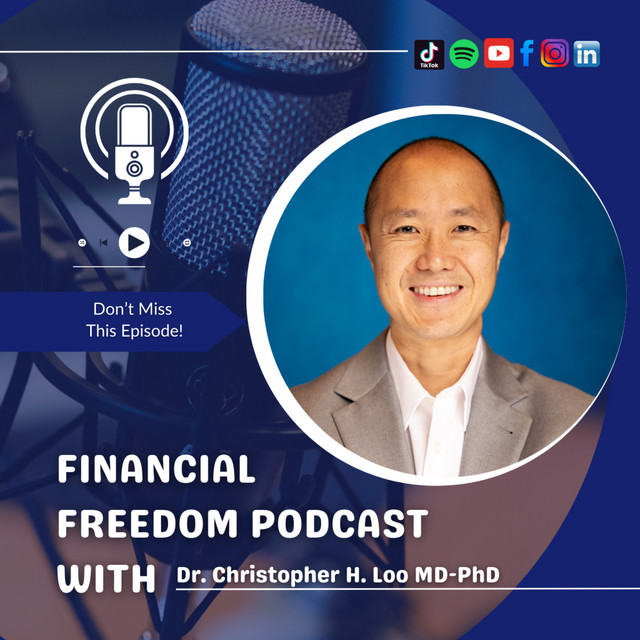
Pod Insights Financial Freedom Podcast with Dr. Christopher H. Loo, MD-PhD #1350 - Mastering the Self-Publishing Journey: Insights with Alexa Nazaro of Axel Author Services About this episode Have you ever wondered what it takes to turn your manuscript into a bestselling book? In this episode, Alexa Nazaro, founder of Axel Author Services, shares invaluable insights into self-publishing, from crafting compelling book covers to navigating Amazon bestseller campaigns. Learn the critical differences between traditional and self-publishing, how to market effectively, and why authors must embrace an entrepreneurial mindset to succeed. Whether you're an aspiring writer or a seasoned professional, this episode is packed with tips to elevate your publishing game. To check out the YouTube (video podcast), visit: https://youtu.be/edNk9sQwER0?si=svm4U30VyxQinuiT Disclaimer: Not advice. Educational purposes only. Not an endorsement for or against. Results not vetted. Views of the guests do not represent those of the host or show. Click here to join PodMatch (the "AirBNB" of Podcasting): https://www.joinpodmatch.com/drchrisloomdphd Enhance your productions through Descript (affiliate): https://get.descript.com/gaei637mutik Check out TubeBuddy, the all-in-one platform that helps you grow and scale your YouTube channel (affiliate): https://www.tubebuddy.com/pricing?a=FinancialFreedomPodcast Click here to check out our Amazon product of the day (affiliate):https://amzn.to/41utr3Q We couldn’t do it without the support of our listeners. To help support the show: CashApp- https://cash.app/$drchrisloomdphd Venmo- https://account.venmo.com/u/Chris-Loo-4 Spotify- https://podcasters.spotify.com/pod/show/christopher-loo/support Buy Me a Coffee- https://www.buymeacoffee.com/chrisJx Click here to schedule a 1-on-1 private coaching call: https://www.drchrisloomdphd.com/book-online Click here to check out our bookstore, e-courses, and workshops: https://www.drchrisloomdphd.com/shop Click here to purchase my books on Amazon: https://amzn.to/2PaQn4p For audiobooks, visit: https://www.audible.com/author/Christopher-H-Loo-MD-PhD/B07WFKBG1F Follow our YouTube channel: https://www.youtube.com/chL1357 Follow us on Twitter: https://www.twitter.com/drchrisloomdphd Follow us on Instagram: https://www.instagram.com/thereal_drchrisloo Follow us on Threads: https://www.threads.net/@thereal_drchrisloo Follow us on TikTok: https://www.tiktok.com/@drchrisloomddphd Follow our Blog: https://www.drchrisloomdphd.com/blog Follow the podcast on Spotify: https://open.spotify.com/show/3NkM6US7cjsiAYTBjWGdx6?si=1da9d0a17be14d18 Subscribe to our Substack newsletter: https://substack.com/@drchrisloomdphd1 Subscribe to our Medium newsletter: https://medium.com/@drchrisloomdphd Subscribe to our LinkedIn newsletter: https://www.linkedin.com/build-relation/newsletter-follow?entityUrn=6992935013231071233 Subscribe to our email list: https://financial-freedom-podcast-with-dr-loo.kit.com/ Thank you to all of our sponsors and advertisers that help support the show! Financial Freedom for Physicians, Copyright 2024
Transcript 0:00 Speaker 00 Your sausage McMuffin with egg didn't change, your receipt did. The sausage McMuffin with egg extra value meal includes a hash brown and a small coffee for just $5. Only at McDonald's for a limited time.
0:12 Speaker 01 Pricing participation may vary. Promotion pricing may be lower than meal pricing.
0:16 Speaker 02 This episode is brought to you by Google Chrome. You think you know a browser, but Gemini and Chrome, that's new. It can help you with practically anything on the web, like restoring a vintage motorcycle from a 50-page restoration block, or finally break down that long article you've had open for weeks. Gemini and Chrome is here for it. Ready to make anything online make sense? There's no place like Chrome. Check responses set up required. Compatibility and availability varies 18 plus.
0:41 Speaker 03 Hey guys, welcome to this week's podcast episode. I'm really excited about today's guest. I have Alexa Nazaro and she is with Axel Author Services. And I'm really happy to have her on the show. She's going to talk to us all about the ins and outs of self-publishing, the three qualities you want from your book cover designer, book reviews. It's going to be a really interesting conversation. So Alexa, welcome.
1:05 Speaker 04 Thank you so much, Chris. Thanks for having me.
1:08 Speaker 03 Yeah, just FYI, there's construction around, so we're gonna, but we live in COVID times. Get us at the stage, talk about yourself, your business, how you got started and dive right into it.
1:19 Speaker 04 Okay, sure, no problem. I am the leader of Axel Author Services. We are an author services agency. What we do is we partner with independent authors who want to do it alone, that they want to do it properly, and they want to do it with professional expert support. Because publishing and self-publishing in particular, it's a whole world. It's, it can be very overwhelming. And so we're here to really shepherd them through the process. So in terms of our services, if somebody is starting out and they just have a manuscript, we're here to help them edit that manuscript, proofread, all of that stuff. Make sure they have the best manuscript possible. And then from there, we pull together all the elements of publishing.
2:04 Speaker 04 Chris, you mentioned cover design, interior layout, setting up all the metadata, figuring out the right categories for the book. And then, of course, once the book is launched, it's all about marketing and finding your readers. And that's honestly one of the biggest parts of self-publishing is finding readers. So we really help in all of those areas with authors.
2:26 Speaker 03 Yeah, and so one question I have in these days and age is this difference between self-publishing and going with a publisher and kind of talk about the differences and why most people I know are just going with self-publishing. It's too much of a hassle to find the publisher. So talk about that.
2:45 Speaker 04 Sure, no problem. So we traditionally have two routes. We've got traditional publishing, like you were mentioning, Chris, where people go, they submit their manuscript for consideration. The traditional publisher will take them on, shoulder all the costs, and then, of course, there's a royalty split. So that's traditional publishing. The fact of the matter is, yes, it's really hard to get a traditional publishing contract now. And what a lot of authors find is, even if they do land a traditional publishing contract, unless they have some kind of a track record, these publishers are going to be hesitant to pour a lot of marketing money into you because that's a gamble. And sometimes it's a gamble they're not willing to take. So it's almost
3:28 Speaker 04 that catch-22 about how do you know my book is any good if you're not willing to put some marketing dollars behind it. So traditional publishing, it can be very difficult, not to mention that there's just the whole task of finding an agent. A lot of publishers, especially the bigger ones, they don't deal directly with authors. They want to speak to the author's agent, and that's just the way it goes. So we have that route that is, I can't say it's less popular. I think for a lot of authors, deep down, they would still love to be picked up by a publisher. I'm not going to lie. It's just the way it is. But of course, they're self-publishing, and that's really, it's pretty much self-described. You do it on your own. You decide that you've
4:09 Speaker 04 got a book, you wanted to find an audience, and so you can do it all on your own. And I always, I'm very honest with authors. Yes, find your own cover designer, your own proofreader, your own website designer, all of that is possible. And there are authors who do it, and that's fine. Or you can partner with an entity like Axel Author Services, where we do all of that heavy lifting for you to make sure that you've got a really professionally Published book because that's so critical because the stigma is still there. Oh, you're self-published. There are still a lot of people in the industry. They're snobby. They're not fans of self-published books. There is still a lot of, there's still a lot of bias and prejudice against self-published books.
4:52 Speaker 04 So it's so important for self-published authors to have a mindset like a traditionally published author and really make sure their book is up to par.
5:02 Speaker 03 Yeah, it's really interesting and it reminds me because I've been watching like Netflix and Hulu and a lot of the A-list actors that you saw in the past. Now they were picked up by the major video studios. And now they're like, they're getting picked up by Netflix and Hulu and these different contracts. And it's reminds me of this self-publisher because you can get a publisher, traditional publisher. But if you know how to leverage social media and you know how to, your potential audience, build audience, build community, you can have a much greater impact compared to a traditional publisher. Plus you have more like freedom and more ownership of your content and everything.
5:44 Speaker 04 Absolutely. No, it's a really nice position to be in. You do have that creative control. Because that's something else. I mean, if a traditional publisher picks you up, they might say, no, we don't like that title. We don't find that title marketable. Or we want you to change the ending. And there are stories like that. You were talking about the entertainment industry movies. There are stories about that even in entertainment. So that applies to publishing as well. And if a traditional publisher takes a chance on your work, they want to have a much bigger say in how things are going to unfold in terms of your book and its cover and its title and all of that. So that is definitely something to consider and that's really important. You have that creative control.
6:27 Speaker 04 But I do always, I'm always honest with authors that if you're going to go the indie route, you have to really, it's gotta be like a culture that you embrace. It's gotta be a position that you embrace. I sometimes talk to authors and I can tell, okay, I guess I'll do this, but I'll keep. Sending out query letters and maybe just maybe a publisher will pick me up. And I actually don't want to work with authors like that only because you need to be in because being an independent author, it's exciting. But there's definitely an entrepreneurial aspect to it. And you know what? If that's not you, then you might not enjoy the indie author experience. And I, I, I prefer being upfront about that with authors as opposed to hiding it.
7:11 Speaker 04 And then they say, oh, I've got to engage a lot more than I thought I would. But the fact of the matter is the irony is a lot of traditionally published authors, they still have to hustle. They still have to do their own marketing. Authors are on their own for that one in many cases.
7:28 Speaker 03 Yeah, it's quite interesting. And talk about the, what you do for your customers and your clients and walk us through the processes. Somebody's thinking they want to get self-published. How do they start? And walk us through the process and then if they want further, they can contact you in the links in the show notes.
7:45 Speaker 04 Sure, not a problem. So if somebody comes to us with, with a manuscript, so they're at the very beginning of the process. The very first thing we do is we assess the manuscript because there are so many books being self-published every year. This is honestly a little bit of the downside. Some people could argue everyone and anyone can publish a book. So standing out is so important. Cover design is a big part of that, but just starting with content that is worth reading is so important. So we always do an initial assessment where we're just honest with the author and we tell them, look, this is actually really strong. We think you just need a proofread and you're ready to go. But writing can be difficult and sometimes people might think they have something ready to go, but it's not ready to go.
8:29 Speaker 04 And we really take it upon ourselves to advise our authors accordingly. So there's that manuscript TLC that is such an important first step. So a lot of our authors will go through what we call a manuscript evaluation stage. Some people call it developmental edit. That's typically the industry term and that's really a deep dive into the content. So for fiction, it's things like dialogue, character development for non-fiction. It's do you have a clear topic? Are you organizing your content? This is a really, this is a challenge sometimes for nonfiction authors. They have it all in their heads. They think it's so obvious and they just plunk it all down. And then it's not organized well. It doesn't follow a good flow.
9:12 Speaker 04 So we look at all of those things and then from there, okay, now the manuscript content wise is good. It's up to par. Let's do that copy edit. Let's do that proof read. So now we assume we're getting all of that taken care of. And now we look at the book production side. So the book production side, the two pillars of that are cover design and interior layout. So the way we work with cover design is we have trusted designers that work with us on a regular basis. And what we task ourselves with is making sure the author feels that they have a great degree of creative control over the cover design process while still getting that guidance and input from experts. Because otherwise, why don't they just do it on their own?
9:54 Speaker 04 So one of the first things we do is we actually have questionnaires that we ask the authors to fill out. Because we really want to know from them, what do they think their book is about? What would they like to see on the cover? And then what we do is we pick the right designer because we have different designers who specialize in different genre. And then what we'll do is we'll get on a brainstorming call with that designer and that author. Because we want authors to also feel they, we want them to know who's working on their book. Sometimes there are other organizations that will just take the book and they're not as accessible to the author. We want the author to feel, I know Alexa's on this on, on my team. And I know that so and so is designing my cover, that kind of intimacy.
10:37 Speaker 04 That's and that personalization is really important to us. So we'll get on a brainstorming call and then from there, the designer will come up with a proposal. Typically three different concepts. And then from there, we tinker away until the author feels that they have a cover that they really love. And, and that, that's always the end result and that's what we strive for. And then even when it comes to interior layout, what kind of fonts look good for your book? We don't want to always go with just standard fonts. We like to play around with fonts and. typography and type setting. So those are the two pillars of the actual book production. And then we look at things like a good book synopsis. Are you winning people over with your Amazon description or your back cover matter? Do you have a good author bio that really lends credibility to yourself?
11:22 Speaker 04 All of those types of things, what kind of book categories make sense? What would be a good retail price? Comp with comparable titles that are out there. So we pull all of that metadata together and then what we do is we set up the books on various, the book I should say, on various self-publishing platforms. So Kindle Direct Publishing is one, IngramSpark is another example, Draft2Digital. And the nice thing about these is that it works on a print-on-demand model so that it saves the author, especially a first-time author, from taking on the onus of, oh, I've just done, I don't know, a 5,000 print run. Now I've got to find a place to put these copies. I have to figure out how I'm going to move them. No, these systems are all put into place so that the author can just sit back
12:07 Speaker 04 and the logistics of sales and shipping and fulfillment, that's all taken care of by the platforms. So that's the publishing side of things. And then, of course, from there, there's marketing and very often we'll pull, we'll do some marketing while we're putting together the book. A, a, a perfect example, an obvious example is website. There's no point in waiting until after your book is published to start working on a website. Have some of these things happening simultaneously so that they all come together at the right moment. So obviously a website design, we figure that out. A press kit for certain nonfiction authors, if they really want to court media. A media kit or a press kit is really useful.
12:49 Speaker 04 Soliciting reviews, if somebody really wants to go after reviews, then we'll produce what we call an ARC, an advanced reader copy. So those would be copies that they could send out to particular influencers, thought leaders, trade review sources, and all of that stuff can happen while we are producing the book. And then, yeah, and then beyond that, then it's we have to think about social media and podcasts and other various vehicles, but we also. As much as we customize the book publishing experience, we also customize book marketing because not everyone's comfortable going on podcasts. Not everybody needs a media kit, so we don't have a cookie cutter solution. We really sit down with the author and we also figure out some authors,
13:33 Speaker 04 they just want their book out there. Some authors have speaking gigs. I know you do speaking as well, so sometimes there are those back of room sales as we call them. And maybe that's their biggest marketing vehicle and it's not going to be social media and the media, traditional media. So we always sit down with authors because we want to know, who are you? What are you currently doing to market? And what can we do to help you get to the next level? And each author's different.
13:59 Speaker 00 Your sausage McMuffin with egg didn't change, your receipt did. The sausage McMuffin with egg extra value meal includes a hash brown and a small coffee for just $5. Only at McDonald's for a limited time.
14:11 Speaker 01 Price and participation may vary. Promotion pricing may be lower than meal pricing.
14:15 Speaker 02 This episode is brought to you by Google Chrome. You think you know a browser, but Gemini and Chrome, that's new. It can help you with practically anything on the web, like restoring a vintage motorcycle from a 50-page restoration block, or finally break down that long article you've had open for weeks. Gemini and Chrome is here for it. Ready to make anything online make sense? There's no place like Chrome. Check responses set up required. Compatibility and availability varies 18 plus.
14:42 Speaker 03 Yeah, that's a wonderful synopsis and I know for the audience out there, a lot of them want to be thought leaders and influencers. So I'm just going to cut down to the very juicy questions that people want to know. And one of them is, how do authors become an Amazon bestseller?
14:58 Speaker 04 Okay, all right. So yes, so an Amazon bestseller is definitely a very sought after title. I wouldn't quite put it on the same level as a New York Times bestseller for obvious reasons. But yes, an Amazon bestseller. So.
15:13 Speaker 04 So Amazon, their algorithms are updated on an hour, like they're continuously being updated. So I should perhaps preface all of this by saying, I always tell, we run Amazon bestseller campaigns. And I always tell authors, the primary goal of running an Amazon bestseller campaign, it's not to hit number one, although many of our authors do. The goal is really to have a nice concentrated awareness boost of your book. Because the fact of the matter is, you can be an Amazon bestseller for a day or two, and then all of a sudden, you're no longer a bestseller. It doesn't mean that you're a failure as an author. It's just the reality is, to really stay up there in those numbers, you need to be consistently selling books.
15:58 Speaker 04 And when you're first starting out, it's not easy to sell consistently a lot of books on Amazon. So what do you need to do? The first thing you really need to do is you need to audit your Amazon categories. That's really the first thing. Amazon has so many different categories. What's key is to figure out what categories really fit your niche and get those categories assigned to your book listing. And that's honestly, that's probably the biggest bulk of the work, is just researching those categories. That's something we do, of course, for our authors. You can do it on your own, but really figuring out your categories. So if you've written a book on real estate investing, but you just decide to keep it in business general or entrepreneurship general,
16:41 Speaker 04 there are a lot of books in that category. So it's going to be hard for you to boost your ranking. But if you can, you know, if you can drill down to a more precise category, that will help you immensely. And then, of course, it's all about telling people that your book is up on Amazon. And we always will adjust the price for a couple of days when we run the campaign. And again, the goal is, yes, it's great to get that badge. That's a wonderful, nice validation point. But it's also about getting a ton of people aware about your book. And we've run bestseller campaigns where we've had people have their ebook downloaded, like a couple of thousand times. And that, to me, is worth so much more than being an Amazon bestseller.
17:22 Speaker 04 Because wow, now I've got 2,000 more people who I probably would have never, ever connected with. And now they know about my book.
17:30 Speaker 03 Yeah, it's so interesting because it's like vanity metrics, but it helps with marketing and advertising.
17:36 Speaker 04 Absolutely. And that's why I don't want, I don't like putting a lot of emphasis on the vanity part of it. Although there's certainly nothing wrong. If you've hit number one, it's legit. You can tell people that you're an Amazon bestseller. But you can't hang on to that because it's really tough to sustain that, at least as an emerging author, even if you're, even if you're an expert in your field, unless you have thousands of people on your mailing list, it's going to be hard to sustain that. So it's just better to be realistic without being discouraged.
18:07 Speaker 03 Yeah, and it's really interesting because there's a, there's, you can gamify the way to become a number one. And it's basically just typing kind of offer your book for free or 99 cents. Um, and then get a review and then you get to that number one and then you screenshot it and then you can say you're, and then the.
18:25 Speaker 04 Yes. Yeah, absolutely. And, and that's totally fine. And that's really legitimate and we offer that to our authors as well. And it's important to some of them and it's frankly, it does still mean something. It's just keep in mind that you're not the only book on Amazon. That's the only thing. Just keep that in mind. Some humility can go a long way.
18:48 Speaker 03 Yes. So my next question is because I have books that sell consistently across everything and people are, I find that the people that leave your reviews are the haters. So they try to like drag your book down or whatever.
18:59 Speaker 04 I was reading some of your reviews. They're, they're, some of them, you've got some really good reviews.
19:04 Speaker 03 Yeah, like I said, it's the haters and, but I was reading this statistic where people's, it's like the majority of books, after like the first week or month, then after that, a lot of them, they don't sell. But it, is it better to have a consistent where you're selling monthly, you're meeting your quota, very little reviews or just have this like thousands of reviews and just nobody's buying.
19:27 Speaker 04 That's an interesting question. So the first thing I want to address is the whole Amazon review thing. This is definitely, even before we run bestseller campaigns, we always recommend to authors, get some reviews. Let's wait, you don't need 20 of them, because 20 reviews, frankly, it takes a lot to get 20 reviews, because it's human nature. I love reading. I can't say I always leave reviews, just because life gets in the way and we're busy with other things. But I always recommend, let's try to aim for 10 reviews, because it offers that social proof. Oh, people have read this book, and of course, hopefully, they all like it, and they give at least four stars. That's the first thing I would say. You talk about that first month, I like to call that the FNF month. It's the friends and family. Even if
20:10 Speaker 04 people are not interested in your topic, they're going to go out, they're going to read your book, they're going to talk about it to everyone they know. And that period, that honeymoon period, is still vital for two things. You just might have some people in your network who can create that ripple effect, and they talk to someone, and they talk to someone. The other thing, too, is it's important to have a bit of confidence. Nothing's worse than you just put your book up, and you don't tell anyone, because maybe you're a little shy. It's a huge leap of faith to publish a book, and not everyone feels ready to claim the title of author. So I still think that honeymoon period's important. As far as what is better, selling consistently
20:50 Speaker 04 or getting reviews consistently, I think for the majority of authors, at the end of the day, getting sales is perhaps a better goal than getting reviews, just because, look, if you look on Amazon, some of the craziest bestselling books, they don't have nearly as many reviews as they've sold books, just because it's human nature, and not everyone is going to leave a review. So I would not put too much emphasis on reviews, but I always tell people, there's nothing wrong even at the back of your book, especially your ebook. Did you like this book? Tell other people about it. Click here to leave a review. There's nothing wrong with soliciting reviews, but just be aware, it's not going to be easy to get people to leave reviews. But
21:34 Speaker 04 reviews have value. They definitely have value.
21:39 Speaker 03 Yeah, I love that. And it's like an extra step to leave a review. And it's either, like I said, it's either like a fan or just somebody that just hated the book or whatever.
21:49 Speaker 04 Of course. And I should mention, though, that you have to be ready that there are going to people who hate your book. Or sometimes people leave reviews that are so silly, like they'll complain about the smallest thing in your book. And you're thinking, really, that's all you took away from that? But there's ultimately, you have no control and you have to let go of that. And that can be a tough mental shift for a lot of authors. It's just that it's that fear of rejection, right? We have that fear of rejection.
22:17 Speaker 03 Yeah, there's so many questions, how to get into Barnes and Noble, launch. We could talk, but how can people find out more about you and the services that you offer?
22:27 Speaker 04 Absolutely. So they're always welcome to visit our website. That's www. axel author services. So that's two A's, X E L like Lewis, author services, all one word, com. I also actually love to hear from authors directly. I love getting emails from authors. It's so much fun. So you can feel free to drop me a line, send me an email. My name is alexa at axel author services dot com. And I'm, I look forward, I always invite authors to, it's a big world out there, publishing. And there are always a lot of questions that need answers. So I'm always happy to do that.
23:03 Speaker 03 Yeah. And for all the audiences, thank Alexa for coming on. And be sure to check out her socials, give her a follow as well as check out her services for self publish. People that want to write a book or that have already wrote a book. And it's really cool. And once you write a book, it's that kind of, you can say you're an author.
23:20 Speaker 04 Yeah, absolutely. It adds a lot of authority, especially for nonfiction authors. I know, for instance, Chris, you service a lot of physicians. I work with everyone from real estate investors, people who are franchise experts, people who are physiotherapists. It's really a nice extra notch in your belt to say that you've written a book and you've shared your knowledge. So there's power in that.
23:44 Speaker 03 Yeah, and thanks so much for coming on to the podcast.
23:46 Speaker 04 Thank you so much, Chris. Thank you.
23:50 Speaker 00 Your sausage McMuffin with egg didn't change, your receipt did. The sausage McMuffin with egg extra value meal includes a hash brown and a small coffee for just $5. Only at McDonald's for a limited time.
24:02 Speaker 01 Price and participation may vary. Promotion pricing may be lower than meal pricing.
24:06 Speaker 05 What's the secret to being a great host this season? Keeping things deliciously simple, like mixing Simply Cranberry into a festive drink as guests arrive, or serving up a warm mug of Simply Apple on a chilly night. That means less time behind the scenes and more time in the moment with everyone. Crafted with real fruit, Simply juices and fruit drinks make any holiday drink effortless, inviting, and completely delicious. Simply. Say yes to simple.
Previous #1348 - Mastering Leadership with Neuroscience: Yossi Kossowsky's Game-Changing Insights Next #1352 - Mastering Real Estate Investment: Insights from Bradley Smotherman on Creative Financing and Future Trends Page updated November 7, 2026 · transcript and summary are machine-generated