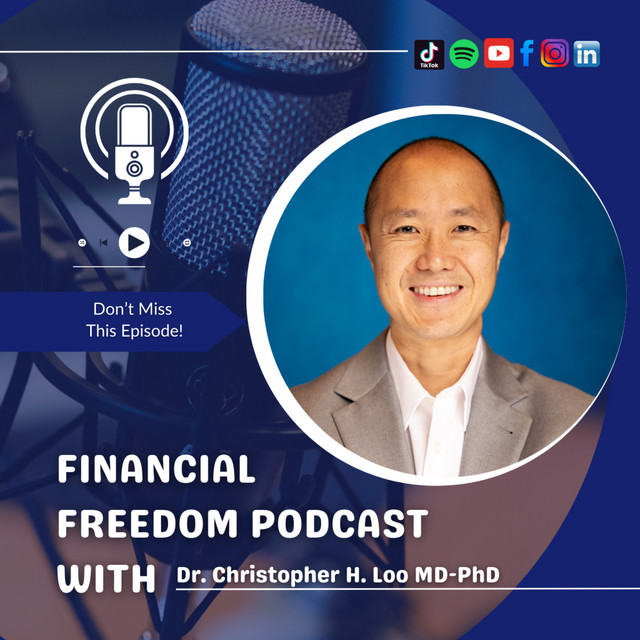
Pod Insights Financial Freedom Podcast with Dr. Christopher H. Loo, MD-PhD #1326 - Master Your On-Camera Presence: Unlock Charisma, Confidence, and Visibility with Shirlee Engel About this episode How do you captivate audiences and transform your public presence? In this episode, we dive into the art of camera confidence with Shirlee Engel, a former TV journalist turned visibility coach. Learn the essentials of video marketing, storytelling, and crafting a magnetic media pitch. Shirlee shares actionable tips on building authenticity, overcoming social media shyness, leveraging AI for content creation, and pitching to the right platforms. Whether you're a business owner or content creator, this episode will guide you to stand out in a crowded digital marketplace. To check out the YouTube (video podcast), visit: https://www.youtube.com/@drchrisloomdphd/streams Disclaimer: Not advice. Educational purposes only. Not an endorsement for or against. Results not vetted. Views of the guests do not represent those of the host or show. Click here to join PodMatch (the "AirBNB" of Podcasting): https://www.joinpodmatch.com/drchrisloomdphd If you enjoyed the audio and video quality of this episode, enhance your own productions by signing up through our Descript affiliate link: https://get.descript.com/gaei637mutik Click here to check out our Amazon product of the day (affiliate): https://amzn.to/4icW4bJ We couldn’t do it without the support of our listeners. To help support the show: CashApp- https://cash.app/$drchrisloomdphd Venmo- https://account.venmo.com/u/Chris-Loo-4 Spotify- https://podcasters.spotify.com/pod/show/christopher-loo/support Buy Me a Coffee- https://www.buymeacoffee.com/chrisJx Click here to schedule a 1-on-1 private coaching call: https://www.drchrisloomdphd.com/book-online Click here to check out our e-courses and bookstore here: https://www.drchrisloomdphd.com/shop Click here to purchase my books on Amazon: https://amzn.to/2PaQn4p For audiobooks, visit: https://www.audible.com/author/Christopher-H-Loo-MD-PhD/B07WFKBG1F Follow our YouTube channel: https://www.youtube.com/chL1357 Follow us on Twitter: https://www.twitter.com/drchrisloomdphd Follow us on Instagram: https://www.instagram.com/thereal_drchrisloo Follow us on Threads: https://www.threads.net/@thereal_drchrisloo Follow us on TikTok: https://www.tiktok.com/@drchrisloomddphd Follow our Blog: https://www.drchrisloomdphd.com/blog Follow the podcast on Spotify: https://open.spotify.com/show/3NkM6US7cjsiAYTBjWGdx6?si=1da9d0a17be14d18 Subscribe to our Substack newsletter: https://substack.com/@drchrisloomdphd1 Subscribe to our Medium newsletter: https://medium.com/@drchrisloomdphd Subscribe to our LinkedIn newsletter: https://www.linkedin.com/build-relation/newsletter-follow?entityUrn=6992935013231071233 Subscribe to our email list: https://financial-freedom-podcast-with-dr-loo.kit.com/ Thank you to all of our sponsors and advertisers that help support the show! Financial Freedom for Physicians, Copyright 2024
Transcript 0:00 Speaker 00 Your sausage McMuffin with egg didn't change, your receipt did. The sausage McMuffin with egg extra value meal includes a hash brown and a small coffee for just $5, only at McDonald's for a limited time.
0:12 Speaker 01 Pricing participation may vary. Promotion pricing may be lower than meal pricing.
0:16 Speaker 02 This episode is brought to you by Google Chrome. You think you know a browser, but Gemini and Chrome, that's new. It can help you with practically anything on the web, like restoring a vintage motorcycle from a 50-page restoration block, or finally break down that long article you've had open for weeks. Gemini and Chrome is here for it. Ready to make anything online make sense? There's no place like Chrome. Check responses set up required. Compatibility and availability varies 18 plus.
0:41 Speaker 03 Good afternoon, guys, and welcome to the podcast. I've got a fantastic guest for you coming out of Canada, Shirley Engel. And I want to start out with this. If you're ready to unlock your on-camera charisma and transform your public presence, well, Shirley Engel, she's a former television reporter. Now she's a camera confidence and visibility coach. And today's talk, we're going to talk about mastering the art of captivating audiences built across digital platforms. And she's done amazing things and I'm really happy to have her on the show. So Shirley, welcome.
1:18 Speaker 04 Thank you so much for having me. It's so great to be here.
1:21 Speaker 03 Yeah, I introduced you and briefly just talk about how you got there and we'll dive into the questions to add value to the audience.
1:30 Speaker 04 Absolutely. I'm very excited to be here as an entrepreneur. I didn't start that way, though. My first love and career for about 20 years was as a television journalist. I worked my way up from the woman who had the camera and the editing and doing the whole thing myself to traveling the world with Canada's prime ministers, a couple of them, because I covered politics and economics for a national television station here in Canada. From there, I went into communication, so advising executives, CEOs, that kind of thing on media, on public affairs. And then during the pandemic, I took a very sharp turn to become an interior designer.
2:10 Speaker 04 Design professional. So I launched my first business and I quickly scaled it to six figures in the first year by getting on TV, getting on stages, basically drawing on my magnetic on camera and stage presence to get my name out there. And what was unique about it was that was an industry where I was a nobody. I had to really build myself up from nothing and people started asking me, oh, how do you do that? How are you so confident on camera? How do you get these gigs? And long story short, it evolved into a whole other business, which is now called Camera Confident. And I help entrepreneurs in all different niches, get visible, get comfortable using video,
2:50 Speaker 04 and really take video marketing to the next level so they can compete in today's really crowded marketplace.
2:58 Speaker 03 Yeah, that's a really fantastic introduction. And I want to start off by this question here because I started off the same way. I was a nobody and then I was like, I really, I realized the power of social media. And so one thing is talking about is a lot of the guests have been reporters or journalists. Do you have to be a on-camera person to develop this skill? Or can it be developed and taught and learned?
3:25 Speaker 04 Absolutely not. In fact, now that I'm in the entrepreneur space and I basically live on social media, like a lot of entrepreneurs who are in service-based business do. And I'll tell you, I had to unlearn things that I used to do as a journalist. For example, speaking like a journalist in a journalist voice. You'll notice, I know in the States in particular, the US, a lot of journalists speak in like a journalist voice. That doesn't fly when it comes to video marketing because in 2024, 2025, people want authenticity. So they don't want to hear a version of you that's fake. They don't want to hear you putting on a show. They want you to be you. They want you to be yourself. Now, what does that mean?
4:09 Speaker 04 That means obviously you have to kick it up a few notches for video. If you just talk the way you would talk normally to a friend, you'd come across as pretty flat, right? I would say that the way that you speak as a marketer and as a business owner is different than the way you would speak as a journalist. That said, there are some fundamentals of journalism such as storytelling. Journalists are excellent at distilling a lot of complex information, jargon, buzzwords into understandable, clear, concise, and in particular in television. I wouldn't write newspaper articles. I would write for broadcast, which is a very different thing than writing for your website, or writing a social media post, or writing an article,
4:53 Speaker 04 right? So the idea of video marketing draws a lot on journalism because that kind of writing is really effective and storytelling is effective. But so is personality. So is taking a stand on things, talking about what you offer. You're selling when you're on video. Journalists don't sell. We're supposed to have no opinion. We're supposed to be objective. And so there are a lot of differences, but sometimes I also think about a lot of the similarities because it's a lot of transferable skills. But absolutely, you do not have to have a background in journalism. And you can learn this, and it doesn't have to take you as long as it took me.
5:34 Speaker 00 Your sausage McMuffin with egg didn't change. Your receipt did. The sausage McMuffin with egg extra value meal includes a hash brown and a small coffee for just $5. Only at McDonald's for a limited time.
5:46 Speaker 01 Price and participation may vary. Promotion pricing may be lower than meal pricing.
5:50 Speaker 02 This episode is brought to you by Google Chrome. You think you know a browser, but Gemini and Chrome, that's new. It can help you with practically anything on the web, like restoring a vintage motorcycle from a 50-page restoration block, or finally break down that long article you've had open for weeks. Gemini and Chrome is here for it. Ready to make anything online make sense? There's no place like Chrome. Check responses set up required. Compatibility and availability varies 18 plus.
6:16 Speaker 03 Yeah, I really love that answer. And for the audience, we're going to talk about in the latter half, essentials of a magnetic media pitch, storytelling, authenticity, how you get good and how you get your reps in. But I want to preface that with this question here because traditionally, it's been like you got on TV, you got on radio, you got the your you got the biggest exposure you got in the States here is like you you advertise on the NF like the NFL or Super Bowl and these types of Oscars. Is that changing now? Because because now now, especially with the media here in the States, people don't trust it as much. And a lot of advertising is moving on to TikTok and Instagram. Is TV still the best way to get your message out there? Or are
7:01 Speaker 03 there better ways?
7:03 Speaker 04 Don't tell my journalist friends, but no, absolutely not. And let me just ask you a question. Do you have a subscription to traditional television channels?
7:14 Speaker 03 I haven't watched TV in over 20 something years. Most of my media consumption is now YouTube or podcasts, but.
7:22 Speaker 04 Exactly. So I hate to say it. And definitely, there's still a place for it. For example, interior design, I was on the local news station, people watched it, I would get people to say they'd call me for services and they would say, oh, like, I saw you on CTV or I saw you on this show. But the reality is that most business owners will get much more bang for their buck by being on social media platforms, because that's where the audience is. And you need to go where people are hanging out, where your people are hanging out. And another thing that really I think people should keep in mind, especially if they're trying to market their businesses, is you don't have to be everywhere, nor should you be everywhere. Because when you try to be
8:06 Speaker 04 everywhere, you're not going to do any of those things. If you want to really grow on YouTube and establish a brand on YouTube, that is one whole other animal than if you are looking to grow on TikTok. And you want to do these other quick, short videos. But you can do short videos on YouTube as well, but it's just a different audience and it's a different. Strategy. So my advice to entrepreneurs is always start with your audience. Where does your audience hang out? If your audience is a boomer audience that is really hardcore news consumers that still watch the big television stations, then yeah, that probably will be a good place for you to get a spot on a local show to talk about your product or service or offer.
8:48 Speaker 04 But if you're looking to target anybody who has not watched television in a long time or doesn't have a traditional television subscription. And I will say that even includes many boomers, by the way, because YouTube is a huge place for people over sixty five these days as well. Then I would be very strategic about investing your resources, your time and your money into putting out video where your people hang out, where it's going to reach those people.
9:17 Speaker 03 Yeah, yeah, that's and there's a place for traditional TV and radio, but you have to use it more strategically. So moving the question, the conversation forward is what are key elements of a compelling media pitch and how can entrepreneurs ensure they're noticed by the their audience and their following in their media?
9:41 Speaker 04 That's a great question, and I'm a hundred percent not saying don't pitch to the media because of course there's still a lot of value in that for certain kinds of businesses. And here is exactly what I mean by that. If you're a local business, if you operate in a certain city or town or area, advertising on the radio, people are driving, that's pretty effective, right? Advertising on the local media station. If you organize something that is really tailored to people in your local area, that is also a really great place for you to do that. And a lot of businesses are very successful in doing that. Let's say you are in the political economic world, like I live in Ottawa, Canada. So this is a very public affairs oriented town.
10:25 Speaker 04 And yeah, the local stuff works well. I'm sure it's very similar in Washington DC. If you want to pitch to these traditional media, there are a few things to keep in mind. And the first is, don't bury the lead. And when I say lead, L E D E, it's the lead, which is the headline of what you're going to talk about. So a lot of people think, oh, I'm going to be on this show. That's nice. So does everybody else. So you've got to go into that pitch with a compelling hook, just like you do in your marketing. So what is the hook? What is the headline? And do your research. So if you're pitching to a local TV station, is there a specific event in the calendar?
11:05 Speaker 04 Maybe it's Thanksgiving, the holidays, maybe it's the release of a new product or a new movie is out. And it is tied to a theme that your business really relates to or represents. So I say, look for events in either the calendar, in the news cycle, or just things that people are talking about, like the season, for instance. Oh, summer's around the corner. Tie your idea, your hook, to an event. And that makes it a lot more palatable for a media outlet to cover what you are talking about, because you need to anchor your idea to something. And the other thing I would say, there's a lot to pitching, obviously. We could do a whole podcast on that.
11:46 Speaker 04 But a big piece of advice is know who you're pitching to. Who is their audience? What are they likely to talk about? Don't pitch something super lifestyle to a very news oriented program. And they're not going to go for that. Have a bit of an understanding of what that show is, just like on a podcast. You're not going to go pitch yourself to a podcast that has nothing to do with the topic. And believe me, I get those pitches all the time. And I'm like, did you read what my podcast is actually about? These are very simple things that a lot of people don't think about. And it automatically puts you higher up in the pile, so to speak, if you show an understanding of these things and you really demonstrate
12:27 Speaker 04 that you really know what value is to this particular outlet, and then you're prepared to deliver.
12:32 Speaker 03 Yeah, I love that. Talking about storytelling and how, what is your approach and strategy to crafting important stories during media appearances? And what tips do you have for people that, for crafting stories that are engaging, memorable, also educational and informative?
12:52 Speaker 04 Yeah, I think that it comes down to a very simple principle, which is that people relate to people. They relate when they have some kind of example or some kind of story that makes them feel something. So don't just tell me what you do and how it benefits people, but give me an example. Give me a story that allows people to really experience your service, your product, whatever it is that you are in business to do. There's always going to be people involved, no matter what kind of business you're in. Because ultimately, that human relationship piece is what is going to create that connection. So I say, really look for those stories, whether you're pitching to a media outlet
13:35 Speaker 04 or you're doing a video for social media. Do you have those examples? A lot of entrepreneurs will come to me, a lot of the clients I work with are starting out in video marketing and they're like, "I don't have those examples yet. I have my own example. I did this thing," and because I work with a lot of coaches and course creators and maybe they don't have a huge roster of clients and examples, but they themselves have made this transformation. Or business owners who know exactly what they want to deliver and they themselves have a story to tell. So your own story can also be very powerful. And especially from a media point of view, if you're going to approach especially a television station with video,
14:16 Speaker 04 do you have video that could help support the story you're telling? Whenever, as a journalist, I would get a pitch and they would be like, "Oh, by the way, I have B-roll, which is video that's not you talking on camera, it's just video of what you're talking about." Then that would immediately make me think, "Okay, less work for me. I don't have to go out and find video about this. They actually have it already." You want to make sure that video is of a certain quality, but it really helps to bring that story alive. So I would say, leading with story and weaving stories through your content. So you're not talking to people up here. You're actually giving them something to relate to so they can understand the benefits
15:00 Speaker 04 and what it's going to look and feel like to work with you.
15:04 Speaker 03 Yeah, I love that.
15:07 Speaker 03 You mentioned earlier in the conversation that there's this journalistic voice or style and we all know that the audience and your followers want to see something that's authentic and real. So when people are on camera, how does someone maintain their authenticity while still delivering a polished performance? And what does authentic really mean in this context?
15:31 Speaker 04 That's such an amazing question. A lot of people go on camera and they picture themselves speaking to a crowd. They're like, okay, here we go. And they're thinking about 500 people on the other side of the camera. That is the quickest way to get nervous, feel overwhelmed, and to start almost like yelling at the camera, right? Like, can you hear me? My biggest tip, especially for entrepreneurs, business owners, leaders, CEOs who are just starting this, is to picture a person on the other side of the camera. So I'm talking to the lens. Right now, I'm just talking to you. I'm not talking to a big crowd. And what it really
16:11 Speaker 04 has helped a lot of my clients is picturing their mother. I have one client who helps people who are on the cusp of retirement. And one of the things she talks about is how to live a purposeful retirement, because she watched her father fall into depression when he retired. So she thinks about talking to her dad when he was going through that, or maybe even before, so she could have rewind, rewind the tape. And what if I got to him before that time? What would I say to him? And you notice when you start to speak to the camera, the way you would to speak to someone over a cup of coffee, having a drink, you know, speaking to your spouse, a mother, a child sometimes, because we have to keep
16:56 Speaker 04 that language to very conversational, you will instantly notice that you start to become more relatable, more authentic, and more you, because you're talking to someone as yourself. The other big thing is, and I say this all the time in all of my trainings and all my videos, my YouTube channel, speak to the lens. Because another thing that we have to get comfortable doing, because it's not comfortable at all, is looking at the lens when we're on camera. It's the equivalent of making eye contact in real life. And there's a huge difference, even as I'm talking to you right now, if I look at you, Christopher, right now, I'm looking at you, I'm not looking at the camera. Look at the difference in when I talk, how I come across versus when I look
17:40 Speaker 04 at the lens. I'm actually not looking at you, but I'm looking at the lens, which to the audience, makes it look like I'm looking them in the eye, I'm making eye contact, and that is the first point of connection that you make on video. One of these things that trips people up is they'll film on their phone, right? I have my phone right here with me, and I usually will film like this, where I'm looking at myself. The problem with that is I'm looking at myself, not the lens of the camera, which is a very awkward place to look. Turn your camera around, and film this way, because then I have no choice but to look at the lens. It's like when someone says, I'm gonna take a picture of you, cheese,
18:21 Speaker 04 and imagine if you were like, okay, and you looked over there. Right? So make eye contact, just like you would in real life with a real person, and talk to one person. Those are the two biggest tips that I have.
18:32 Speaker 03 Yeah, no, and we have around five more minutes remaining. And so you talked about just practicing with your camera. What other daily practices or exercises do you recommend? And for someone just to consistently improve their on-camera presence? And also, talk about just a lot of people, like this idea of getting, like posting on social, I know people that have stories that they were, they got, they had to spend two hours to write a post, and just being social media shy. How do you get over that?
19:04 Speaker 04 So many things. If you only have five minutes, we'll have to talk. And I also, this is exactly what I work with clients on all the time, inside Camera Confident Academy. We work on a system of really first nailing what to say. And so if you don't have your message crystallized, then you're really gonna struggle on camera. So before you even hit record, you have to To get clear on your message, your value proposition, a simple exercise you can do every day is what's your elevator pitch? A lot of people are like, eh, elevator pitch, but that is how you introduce yourself to people. So, starting with a video that just introduces you to people. And getting used to talking about who you are and what you do and what your value is, that's really important.
19:49 Speaker 04 That's the heart of the message, but then there's layers on top of that. We talked about stories. We talked about having a central value proposition that you can communicate. So, once you've really nailed what to say, then you can start focusing on how you say it, which is getting on camera. And the short answer is, there's no shortcuts. You hit record, and you do it again, and you do it again, and you put in your reps and you keep going. Here's a hack for people who are not really feeling comfortable about releasing those videos. Start a YouTube channel and make all the videos unlisted. Nobody can find them. But you've gone through the exercise of publishing a video.
20:30 Speaker 04 The more you do it, the more comfortable you will be. Obviously, having coaching in the process helps you speed up and not make the same mistakes over and over again. And then I really encourage people to do it messy. So, if you stumble, that's okay. People know that you're not perfect. I have students all the time that are like, this is take number 20. And I'm like, no, don't do 20 takes. You can do two takes, three takes. At a certain point, you start to almost get worse the more you try and redo it over and over again. So, instead of trying to get out there and film something in one big, long bit, you can also break it up into smaller pieces and edit things together.
21:12 Speaker 04 So, there's a lot of things that you can do to really get out there and start posting on social media, but my advice is just start. And you can start with simple videos of you speaking to the camera. And then as you develop the skills, as you learn the process, then you can start to get fancy with B-roll, putting other clips on top, and really go from there. But get off the page. Once you've got your messaging crystallized and then you get on camera and then once you get good at that, then you start pitching yourself and really getting out there on podcasts and media and all of that good stuff.
21:45 Speaker 03 Yeah, this is actually my favorite question because it's just like getting your reps in. Just if you look at guys like Mr. Beast or just a lot of famous YouTubers or Instagrammers, they their first posts were not very good, but they just did what you're doing and just getting that the repetitions in. One last question, what are your thoughts on AI in this whole area and Gen AI? And how do you think it'll affect? Is it gonna make it better? Is it you gotta learn how to use it? I'm curious about your thoughts and how can people find you?
22:15 Speaker 04 Yes, absolutely. Lots of questions there. Okay, first thing, AI is your friend. AI is a tool that everybody is using. If you've ever wondered how people who you admire can churn out so much content so quickly, the answer is AI and a team. But at the very least, AI and ChatGPT in particular is a fabulous tool for brainstorming, for giving you a frame. I never ever start any video or social media post with a blank page. I always go into ChatGPT first and I get it to give me a frame. However, I never ever copy and paste what it spits out. And here's the danger. I've seen this happen a couple of times where people who maybe are in similar niches or even
22:59 Speaker 04 the same niche in some of the group coaching programs that I run and some of the other areas that I work in, I noticed that sometimes they get similar things from ChatGPT. So the risk is really that people will start having the same type of message. So that's why, yes, use it as a tool, use it as something that is going to help get that juices flowing, help you through those writer's block situations, but then absolutely make it your own and make sure that you are putting it in your own voice. Because I think a risk, and we're already seeing it as ChatGPT continues to catch on and it's not just chat, there's lots of really great AI tools even that I use other than chat
23:43 Speaker 04 to do all kinds of things. Things on social media, so keep that in mind for sure. As for where people can find me, I really like to hang out these days on YouTube. It's a great format for long form. It's B dot camera dot confident. Shirley Engel at camera confident. I also hang out on LinkedIn all the time. So those are my two big platforms at the moment.
24:03 Speaker 03 Yeah, I really love this and I really love. It's very clear that you're very well established and I'm really happy that you're sharing this with the audience. And keep up the great work.
24:12 Speaker 04 Of course, thank you so much for having me and I would love to hear from anybody who wants to hear more. I also have a podcast called Camera Confident. So we cover this AI, all of these things, what to say, how to say it, how to create buzz. So be sure to listen to that either on Apple or Spotify or wherever you get your podcasts. And also it's on YouTube because of course a video gal needs to have a video podcast, right?
24:35 Speaker 03 Yeah, I love that. Thanks so much for coming on.
24:38 Speaker 04 Thank you. Thanks so much.
24:41 Speaker 00 Your sausage McMuffin with egg didn't change. Your receipt did. The sausage McMuffin with egg extra value meal includes a hash brown and a small coffee for just $5. Only at McDonald's for a limited time.
24:54 Speaker 01 Price and participation may vary. Promotion pricing may be lower than meal pricing.
24:56 Speaker 05 Sam's Club is the club for every holiday club. Guess who's joining the club this season? Walmart Plus. Yep, Sam's Club Plus membership now comes with Walmart Plus at no extra cost. Two memberships, one great price. Just 120 bucks a year can save you time and over $700. Want to get in on the membership duo of the century? Visit Sam's Club dot com. Come join us. Sam's Club.
Previous #1322 - From Childhood Wounds to Adult Wisdom: The Power of Inner Child Healing with Alicia Farricielli Next #1327 - Rusty Fulling on Embracing Faith, Mentorship, and Leadership in Business Page updated November 7, 2026 · transcript and summary are machine-generated